
[10x Productivity] Automation with Tool Setter x Probe x Collaborative Robot! Realizing 24-hour operation of machining centers
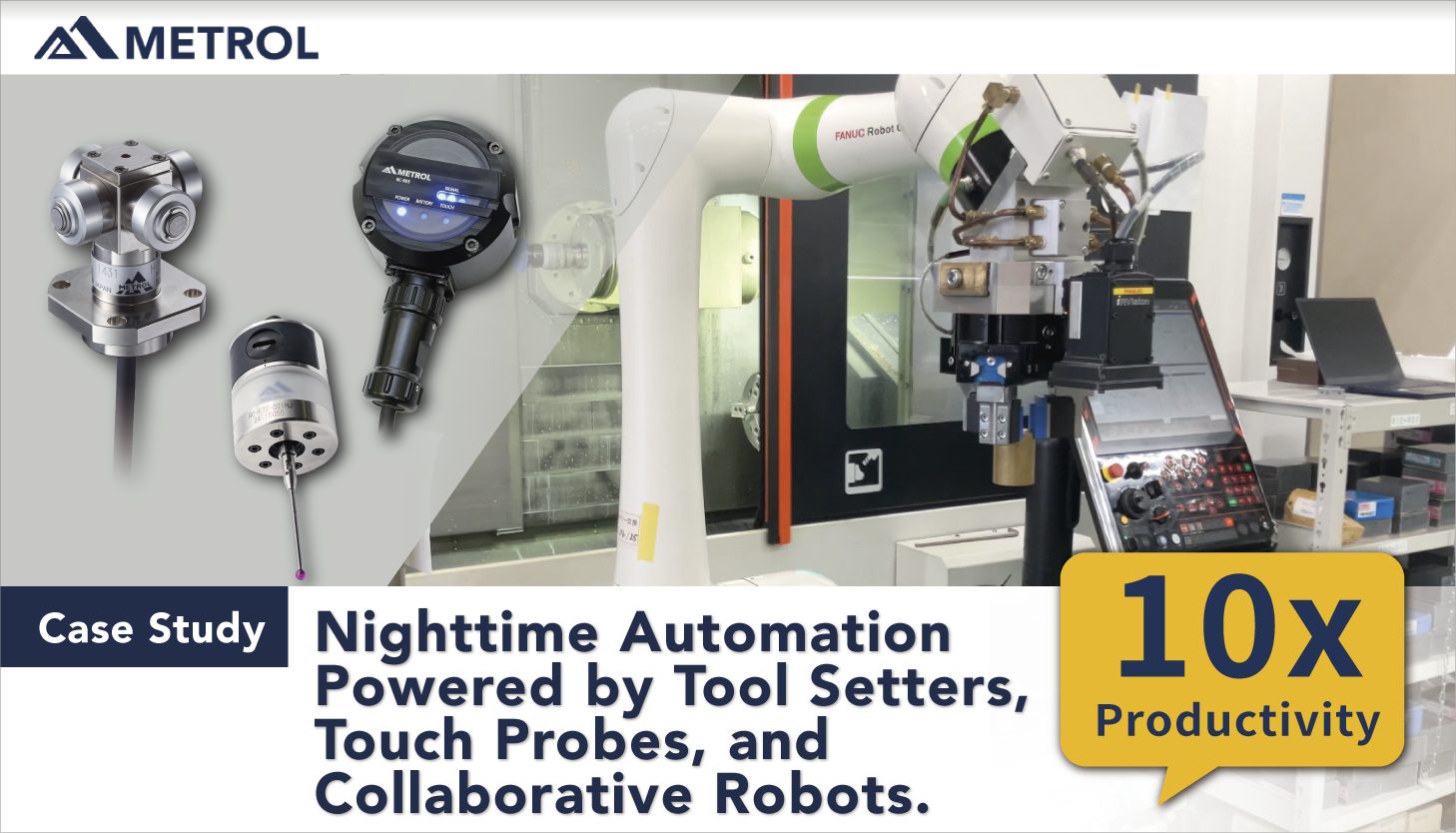
Metrol manufactures parts for its own products in-house, and this article introduces a case study of using Metrol sensors and collaborative robots to realize 24-hour operation.
We hope this will be helpful for those considering automation due to labor shortages but hesitating over the cost.
Table of Contents
24-hour operation was nothing but a pipe dream…
Metrol offers high-precision sensors at affordable prices, but the secret to this is that we increase the in-house production rate of sensor parts, and many of the parts are machined in-house. We also use our own sensors in production to promote automation and increase productivity, while feeding back user experience to our product development department from our customers’ perspective, aiming to improve our products.
On the other hand, it has only been in the last few years that our automation has picked up speed.
This time, we talked to Mr. Urano and Mr. Yashima from the Machining Department about how Metrol has been promoting automation.
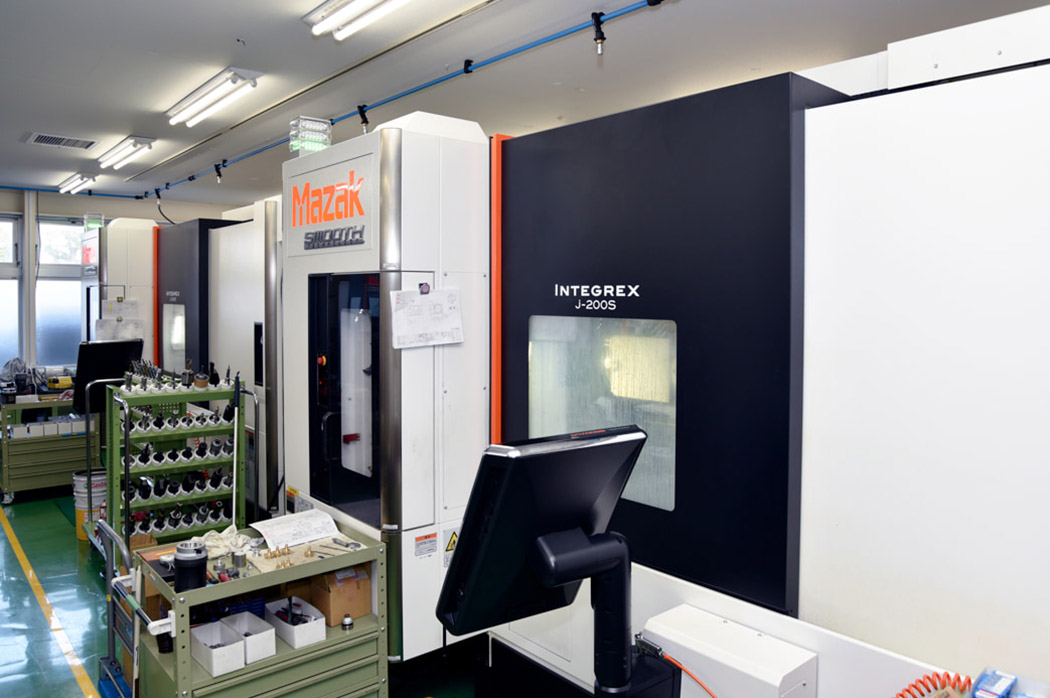
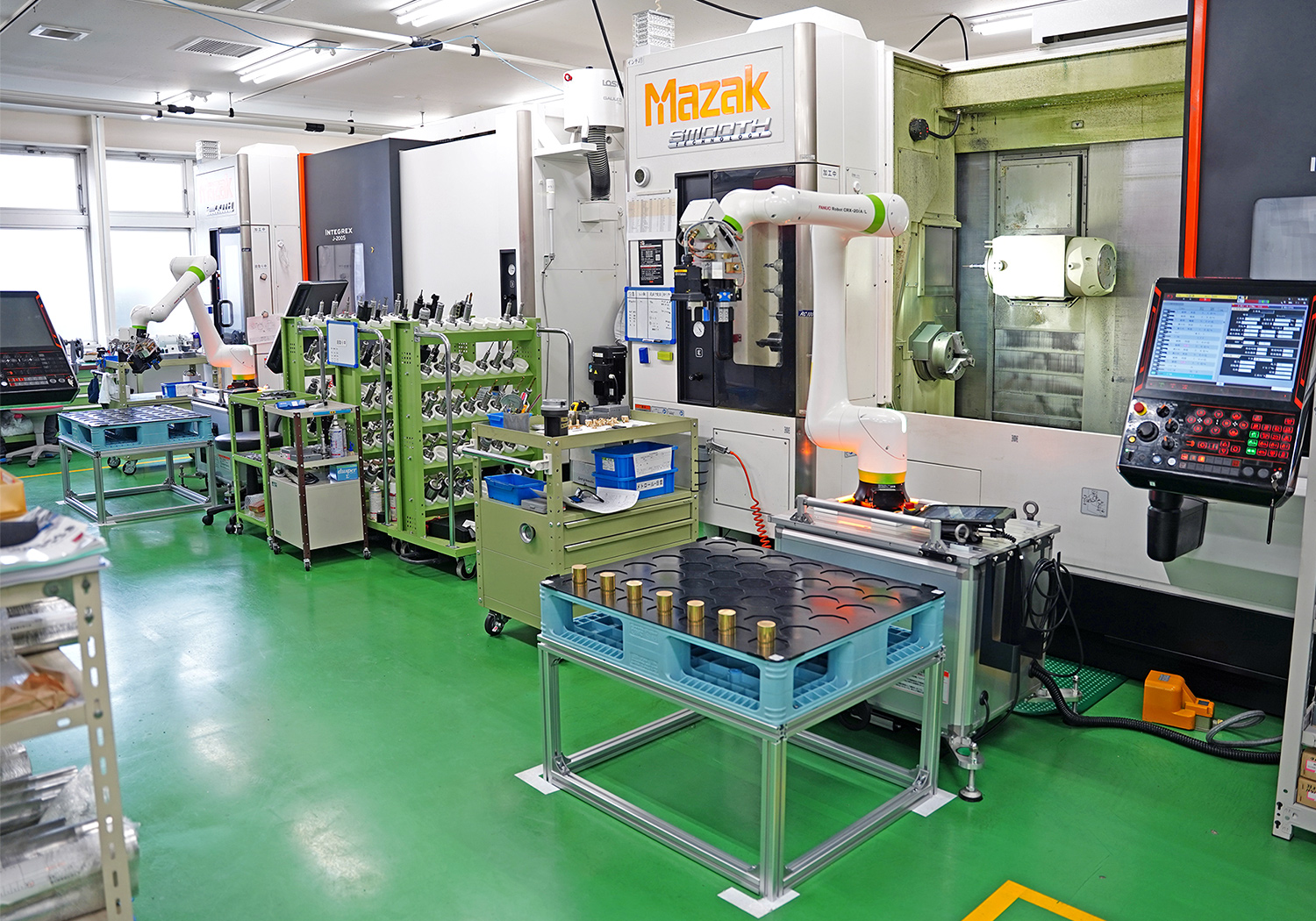
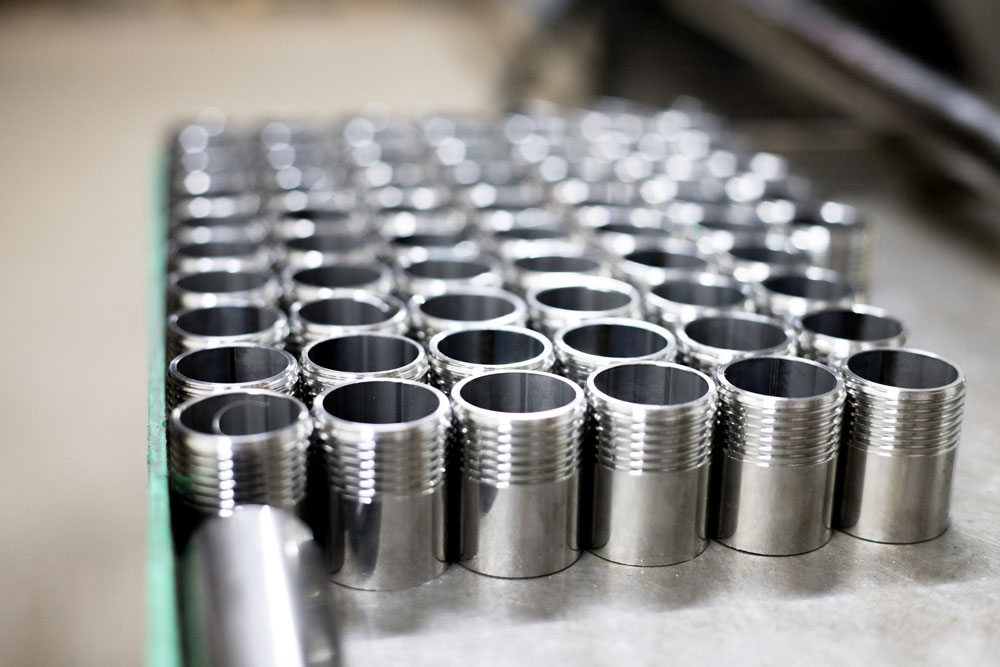
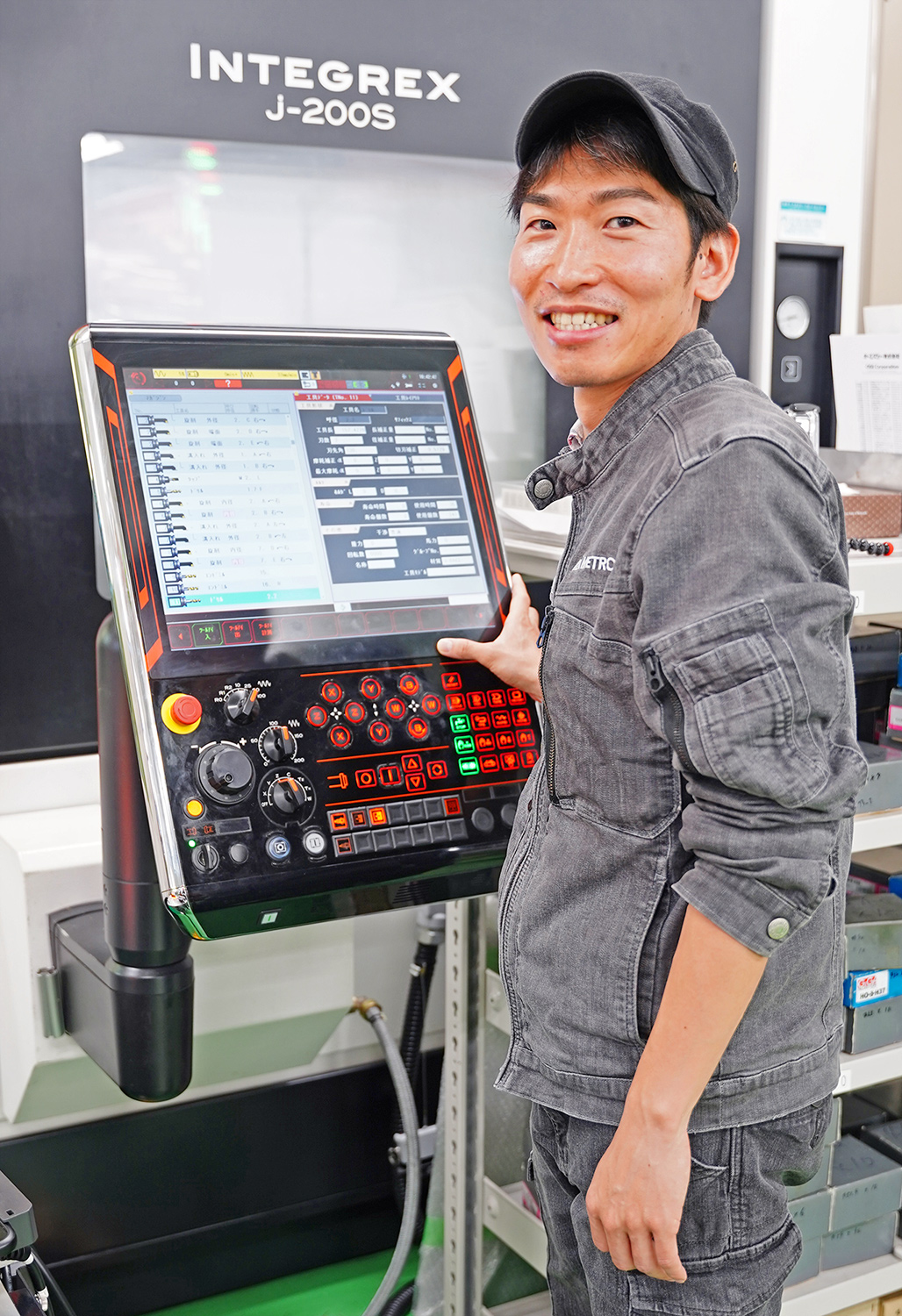
This line manufactures housing parts for sensors, using MAZAK’s INTEGREX j-200S machine center.
(Issues) Three production issues in manufacturing parts in-house
“In the past, we had to do all the machining work during the day and simply stop at night,” says Mr. Yashima from the Machining Department.
There were three reasons.
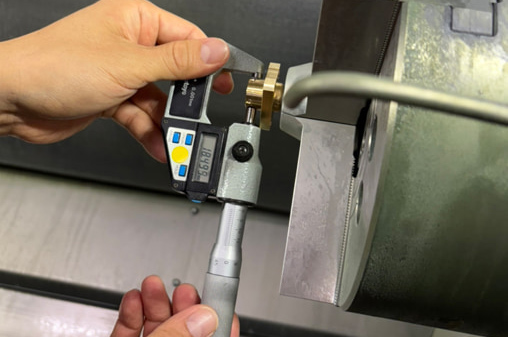
Issue 1: Staff had their hands full with materials supply and product takeout
Issue 2: Workpiece origin setting changeover was also done manually
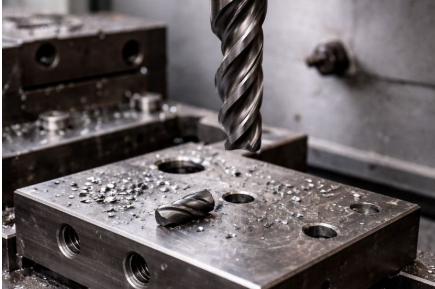
Issue 3: Drill breakage and machining errors had to be discovered visually


(Solutions) What kind of automation has realized 24-hour operation?
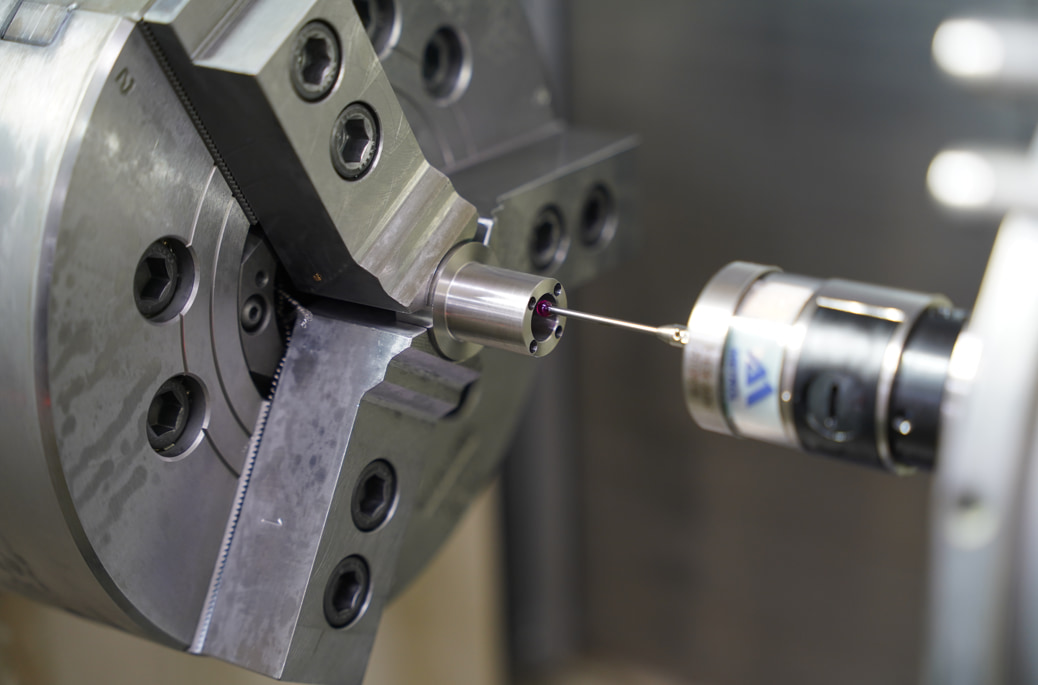
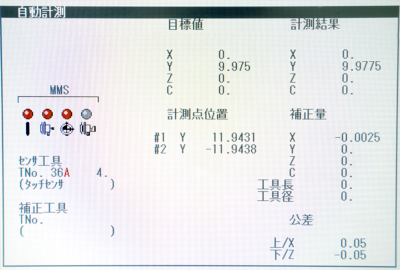
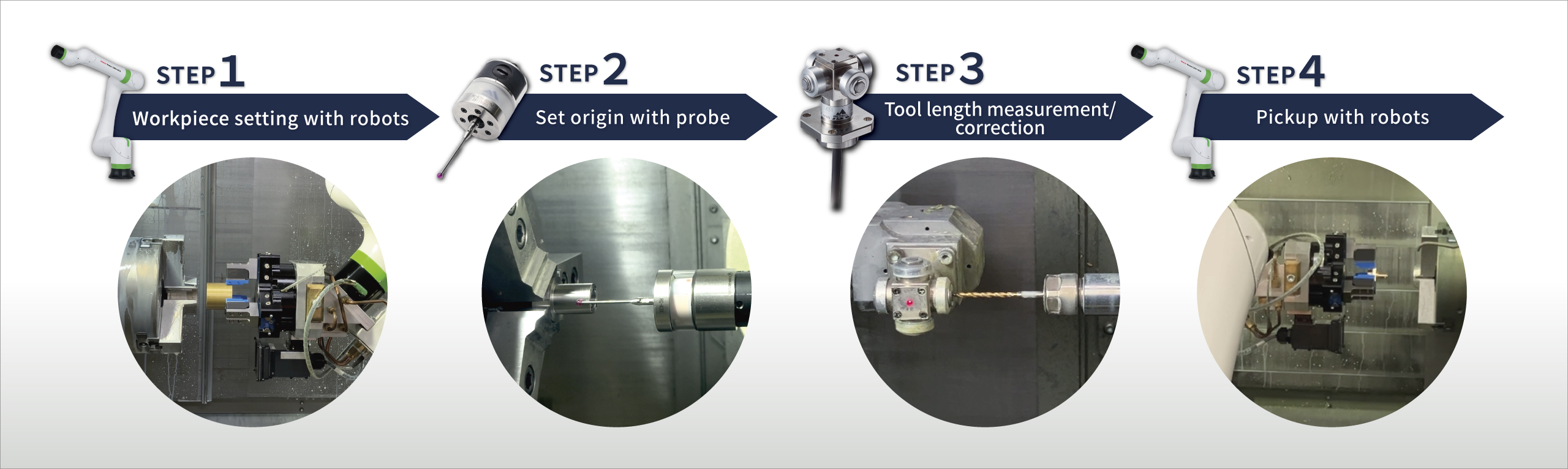
Automation (1) Automating changeover work and breakage detection with touch probes and tool setters
One day, a turning point came to the manufacturing site. They first introduced tool setters and touch probes.
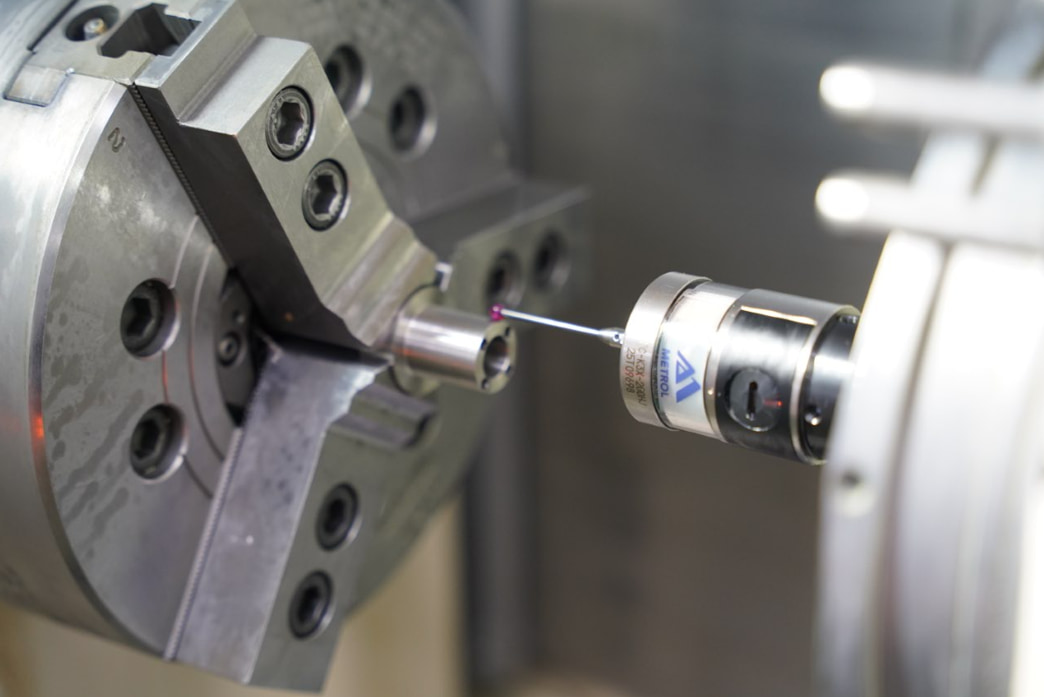
“Thanks to the touch probes, the measurement work that used to be done with a micrometer every time has been automated on-machine.” Changeover time has been drastically reduced, while measurement variations due to manual work and the influence of temperature changes have been eliminated.
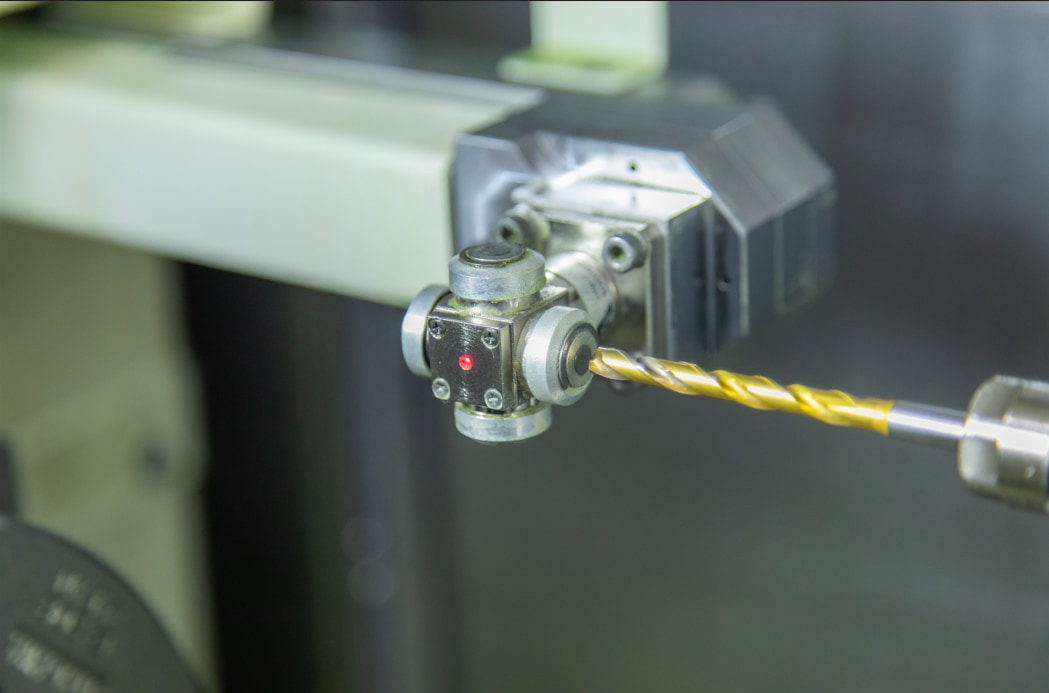
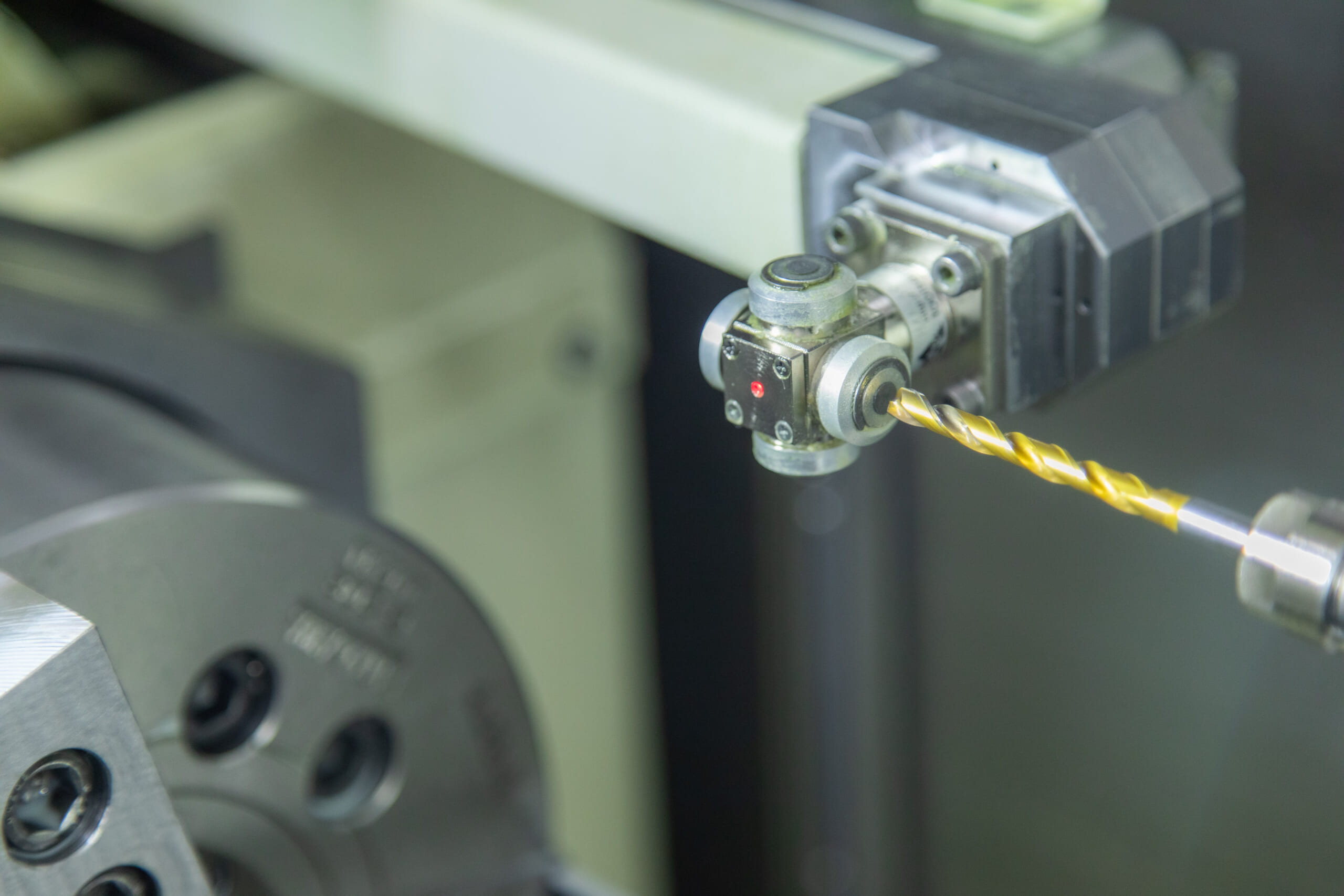
The effects of using a tool setter for automatic detection of broken tools have been especially notable.
“In the past, a tool would break during machining and we’d end up mass-producing defective products. Now, the tool setter measures tools at regular intervals, and the machine stops immediately when breakage is detected.” It is a big difference from the days when there were heaps of defects.
Automation (2) Furthermore, the introduction of collaborative robots enables completely unmanned night operation
On the other hand, even after the introduction of probes and tool setters, workpiece setting and finished product takeout were carried out by hand.
They decided to introduce collaborative robots to further improve productivity.
The robots took over everything from workpiece supply to finished product takeout, realizing completely unmanned nighttime operation.
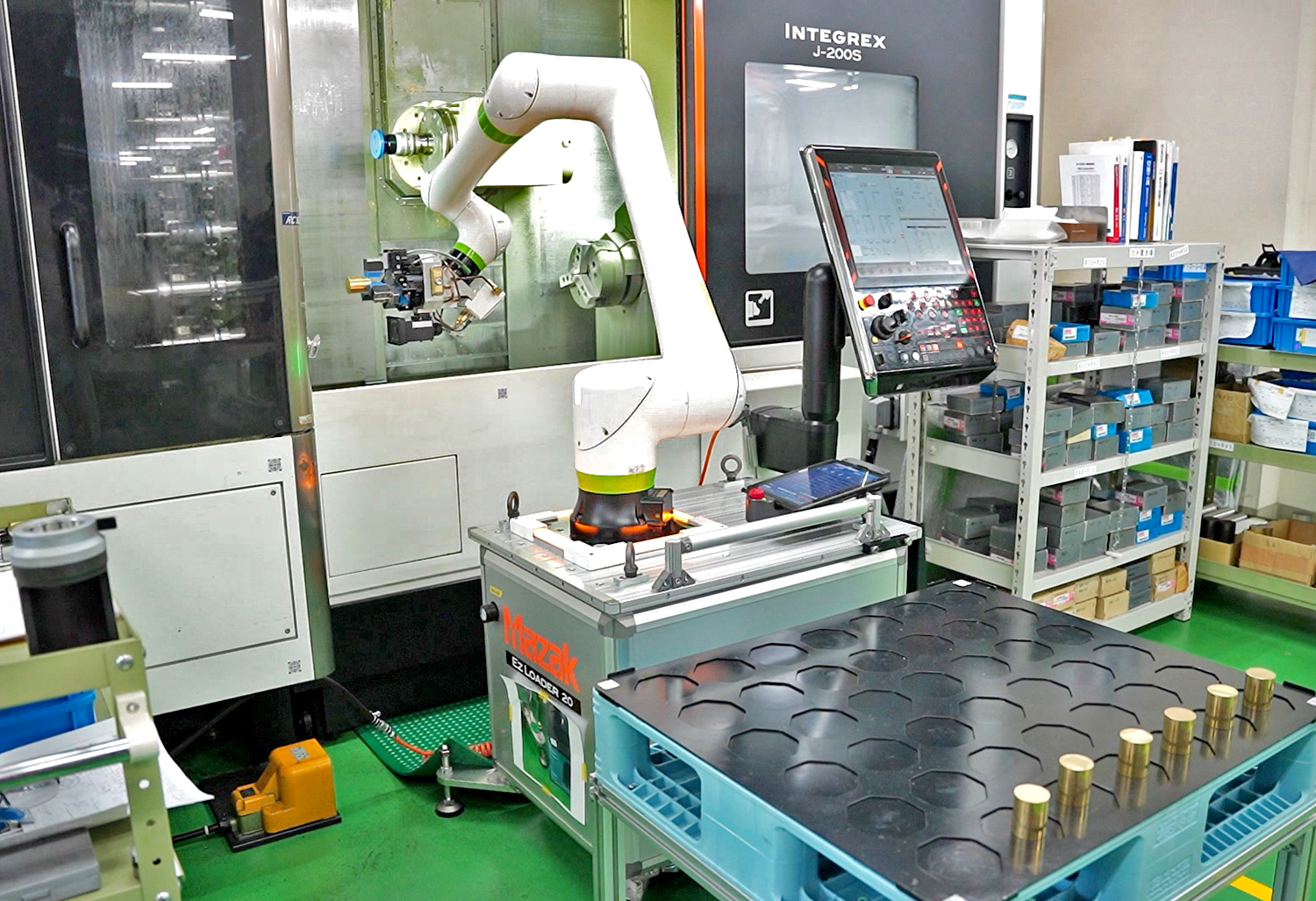
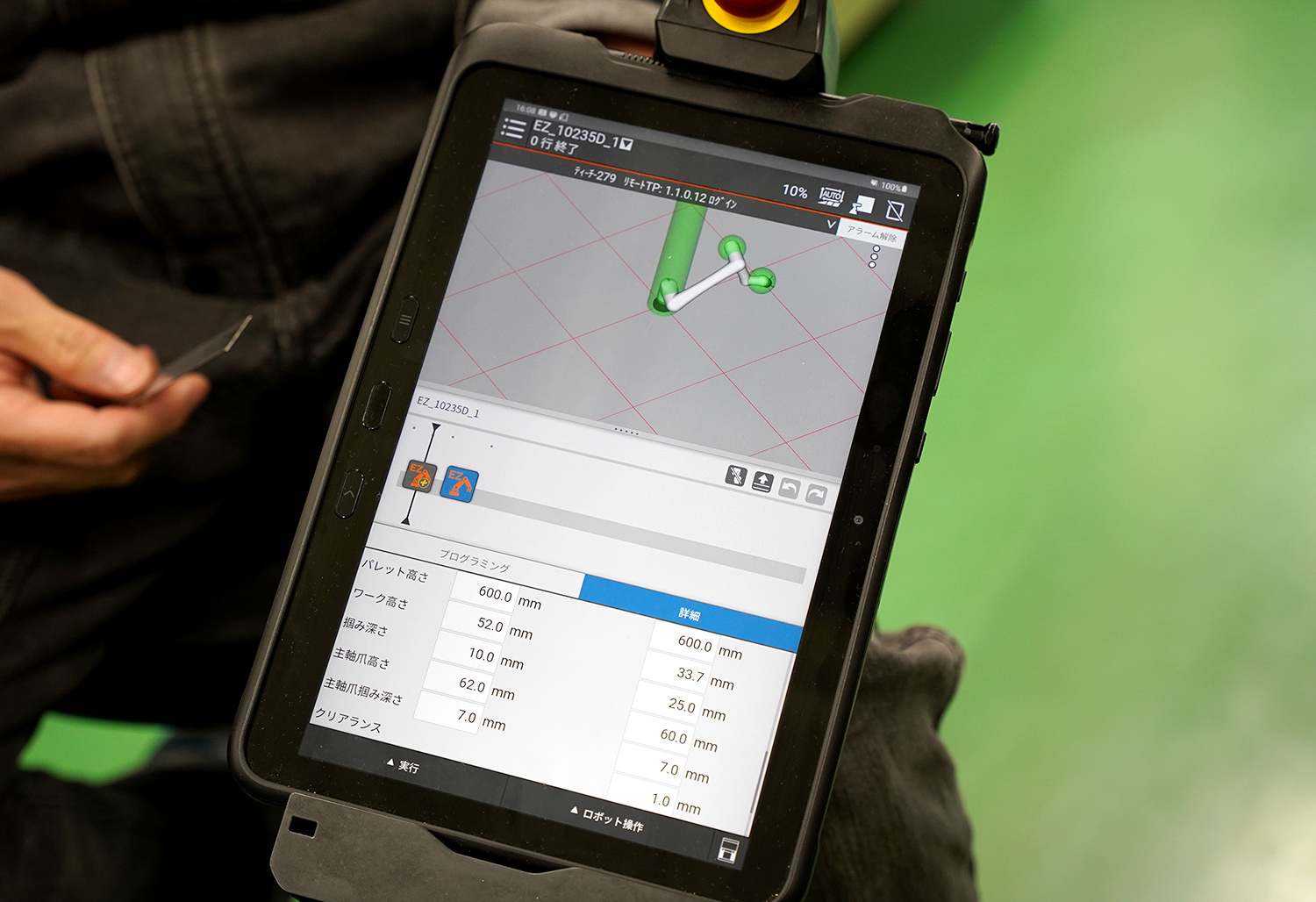
“We thought at first that operating the collaborative robots would be difficult, but the ones we introduced can be operated from a tablet, simply choosing the operation instructions from icons. It took us just a week to master it.”
Along with the simple setting process, the deciding factor was the safety design, which allows the collaborative robot to reduce impact upon contact detection and stop softly, even if the operation instructions are set incorrectly. Robots and human beings were able to share the same workspace with peace of mind.
[Reference Video] Automation with Tool Setter x Probe x Collaborative Robot! Realizing 24-hour operation of machining centers
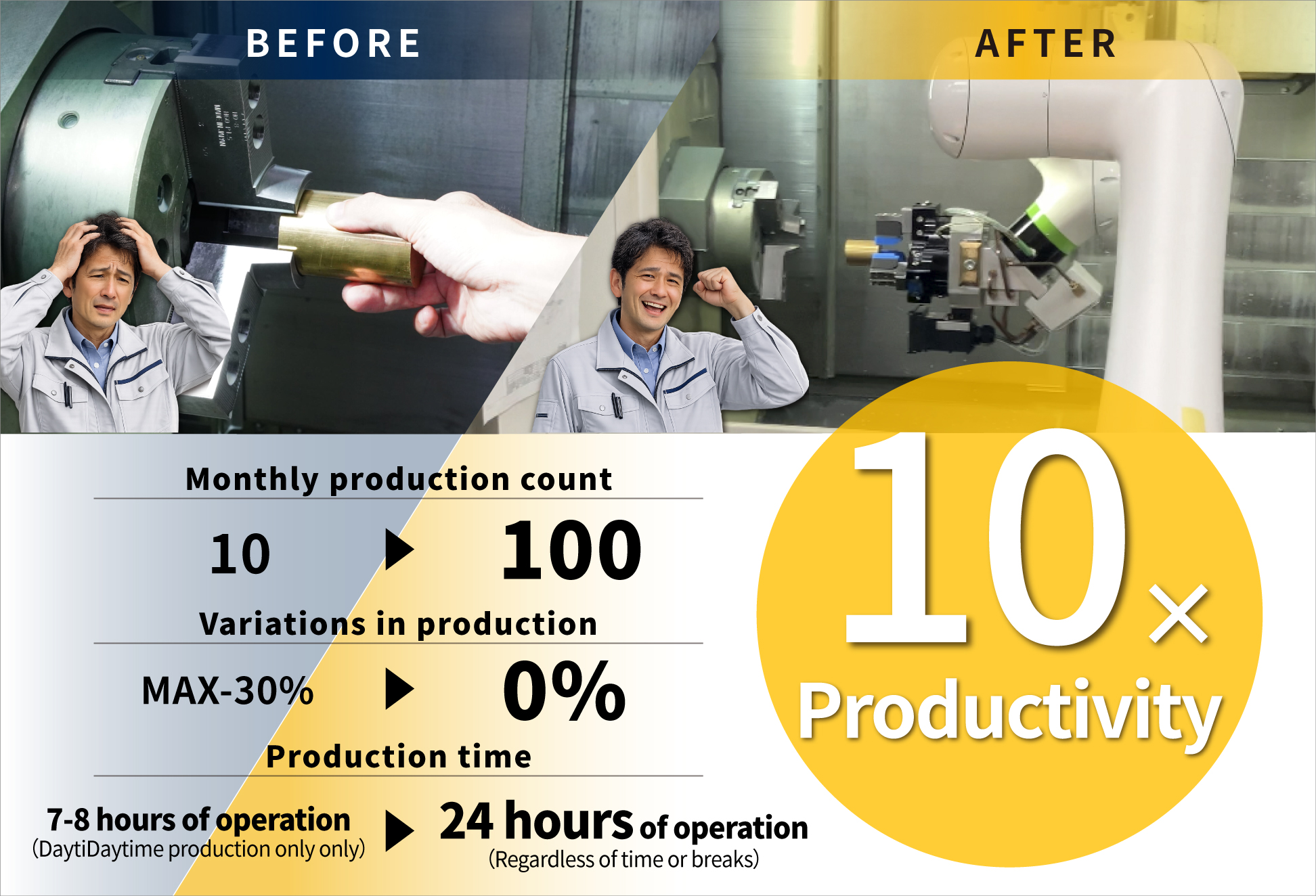
(Effects of Introduction) Realizing 24-hour operation and increasing productivity 10 times. Lead time-related mental stress also significantly reduced
The effects of introducing tool setters, touch probes, and collaborative robots are listed below.
The greatest effect is the tenfold increase in productivity by realizing 24-hour operation!
There have also been effects other than productivity.
- Touch probes automate changeover and measurement work
- Tool bit sensor immediately detects tool breakage and prevents continued production of defects
- Materials supply and product takeout also handled by collaborative robots alone
- Changeover time reduced to 1/5, worker mental stress also reduced
“No more late hours!” Increased productivity and peace of mind on site achieved by automation
“We can now mass-produce 100 products that could only be made 10 pieces a month.”
Productivity has increased 10 times by simple calculation. Production was previously confined to daytime hours, but now the nighttime hours can be used as well, which has become a major factor in productivity increase.
“In the past, when deadlines were tight, it was often the case that we worked late into the night and couldn't leave until the machining was finished. Now we can go home with peace of mind. Reduced mental stress is also one of the effects of introduction.”
The plant has also used the time freed up by automation to begin in-house production of parts previously contracted out.
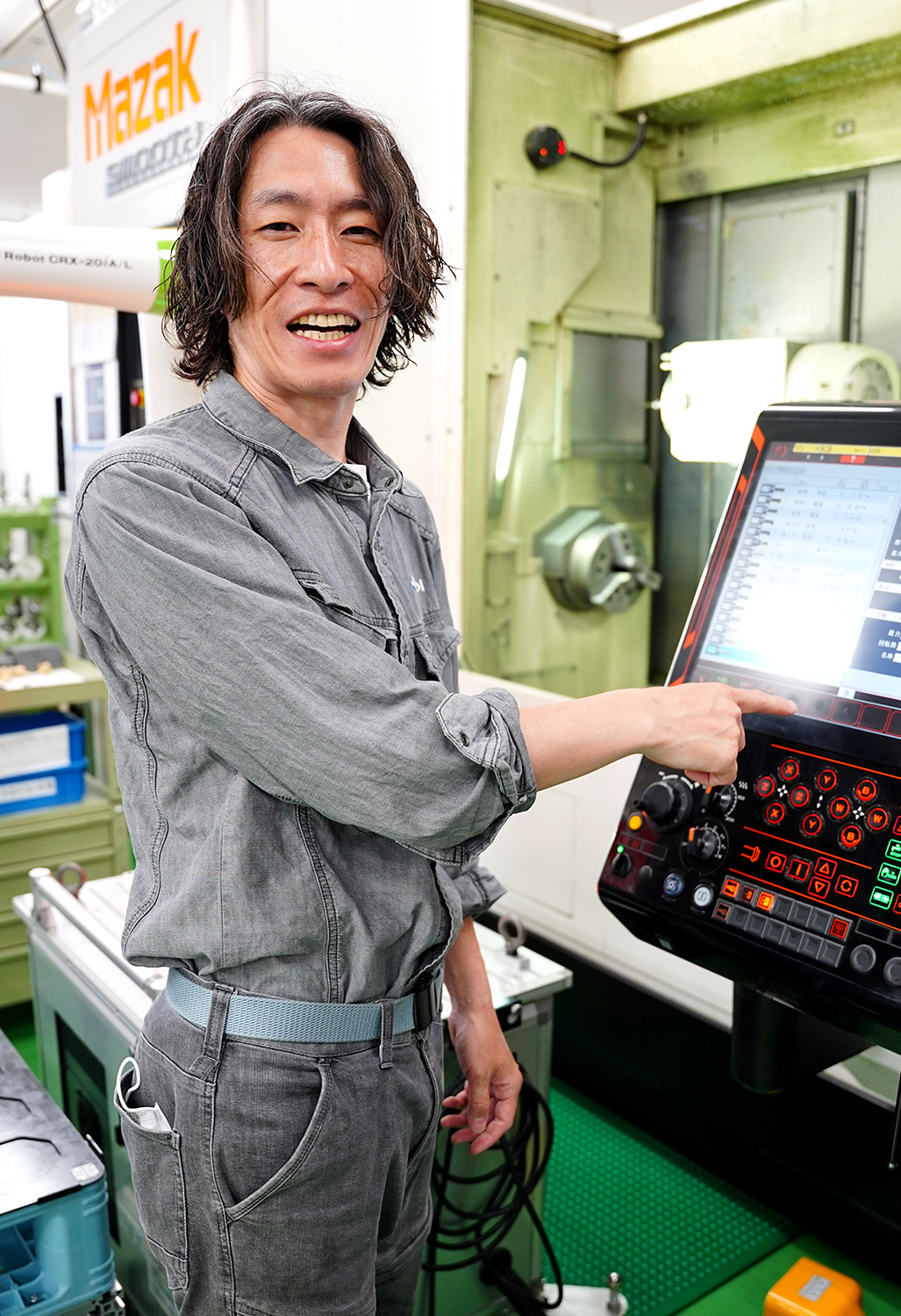
“The reduced workload has also helped us reduce costs and shorten lead times,” says the on-site leader Mr. Urano.
For those who consider “introduction infeasible due to high costs”
If only we’d done it five years ago
Automation does indeed come with costs.
However, Mr. Yashima emphasizes that “you can’t make up for the losses incurred by manual work.”
“The tool setters for lathes and the touch probes alone have made changeover work so much easier.
With the collaborative robots thrown in as well, we can use the entire night for production.
I have come to think that facilities investments of several million yen are cheap when they’re buying us tenfold productivity.”
“If only we’d done it five years ago - I wish I could go back and tell myself.”
Automation is not just for mass production sites.
It’s also possible to create mechanisms enabling continued nighttime production even in low-volume and high-mix machining where every workpiece may be different.
This is made possible by tool setters for lathes and touch probes.
Even when every workpiece is different, the touch probe performs workpiece origin setting to automate high-precision machining suited to the workpiece. Likewise, even if a tool breaks, the tool setter detects the breakage and prevents production of multiple defective products.
Machines are no longer reliant on constant human presence. Sensors and robots work in partnership, ready to solve your problems as soon as you call on us for advice.
This concludes our report on the introduction of Metrol sensors and collaborative robots.
We hope it will prove helpful.
The products featured in this case study
Wireless High-Precision Touch Probe
![[RC-K3X Series]](https://metrol-sensor.com/wp-content/uploads/2024/08/RC-K3X_bg-6-800x530-2-800x530.png)
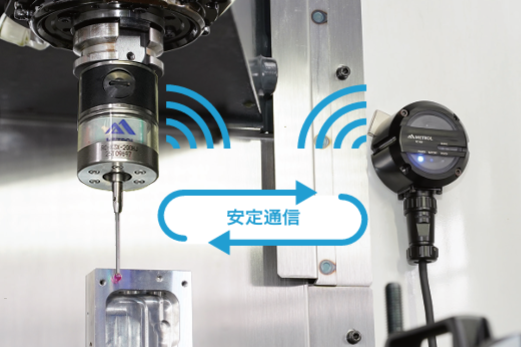
The RC-K3X series is a Japan-made wireless 3D touch-probe sensor that is mounted inside CNC machine tools such as machining centers to measure the dimensions of machined workpieces.
Using wireless communication, the receiver transmits the probe's measurement signals to the machine.
Originating the blade of CNC Lathe
![[H4A Series]](https://metrol-sensor.com/wp-content/uploads/2021/03/MET_I_9_H4A_ST1-2-800x530.jpg)

The H4A series is equipped on CNC lathes and machining centers to preset the blade, and also performs wear, chipping, and thermal displacement compensation, contributing to maintaining the constant machining precision of the machine tool.
The number of and directions of contact-surface can be chosen from 1 to 5 directions depending on the mounting space and the detection direction of the tool.
