
~Automated correction of grinding coordinates for automatic brake gear parts with pneumatic gap sensor capable of providing numerical output~
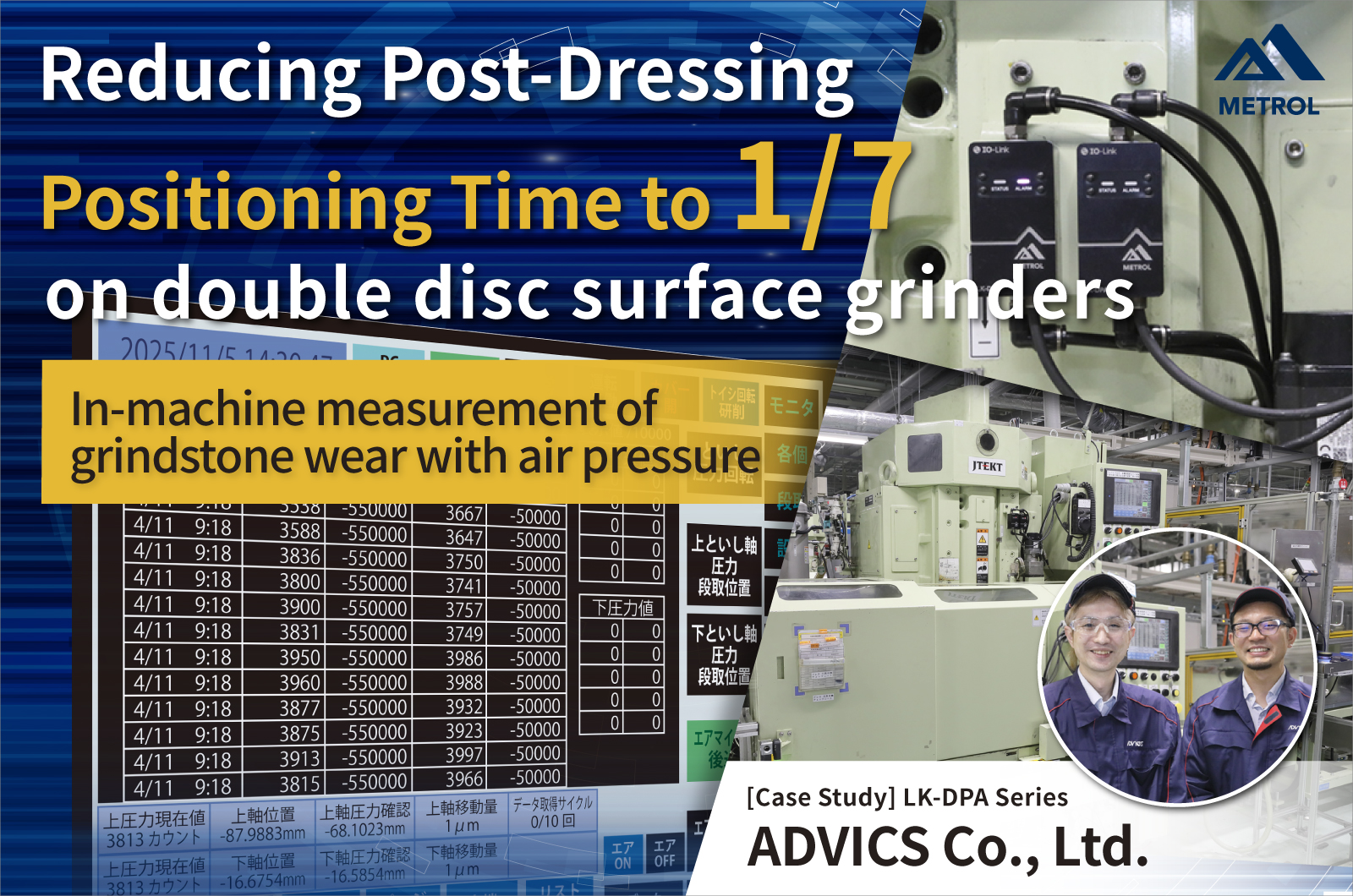
Table of Contents
Interviewee: ADVICS Co., Ltd.
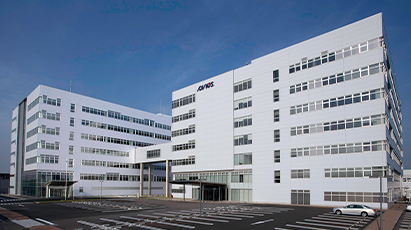
The interview was conducted in cooperation with ADVICS Co., Ltd. in Kariya City, Aichi Prefecture. (Honorifics omitted below.)
Known as a globally superior brake system supplier, ADVICS is constantly striving for technology innovation, aiming to become “a brake manufacturing group that satisfies all customers in the world.”
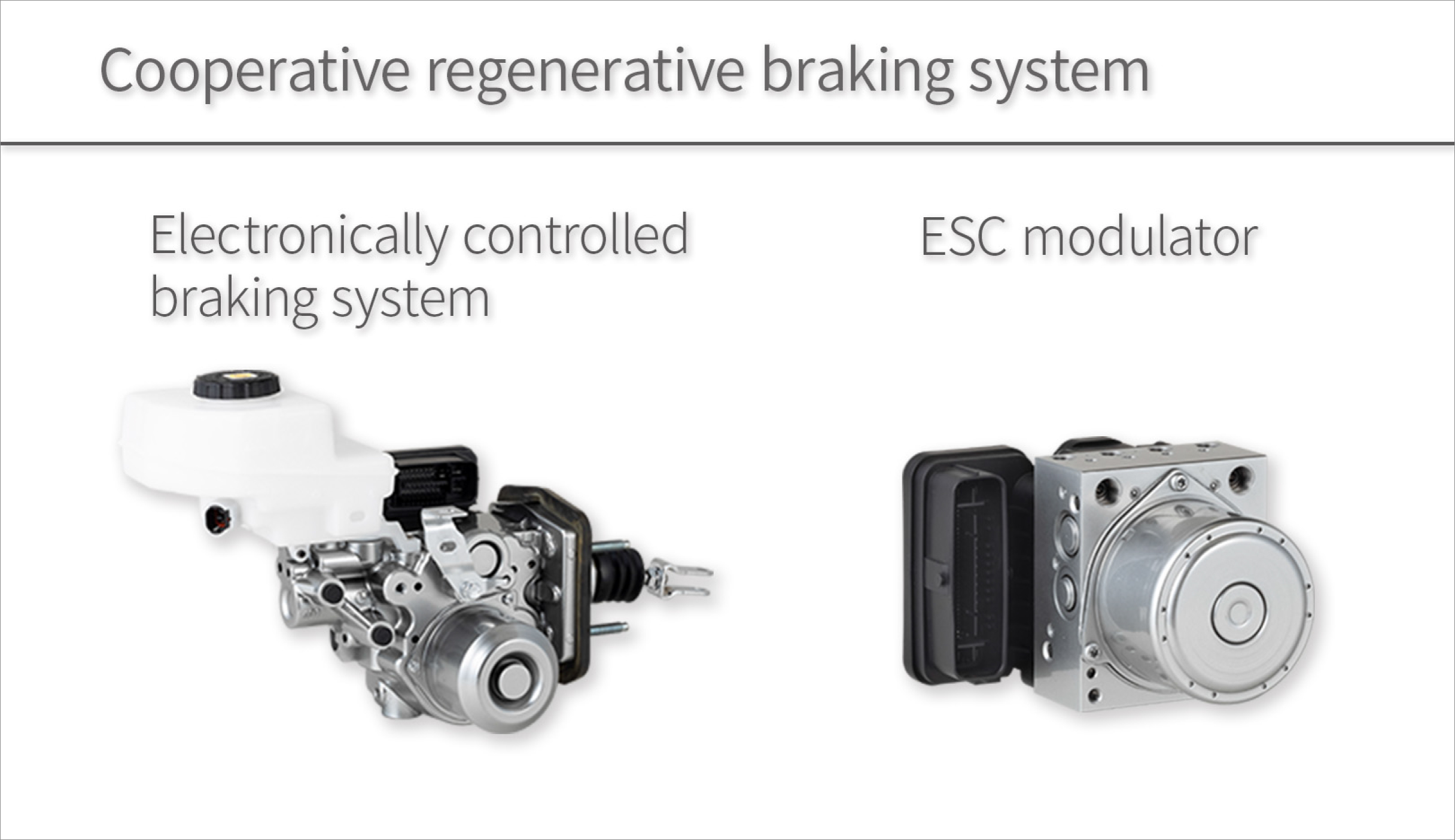
Among its representative initiatives is the “cooperative regenerative braking system” which supports improved performance of electric vehicles.
By efficiently recovering energy during deceleration through regenerative braking and maximizing its effect, the system contributes to improved power efficiency and reduced CO₂ emissions. As the shift to EVs is accelerating, the cooperative regenerative braking system is drawing significant attention as a flagship technology that demonstrates ADVICS’s leadership in the era.
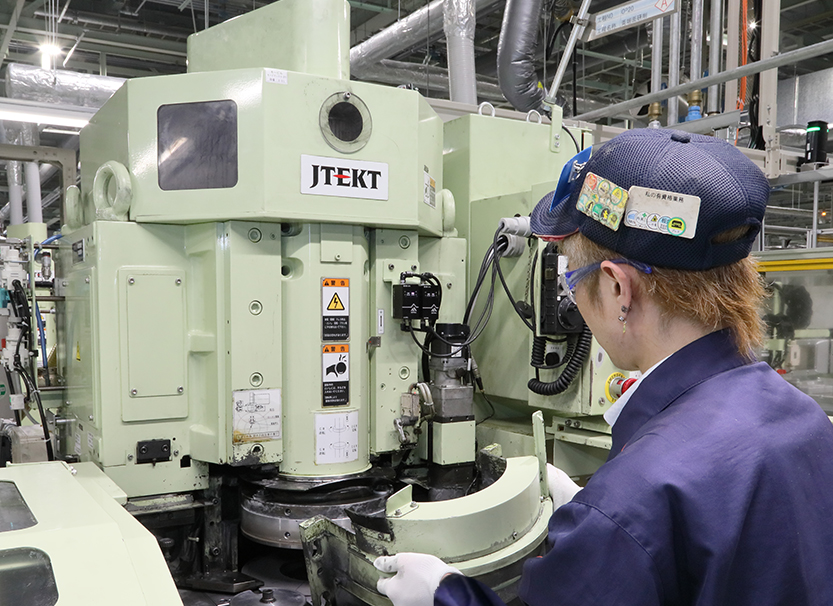
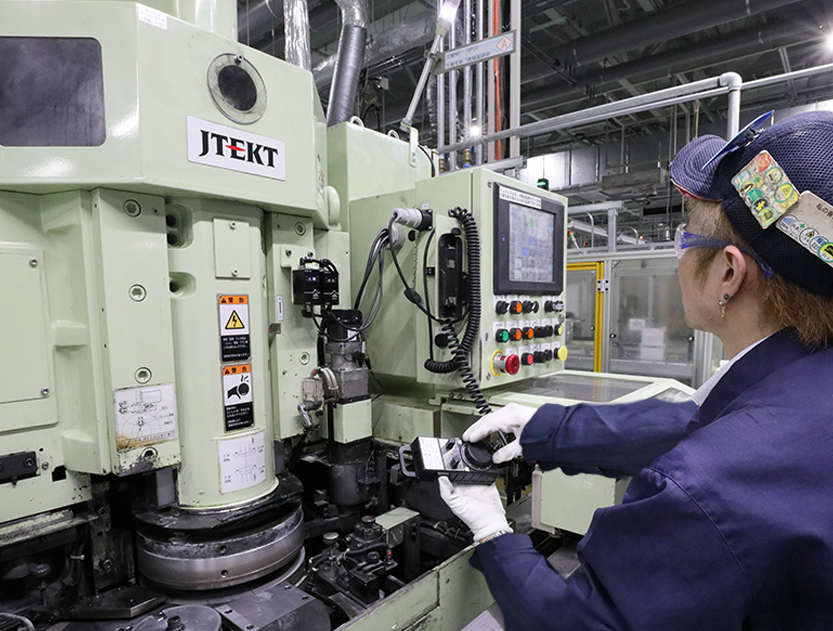
At the Handa Plant, the Air Gap Sensor LK-DPA has been adopted for the double disc surface grinders manufactured by JTEKT Machine Systems Corporation, which is used for mass production of gear parts incorporated in the cooperative regenerative brakes.
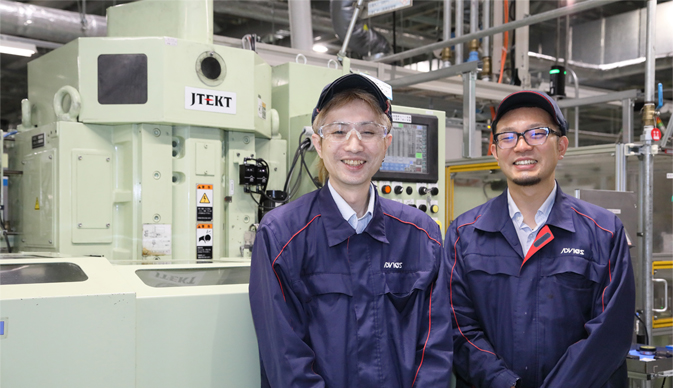
Here we discussed how the sensors were introduced and the effects thereof with Mr. Yamazaki and Mr. Hirayama from the Production Technology Department.
[Issue] Struggles with minute errors between machines, requiring time for adjustment
When manufacturing gear parts for automatic brakes, grindstone wear correction was an issue in the grinding process using double disc surface grinders. Grinding allowable error for gear parts is within 5μm. On the other hand, high-precision adjustment is required due to minute individual differences between machines.
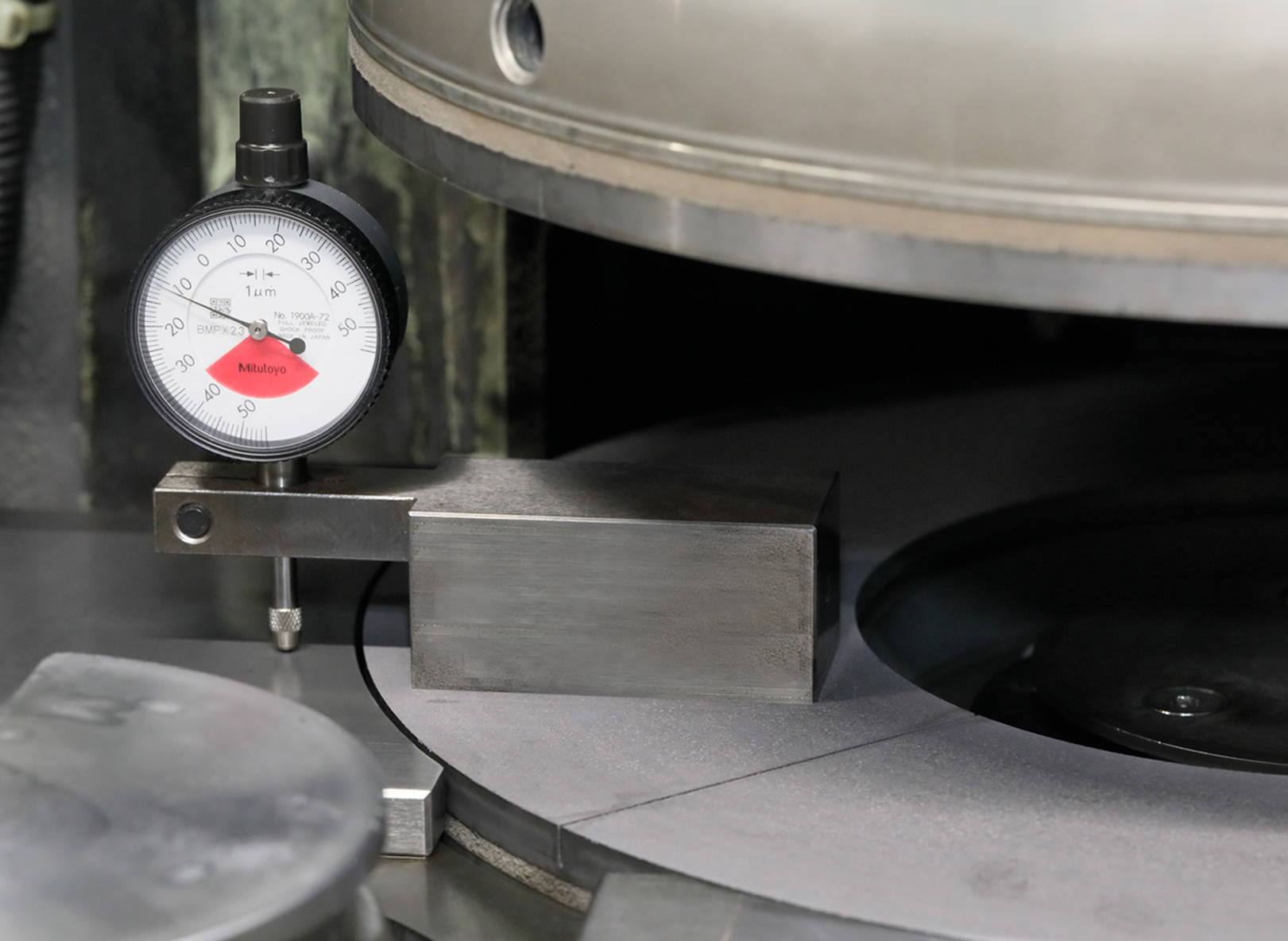
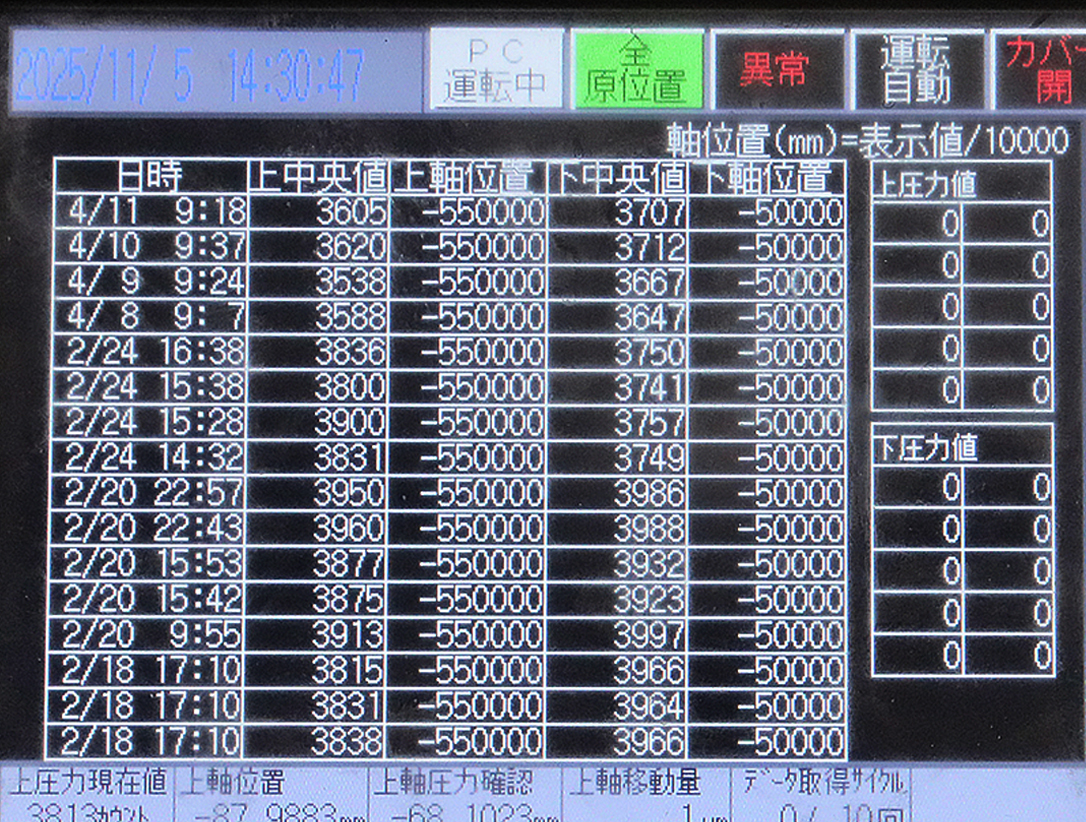
Production Technology, Mr. Yamazaki: “We used to have to remove the grinder covers, measure the wear amount with a dial gauge, and input the numerical values into the machine. Adjustment alone took a lot of time and ended up being a bottleneck to productivity.”
Later, they introduced pneumatic gap sensors from other companies, but achieved only precision for presence inspection, and fine adjustments during machining were difficult, rendering actual implementation impossible.
Reason for introducing the LK-DPA: Precision making it usable as an “in-machine measuring instrument” and the capacity to digitize and output air pressure
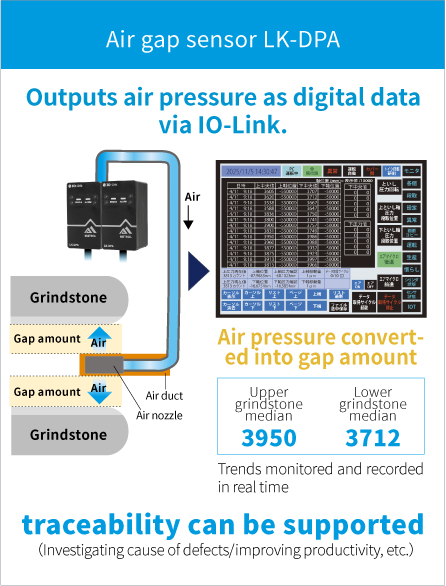
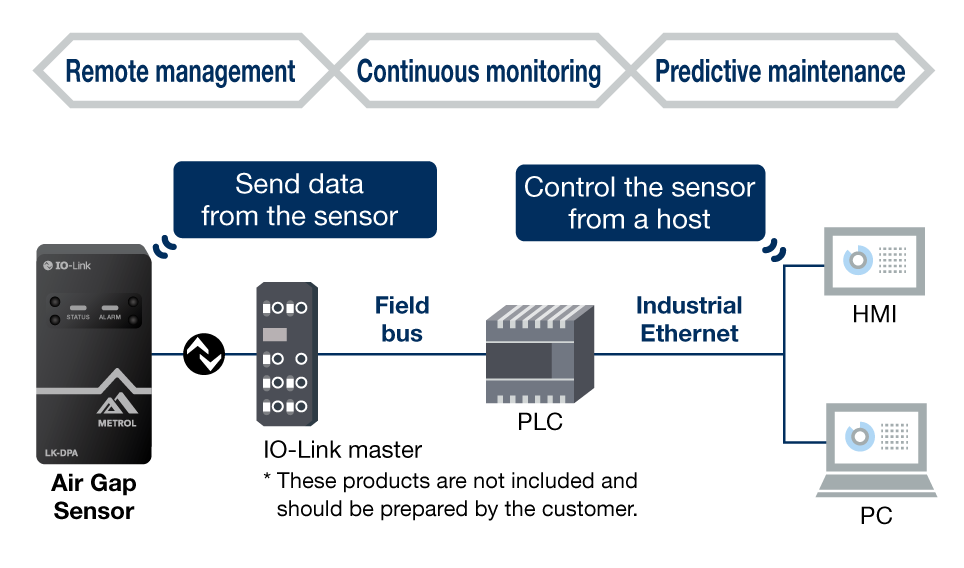
In this context, they learned about Metrol’s LK-DPA Air Gap Sensor, which can digitize air pressure and output it with IO-Link.
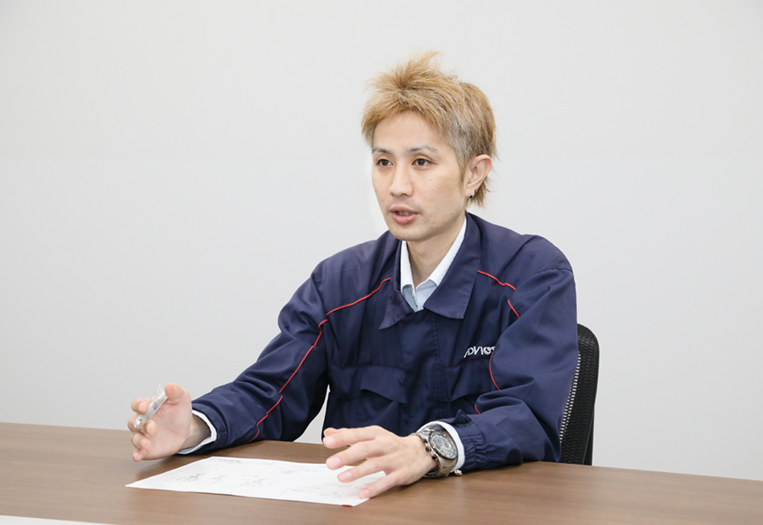
Production Technology, Mr. Hirayama: “I was attracted by the precision and responsiveness of the DPA that I saw at an exhibition, so I kept checking their catalogs regularly. When I knew about the sales launch of the LK-DPA, I was sure its precision and numerical output would make automatic correction possible.”
Introduction reason 1: Numerical in-machine measurement of grindstone wear
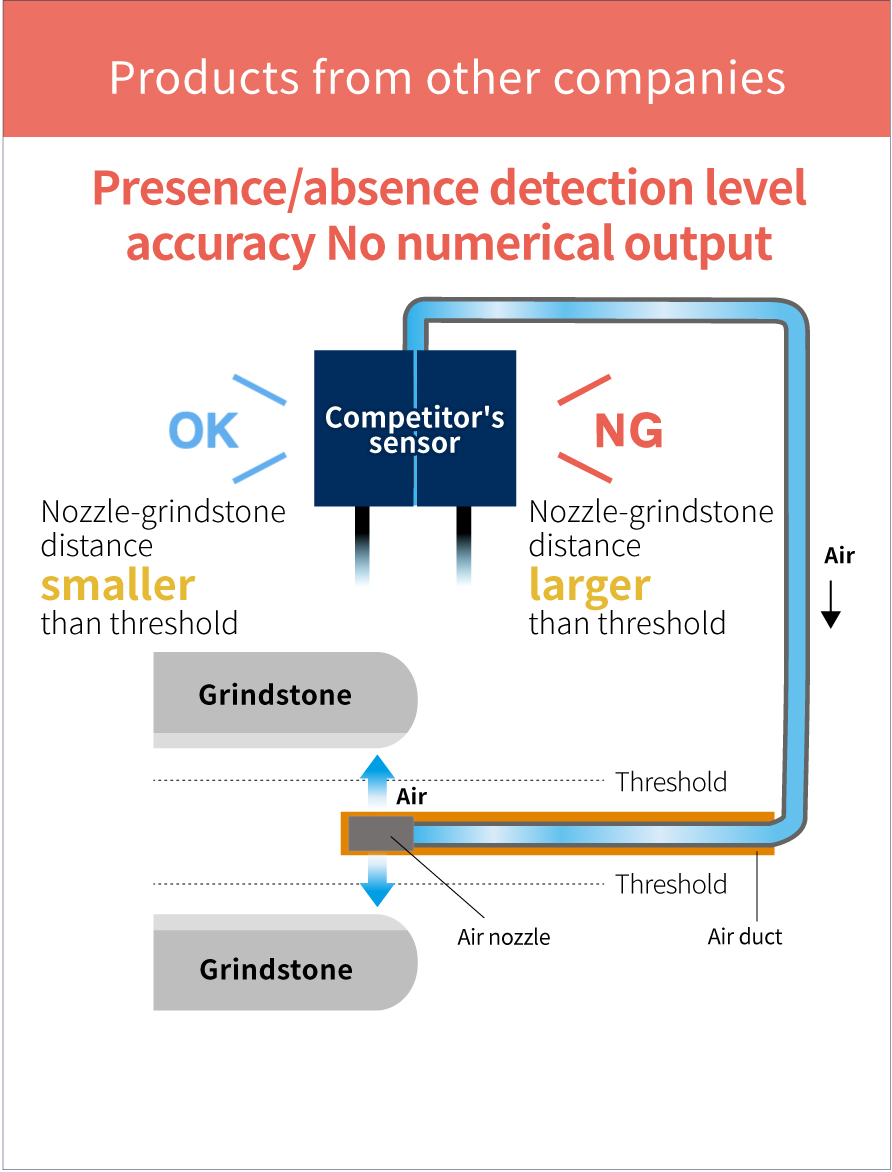
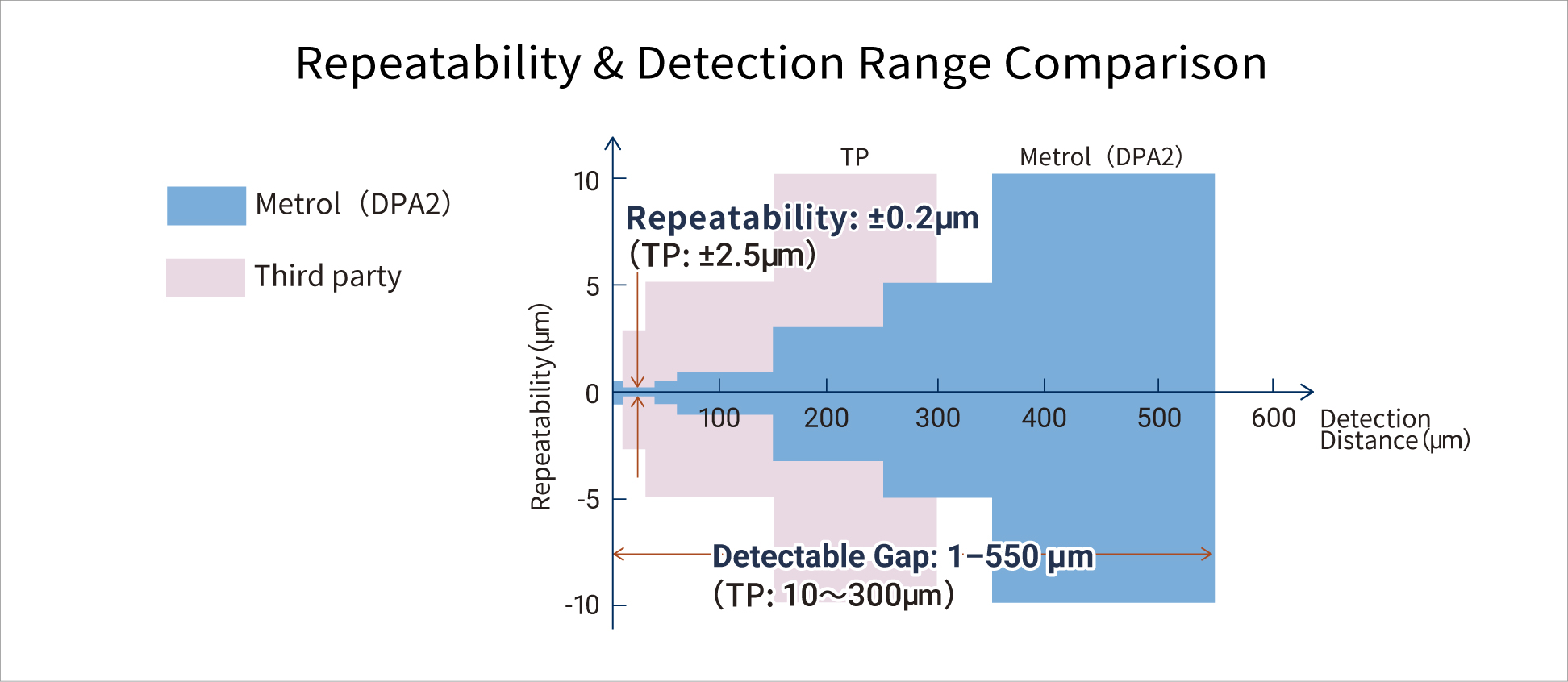
Introduction reason 2: Comparison with products from other companies: Repeatability 5x or higher
Introduction reason 3: Measurement data can be output to a PLC or PC with IO-Link
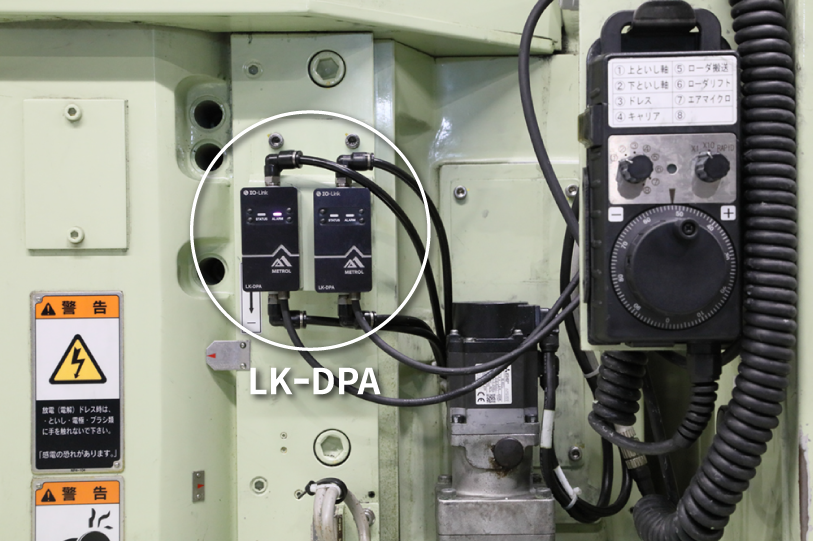
[Solution] Upper and lower grindstones are regularly monitored with two LK-DPA units
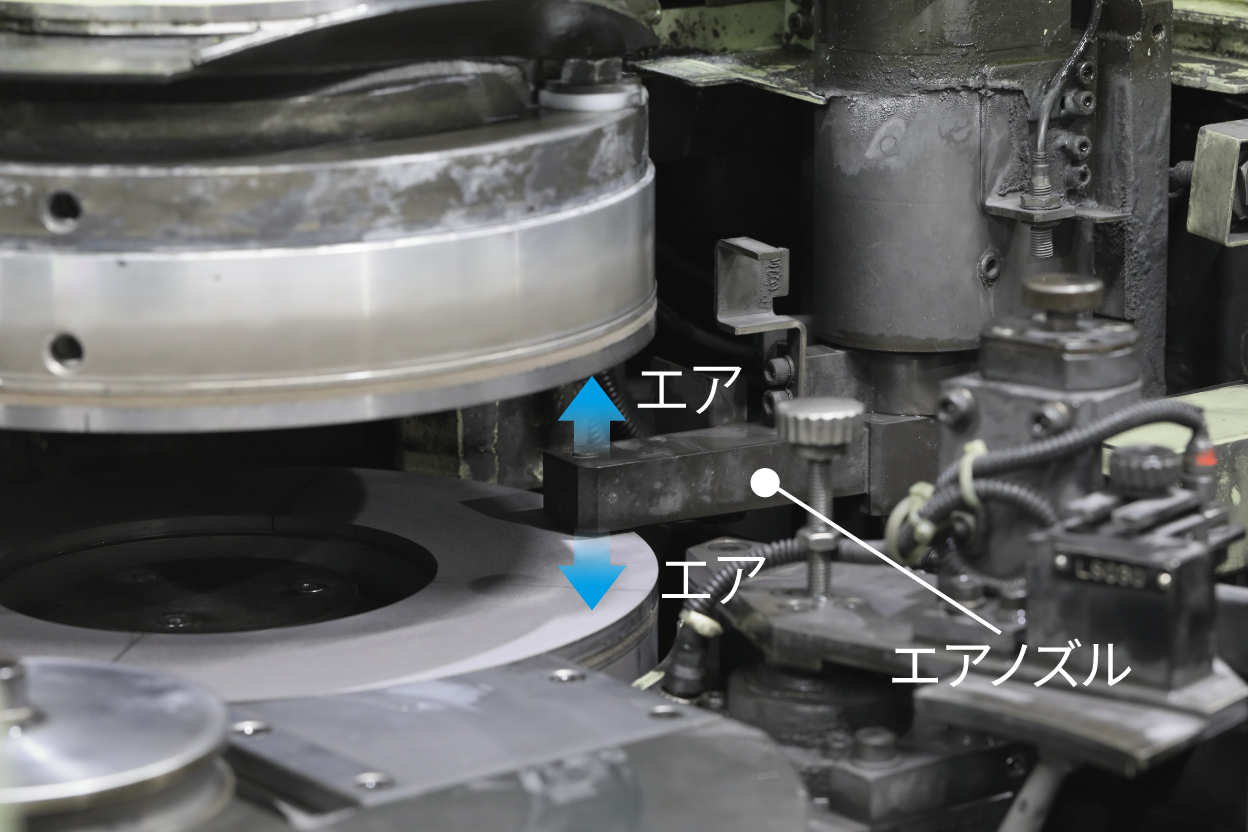
Currently, one LK-DPA unit is installed on each of the upper and lower grindstones, measuring wear amounts every two to three hours and performing automatic correction.
The air nozzle is inserted into the double disc surface grinder which clasps the gear part, to spray air on the grindstone surface. Correction in real time is possible by calculating the median wear amount value of the grindstones, which rotate toroidally.
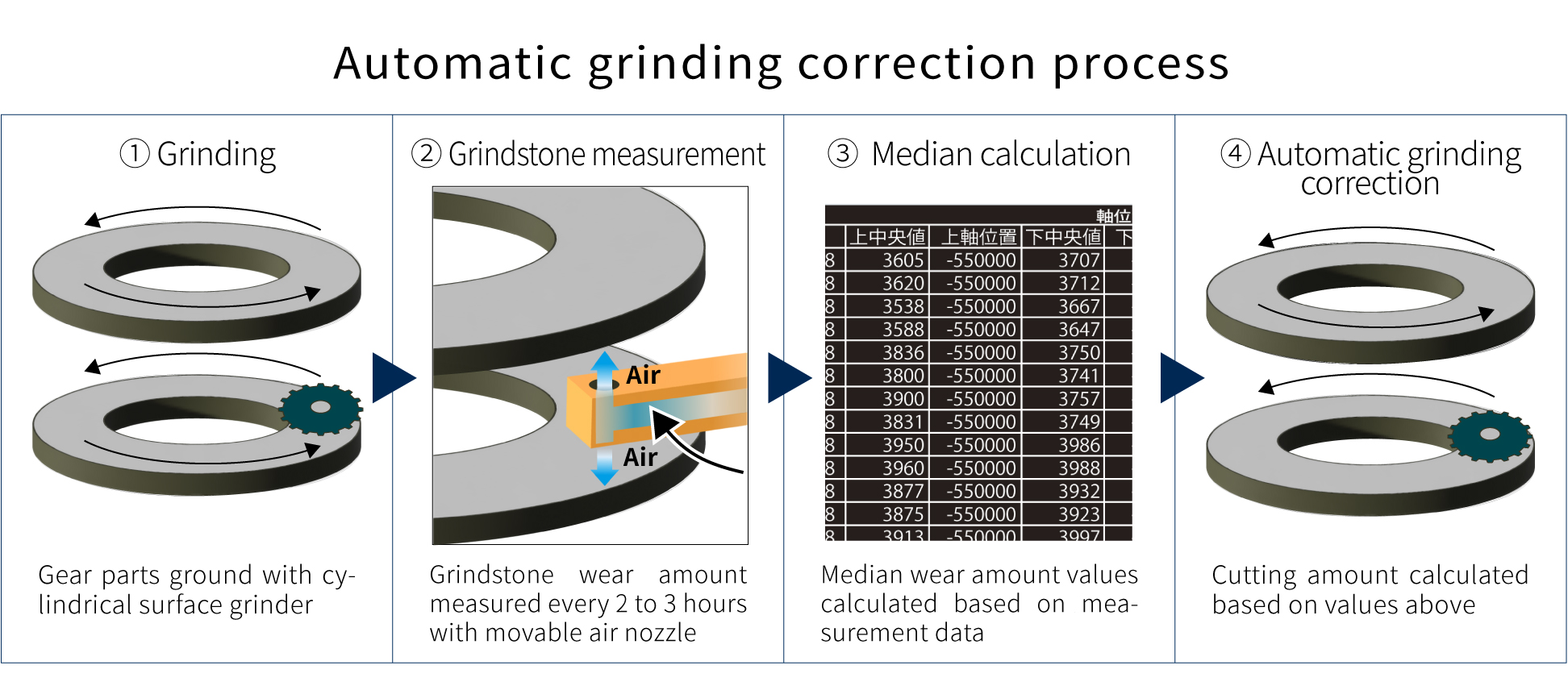
Yamazaki:“The main characteristic of the LK-DPA is that its numerical data can be handled directly on a computer. Even data that’s hard to read from a PLC can be easily analyzed, so it’s also useful for analysis of wear trends and automating maintenance.” Currently five grinders are equipped with LK units, mainly operating in processes requiring high precision.
[Effects of introduction] Outcomes of automated grindstone positioning adjustment on double disc surface grinders
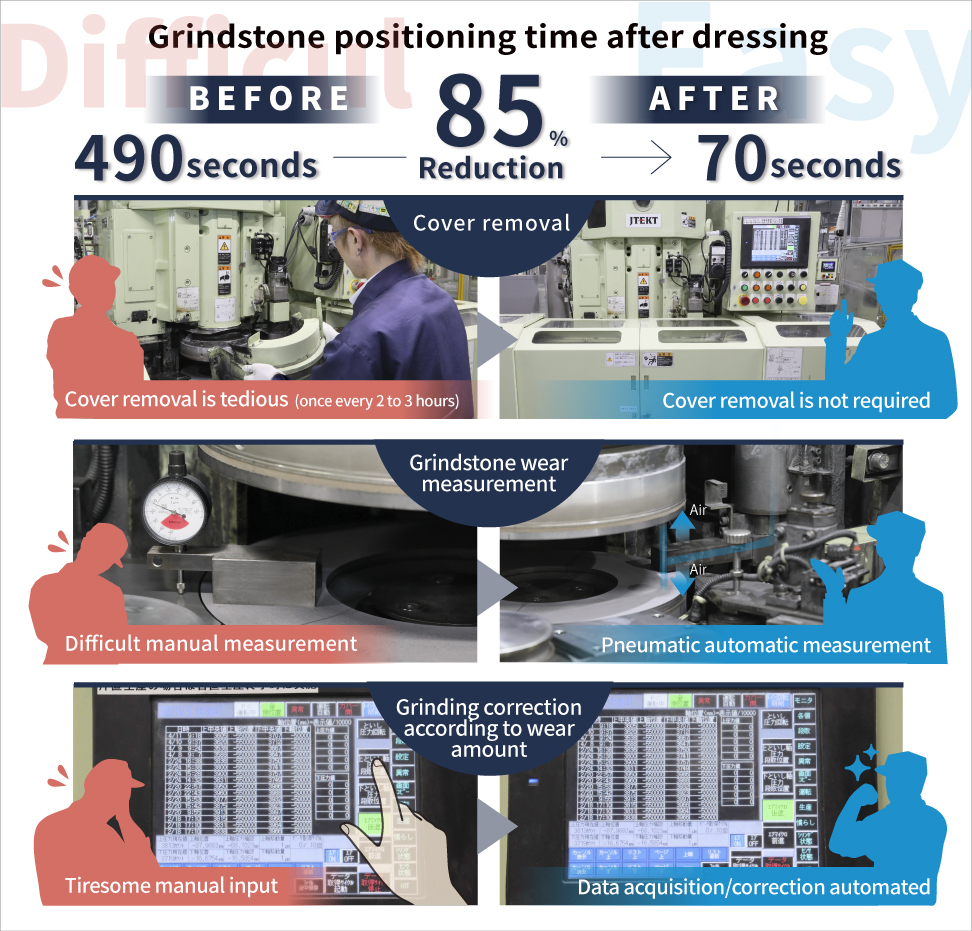
As a result of automating grindstone positioning on double disc surface grinders with the LK-DPA, the following effects have been realized in comparison to manual adjustment.
Grindstone positioning time sharply reduced to 1/7! Also…
The biggest outcome is the sharp improvement in productivity. Grindstone positioning time after dressing was reduced from 490 seconds to just 70 seconds, or 1/7.
The following effects were also realized.
- Changeover work: Tiresome cover mounting/removal is no longer required
- Safety:Due to the above, operator safety is also improved
- Cost reduction:Just 1.2 seconds are required to adjust one unit, reaching required production amounts without increasing grinder units
- Quality:Precision and machining time, previously varying with operator experience, are standardized and quality improved.
- Malfunction cause identification:With wear amount as numerical data, malfunction causes are easier to identify when defects occur, reinforcing traceability
Hirayama approves: “This sensor can be used as an in-machine measuring instrument.”
Future prospects: Toward self-diagnosis and automated maintenance
Mr. Yamazaki says, “We hope to accumulate coordinate change data and use it toward machine self-diagnosis as predictive maintenance.”
Mr. Hirayama adds, “We can now adjust each machine for individual differences while the grindstones rotate on site. We hope to move toward further optimization.” Approaches to data utilization have just begun. Their potential remains vast. The ADVICS staff plan not just to create success stories and enhance their own productivity through further challenges, but also to contribute to labor saving for grinder operators. We were struck by their determination to reform the manufacturing process through data utilization, as well as their capacity to make it happen.

ADVICS Co., Ltd.
ADVICS Co., Ltd.
Interview cooperation
ADVICS Co., Ltd.
Interview cooperation: Mr. Yamazaki and Mr. Hirayama, Machining Production Technology Department
Product used: Pneumatic Air Gap Sensor “LK-DPA”
Application: Automatic grindstone wear correction in the grinding process of gear parts for automatic brakes
Find the product introduced in this article here
![[IO-Link Compatible] Air Gap Sensor LK-DPA](https://metrol-sensor.com/wp-content/uploads/2026/07/img_products_air_gap_sensor_lk-dpa-2-2-edited-400x400-1-400x400.png)
[IO-Link Compatible] Air Gap Sensor LK-DPA
Ideal for IO-Link compatible equipment
First IO-Link compatible model in the series. Visualizes the production process through constant monitoring, remote management and predictive maintenance based on aggregated data. Combined with an IO-Link master, sensor internal data can be sent to and from PLCs and networks.
