What Is an EDM Machine? An Easy-to-Understand Guide to Types and Features
Source: "Hajimete no Kousaku Kikai"
Key Points
- Uses electrical energy to machine workpieces
- Sinker EDM machines and wire EDM machines are the two main types
- Copper, graphite, and brass are commonly used as electrode materials
Table of Contents
What Is EDM?
1. Features of EDM
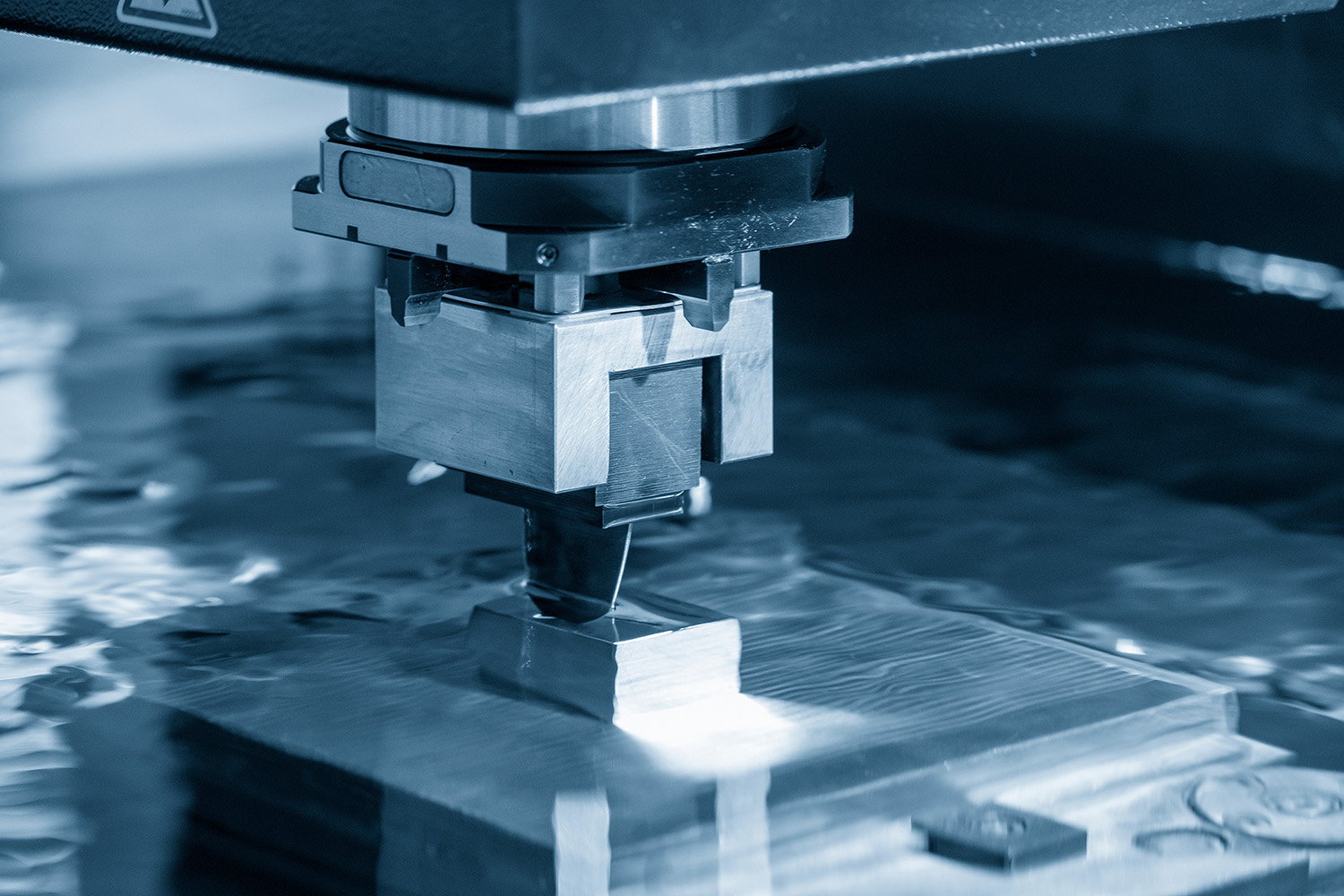
Simply put, EDM machines workpieces using a mechanism similar to lightning discharge. However, unlike lightning generated in the atmosphere, EDM generates electrical discharge in a liquid.
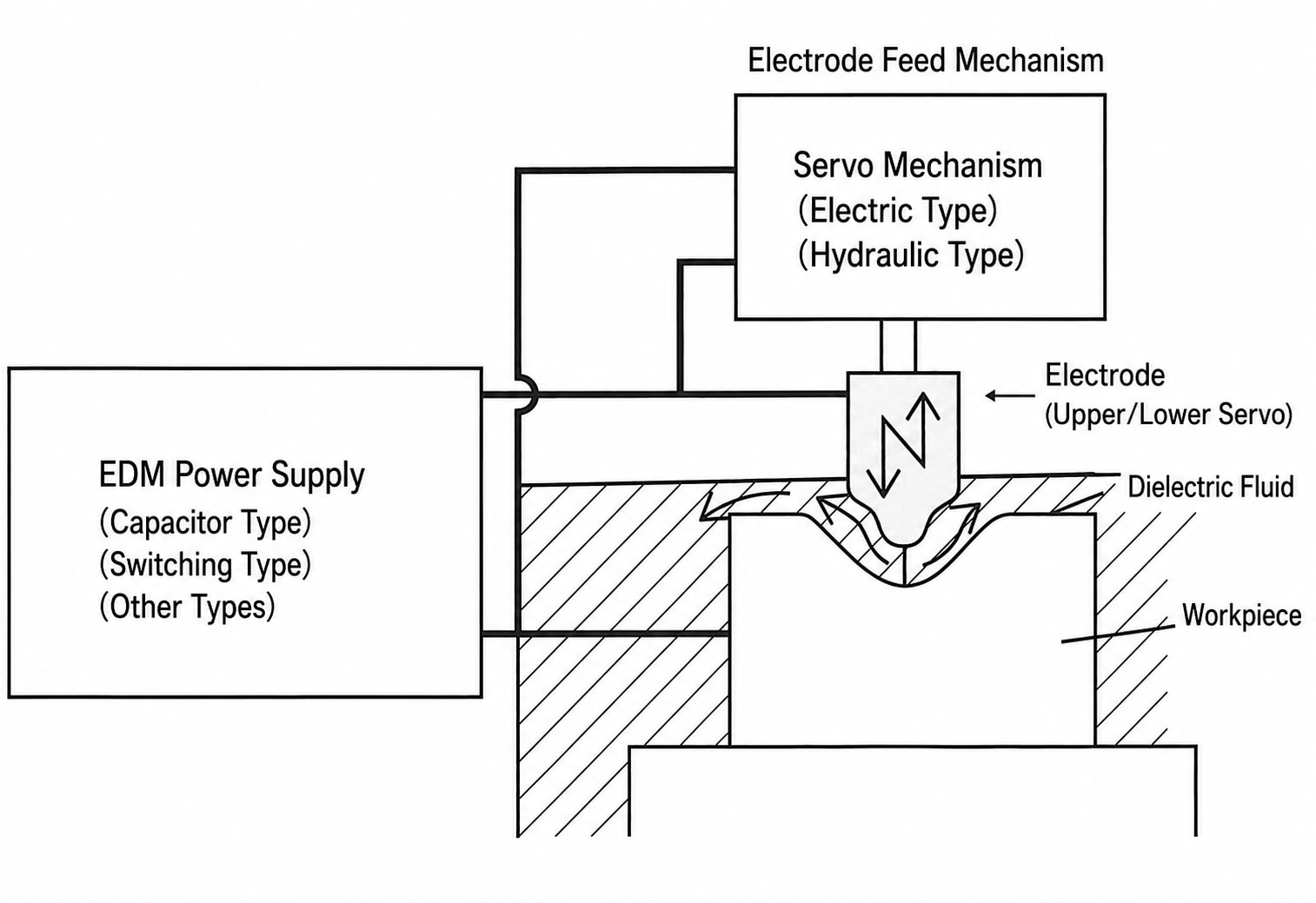
Inside a highly insulating dielectric fluid, small lightning-like discharges are repeatedly generated between a tool called an electrode and the workpiece. The heat generated by this electrical energy gradually machines the workpiece.
Because EDM removes material by gradually vaporizing the workpiece, machining takes longer compared to cutting processes. Therefore, for materials that can be machined conventionally, cutting is generally faster.
However, EDM is generally unaffected by material hardness as long as the material is electrically conductive. This makes it highly effective for machining difficult-to-cut high-hardness materials such as cemented carbide and hardened steel. On the other hand, non-conductive materials such as glass and highly insulating ceramics cannot be machined.
In addition, machining deep grooves or deep small-diameter holes by cutting requires long overhang cutting tools, which increases the risk of tool breakage and makes machining difficult. In contrast, EDM does not involve contact between the electrode and the workpiece, allowing deep grooves and deep holes to be machined without concern for tool breakage.
2. Principles of EDM
EDM operates through the following process:
(1) The electrode is brought within several μm to several tens of μm of the workpiece
(2) Arc discharge is generated between the electrode and the workpiece
(3) The heat from the arc discharge slightly melts and vaporizes part of the workpiece
By repeatedly performing steps (1) to (3), machining progresses gradually.
Arc discharge is a type of electrical discharge phenomenon occurring in gas, characterized by extremely high temperatures and intense light emission. Because the temperature is high enough to melt metal, it is also used in welding.
When the electrode and workpiece are brought within a certain distance, a phenomenon called dielectric breakdown occurs. Dielectric breakdown is a phenomenon in which an insulating material loses its insulating properties and allows a large current to flow when a voltage above a certain threshold is applied. This dielectric breakdown triggers arc discharge.
The principle of EDM was invented in the 1940s during World War II by the Lazarenko couple of the Soviet Union (present-day Russia). After the war, research also began in Japan, and domestically produced EDM machines were developed in the early 1950s.
In EDM, not only is part of the workpiece removed, but the electrode itself also wears down. When EDM was first invented, electrode wear was significant, limiting its applications mainly to drilling. However, technologies to reduce electrode wear improved machining accuracy and expanded its range of applications.
Automated workpiece centering and positioning
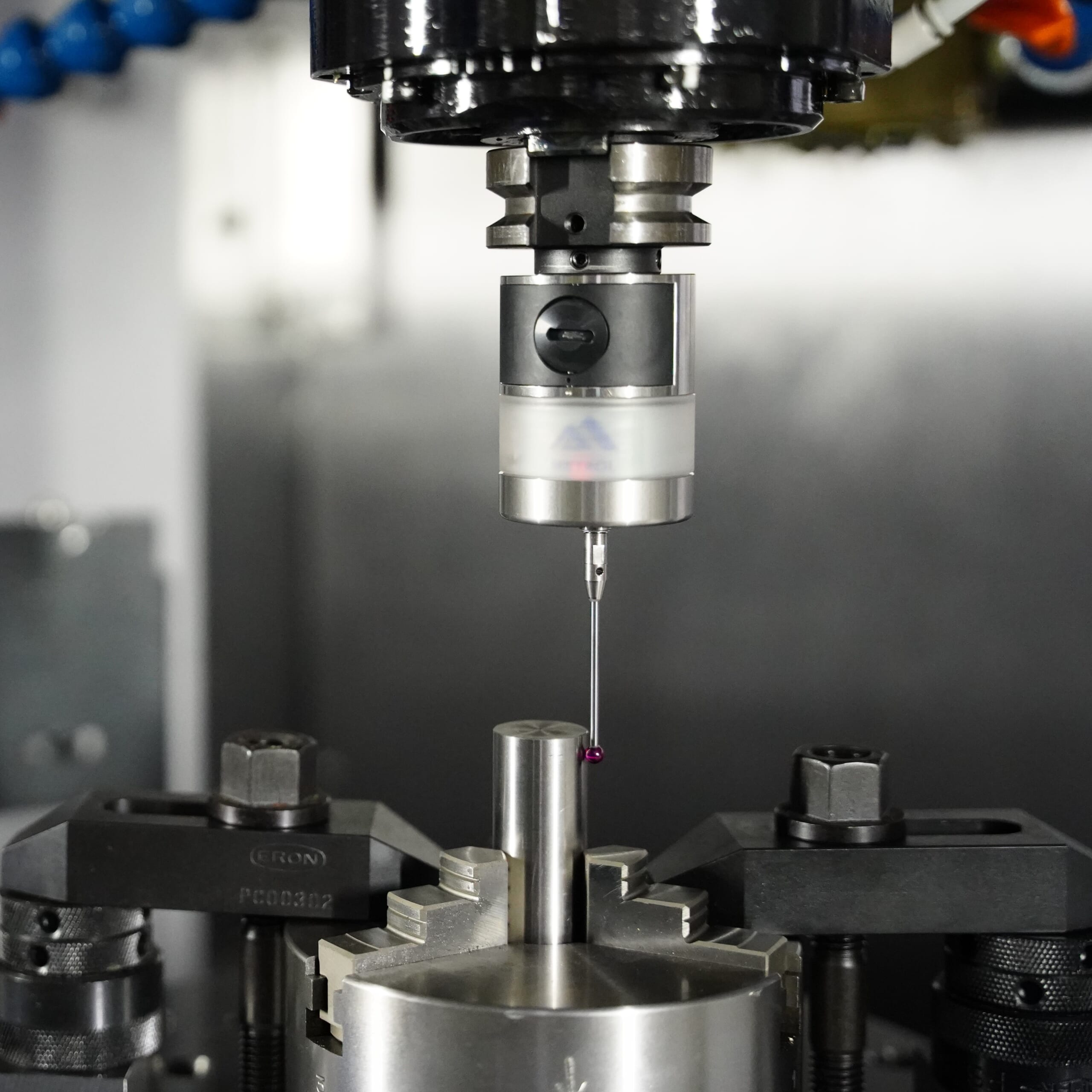
- Touch probe -
A contact/touch sensor for on-machine measurement that improves the efficiency of setup work
Click here ›3. Components of EDM
EDM requires several essential components, including (1) electrodes, (2) dielectric fluid, and (3) a power supply.
(1) Electrodes
Electrodes are mainly made from copper, brass, or graphite composed of carbon. EDM machines are broadly classified into sinker EDM machines and wire EDM machines. In sinker EDM machines, copper and graphite are commonly used as electrode materials.
An electrode shaped as the inverse of the desired workpiece geometry must be manufactured in advance. Since the electrode itself is machined using cutting tools, the material must also offer good machinability.
In addition, electrodes are required to have high thermal conductivity so that only the workpiece can be efficiently removed. Thermal conductivity is an indicator of how easily heat is transferred, and higher thermal conductivity allows heat to dissipate more quickly.
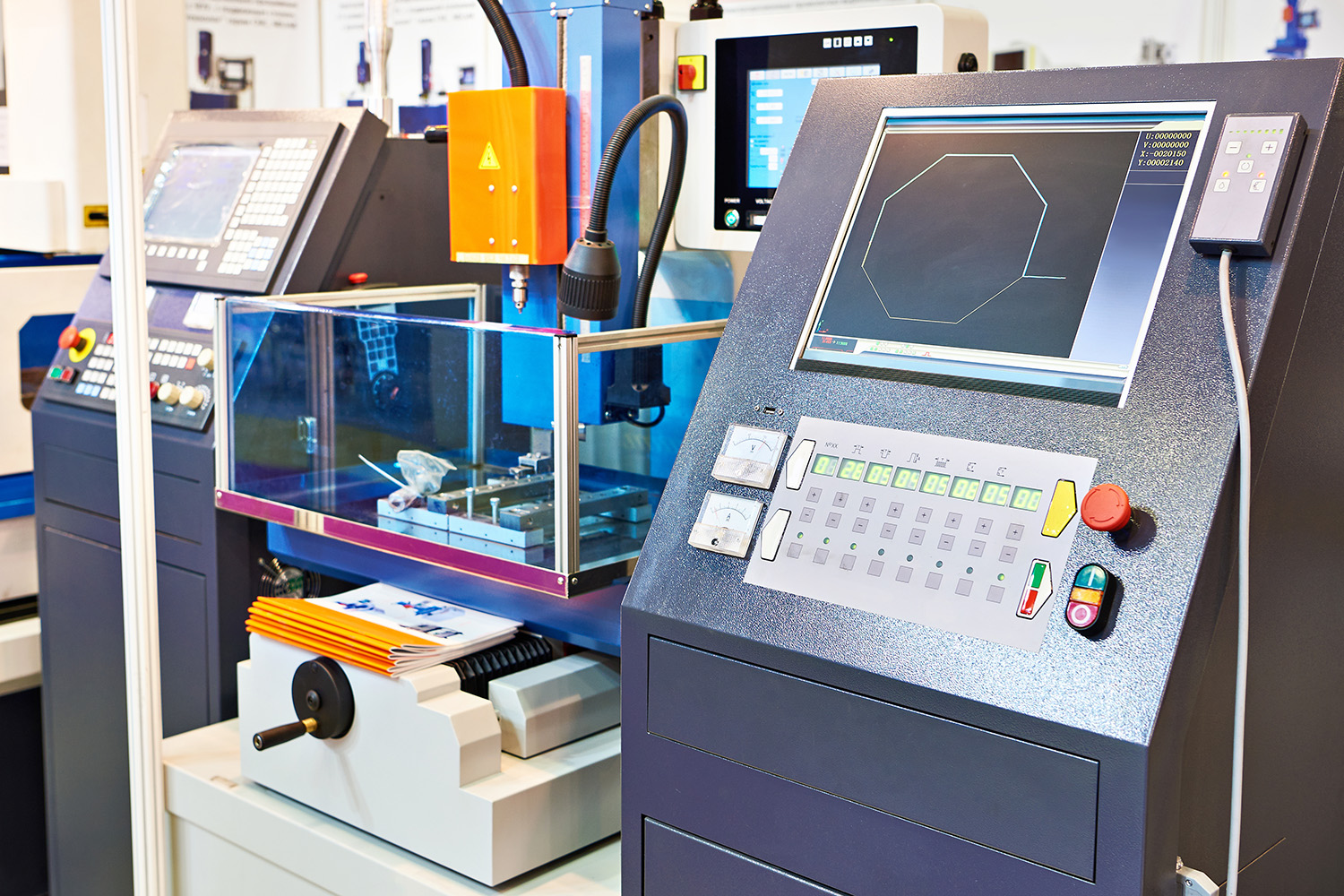
Copper, which is commonly used for electrodes, has a relatively low melting point and melts easily. However, because it has high thermal conductivity, heat can dissipate before the material melts significantly. Even so, electrodes do not remain completely unworn and gradually wear down over time.
Graphite has lower thermal conductivity than copper, but its sublimation temperature (the temperature at which it changes directly from solid to gas) is much higher than the melting point of copper.
In wire EDM machines, the wire used as the electrode is disposable, so electrode wear is less of a concern. Tensile strength and discharge characteristics are prioritized, and brass is commonly used as the wire material.
(2) Dielectric Fluid
There are two main types of dielectric fluid: oil and deionized water with ions removed. Each has its own advantages and disadvantages. Sinker EDM typically uses oil. Wire EDM, on the other hand, uses either deionized water or oil. Deionized water offers higher machining speed and lower operating cost, whereas oil makes it easier to achieve high precision and a superior surface finish.
(3) Power Supply
EDM also requires a power supply to provide electric current. Instead of a DC power supply, a pulse power supply is used. A pulse refers to current generated for an extremely short period and repeated at fixed intervals. EDM advances machining through this pulsed arc discharge process.
The heat generated by arc discharge causes vapor explosions in the dielectric fluid. As a result, microscopic craters are formed on the workpiece surface. These craters are called discharge marks, and the accumulation of these marks gradually removes material from the workpiece.
The size of the discharge marks is determined by the discharge conditions, including current value and pulse width. Larger current values and longer pulse intervals create larger discharge marks.
Automated workpiece centering and positioning
- Touch probe -
A contact/touch sensor for on-machine measurement that improves the efficiency of setup work
Click here ›Types of EDM Machines
An EDM machine is a machine tool that machines workpieces using arc discharge. It is one of the representative machine tools that operates on principles different from cutting and grinding processes.
EDM machines can be classified into several types, with sinker EDM machines and wire EDM machines being the most representative. The term EDM comes from the English name “Electric Discharge Machine.”
1. Sinker EDM Machines
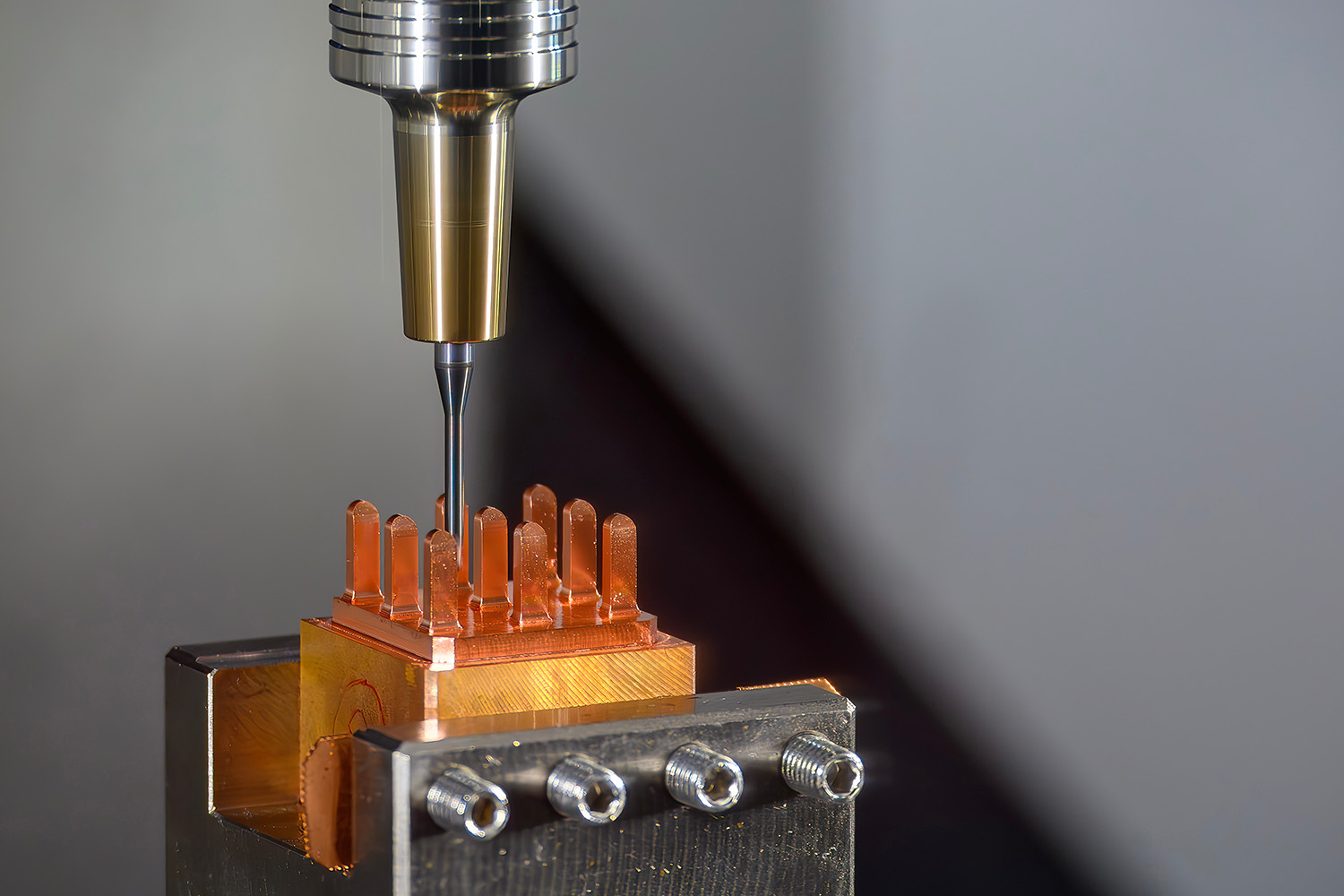
A sinker EDM machine uses an electrode shaped as the inverse of the geometry to be machined.
It can precisely transfer the electrode shape to the workpiece. Pulsed discharge lasting from 1/1,000 second to 1/1,000,000 second is generated between the workpiece and the electrode to finish the workpiece into the desired shape.
The electrode must be machined in advance using cutting tools, but once the electrode is prepared, even complex machining can be performed easily. However, electrodes wear down during use, so multiple electrodes may be prepared as needed. Copper and graphite are often used because they resist wear and can be machined into precise shapes.
Machining square blind holes and small holes in precision parts is an area where sinker EDM machines excel.
Unlike cutting, EDM does not apply large forces to the electrode or workpiece during machining, so even thin plates can be machined with high accuracy without distorting the machined surface.
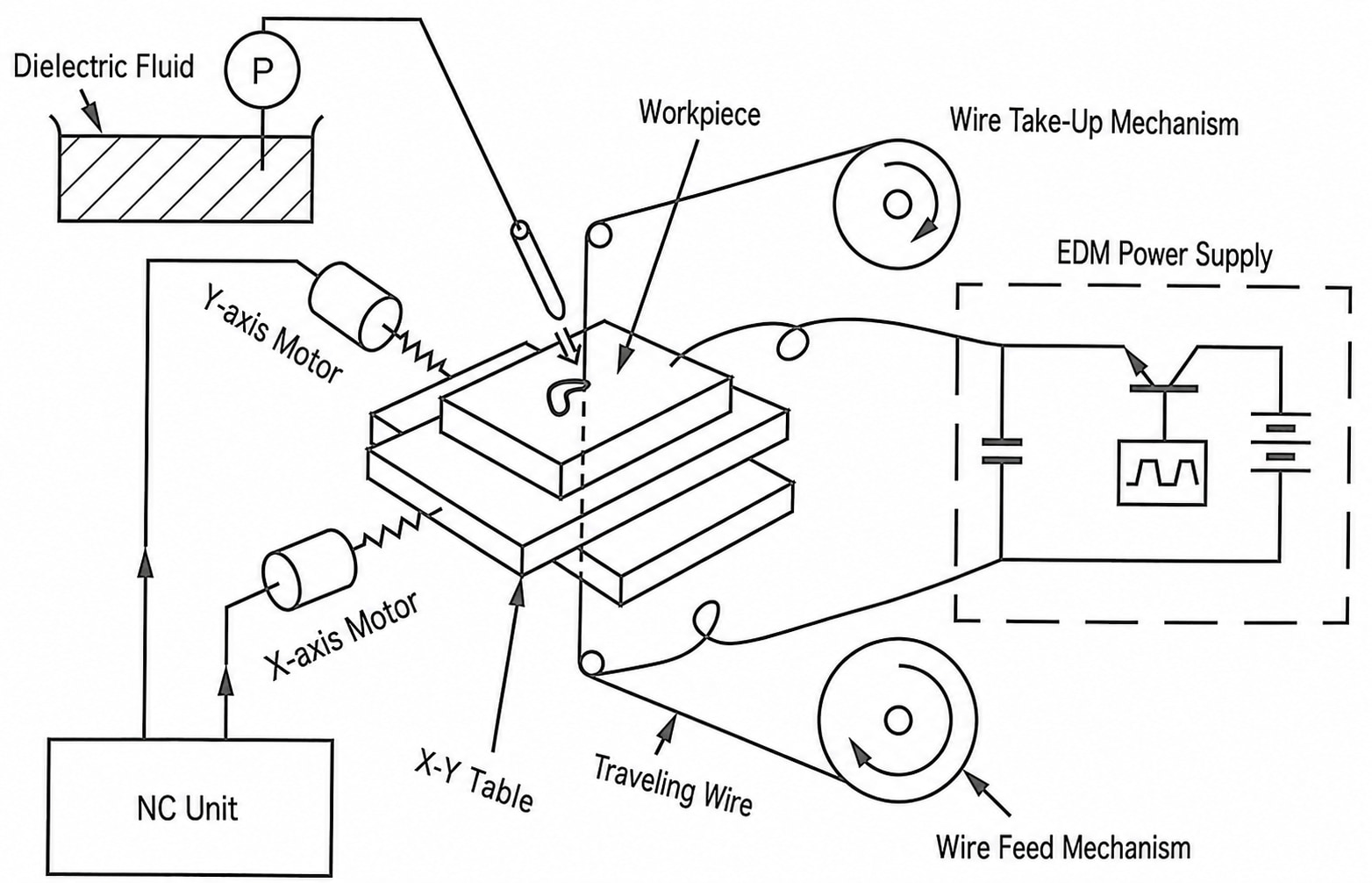
A sinker EDM machine mainly consists of:
(1) spindle for mounting the electrode
(2) table for holding the workpiece
(3) machining tank for holding dielectric fluid such as oil
(4) power supply unit
(5) bed
(6) column
An NC sinker EDM machine, which controls the movement of the table and spindle using numerical data, also includes an NC unit.
Because an NC sinker EDM machine can control multiple axes simultaneously, it can easily machine complex shapes such as three-dimensional geometries.
One factor that affects the machining efficiency of a sinker EDM machine is the magnitude of the current.
EDM machine manufacturers are focusing on developing high-capacity power supply units to meet the demand for high-speed machining.
Machining debris is one factor that interferes with machining. For this reason, a jump function, which moves the electrode up and down in small increments to quickly remove machining debris, also helps improve machining efficiency. Recently, manufacturers have proposed high-acceleration jump functions that improve debris removal while also reducing non-machining time.
There is also a machining technique called orbital machining, in which the electrode is moved while being oscillated. With orbital machining, the discharge point moves, making it easier to remove machining debris and enabling more efficient machining.
In addition, demand for automation in machining sites has been increasing recently, and automated systems that combine sinker EDM machines with stockers for storing workpieces and electrodes are also attracting attention.
2. Wire EDM Machines
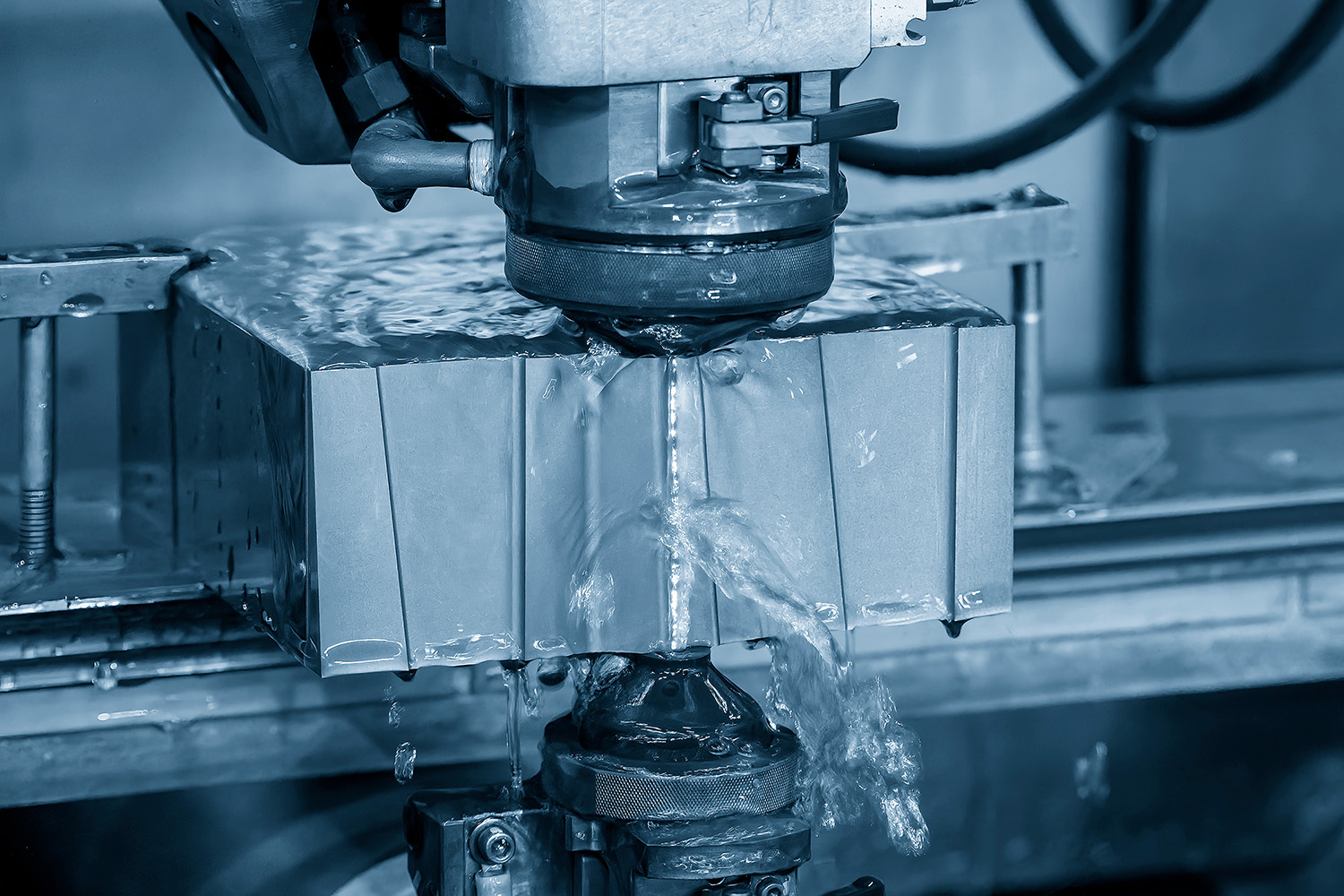
A wire EDM machine uses a thin wire as the electrode and machines the workpiece by generating discharge between the wire and the workpiece while winding the wire in one direction.
The process is similar to machining with a scroll saw.
It is mainly used for cutting shapes out of metal plates.
When performing wire EDM, it is often necessary to first machine a pilot hole through which the wire can pass.
Brass is mainly used for the wire, with diameters of 0.1 to 0.3 mm being the mainstream. Discharge characteristics and tensile strength are especially important.
Because this is a wire-cut type EDM machine, it is also called WEDM, with the “W” added from “wire.” It is often used for mold and die-related machining, such as press blanking dies and extrusion dies.
A wire EDM machine mainly consists of:
(1) drive unit that feeds the wire electrode
(2) table
(3) dielectric fluid tank
(4) power supply unit
(5) bed
An NC wire EDM machine also includes an NC unit.
Deionized water is commonly used as the dielectric fluid. Therefore, a separate deionizing unit is also required to remove ions from the fluid. When extremely high accuracy is required, oil may also be used.
Wire EDM machines basically move along two planar axes, the X-axis and Y-axis, and are often used to cut plate material vertically.
However, 4-axis wire EDM machines have also been developed by adding two auxiliary axes, the U-axis and V-axis, to the X-axis and Y-axis. By moving four axes simultaneously, more complex shapes can be machined, such as tapered geometries and shapes that differ between the top and bottom.
Both sinker EDM and wire EDM can achieve high accuracy, but they require long machining times. For this reason, many EDM machine users seek safe nighttime operation, and interest in automation and unmanned operation is high.
As part of addressing these automation needs, wire EDM machines are equipped with automatic wire threading mechanisms.
An automatic wire threading mechanism automatically cuts the wire after machining is completed, moves the table to the next starting position, and automatically threads the wire.
The biggest obstacle to stable automatic machining is wire breakage during machining. As countermeasures, various technologies have been developed, including uniform discharge, discharge energy control, and wire tension control.
3. Small-Hole EDM Machines
Small-hole EDM machines are EDM machines that excel at machining small-diameter holes. They are used to machine pilot holes before wire EDM and air vent holes in molds and dies.
They are also suitable for drilling holes in aircraft parts, turbine components, and various nozzles that require heat resistance and wear resistance. Because the process does not machine by contacting the workpiece like a drill, it can also handle micro-hole machining with diameters of 0.1 mm or less.
Its main features include:
(1) burrs are less likely to occur because machining uses fine electrical discharge
(2) deep holes with depths several hundred times the hole diameter can be machined
(3) commercially available brass or copper pipes can be used as electrodes
Because commercially available pipe electrodes can be used, costs are low, and the work required to manufacture electrodes, as in sinker EDM, can also be eliminated.
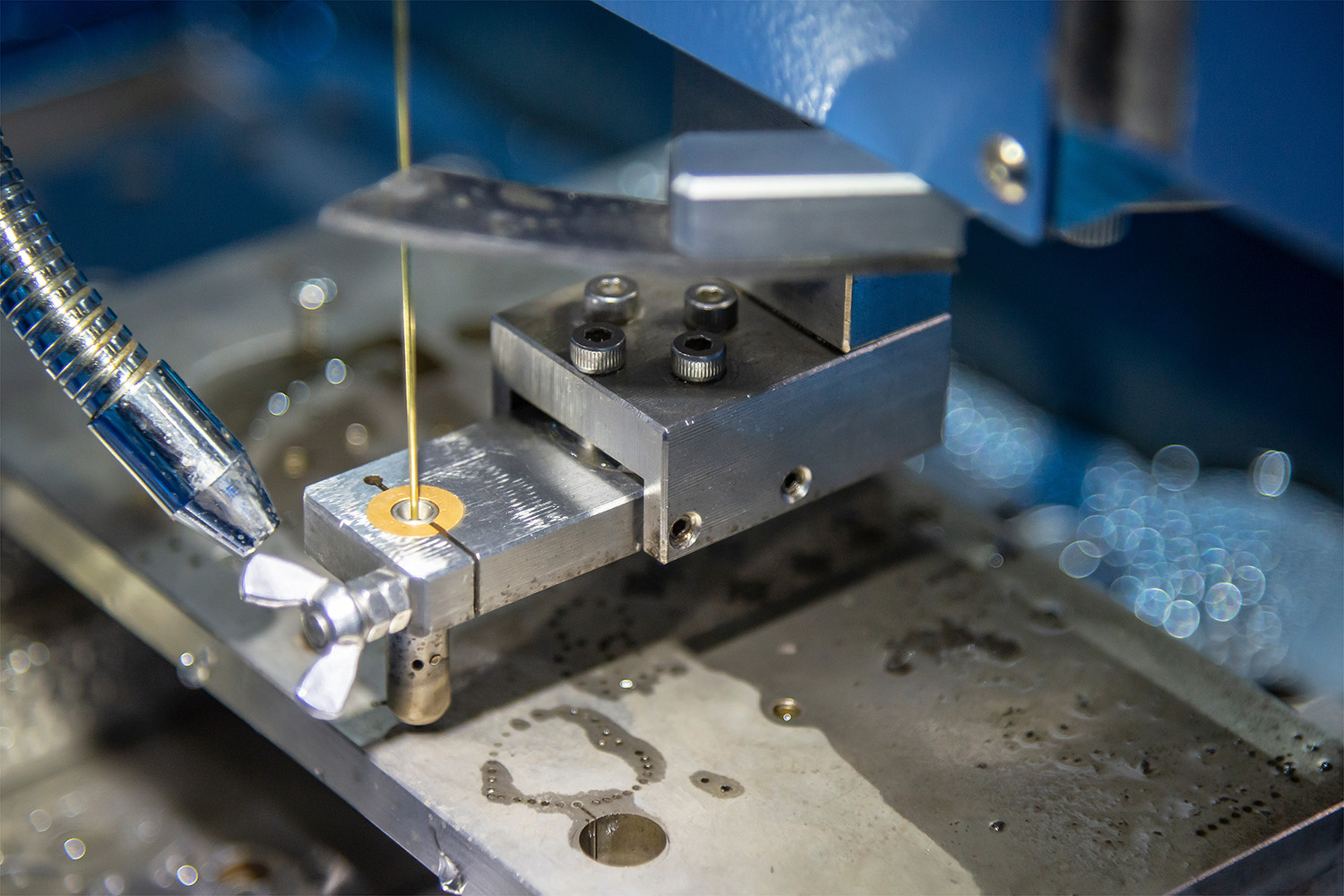
Another type of machine that uses commercially available pipe electrodes, like small-hole EDM machines, is a contouring EDM machine. It machines the workpiece by moving a pipe electrode along the contour of the workpiece.
Source: "Hajimete no Kousaku Kikai"
Automated workpiece centering and positioning
- Touch probe -
A contact/touch sensor for on-machine measurement that improves the efficiency of setup work
Click here ›[Video]
【Must-Have for CNC Users!】Wireless 3D Touch Probe RC-K3X
Related Articles
What Are Machine Tools? A Clear and Easy-to-Understand Explanation of Their Types and Features
Machine tools produce parts used in many everyday products and are indispensable in manufacturing sites.
This article classifies machine tools into representative categories and introduces the major machine tools that play a central role in machining operations.