What Is a 5-Axis Machining Center? An Easy-to-Understand Guide to Its Types and Features
Key Points
- A machining center equipped with three linear axes plus two rotary axes
- Two machining methods: indexed 5-axis and simultaneous 5-axis machining
- Capable of machining complex workpiece geometries
Source: "Hajimete no Kousaku Kikai"
Table of Contents
What Is a 5-Axis Machining Center?
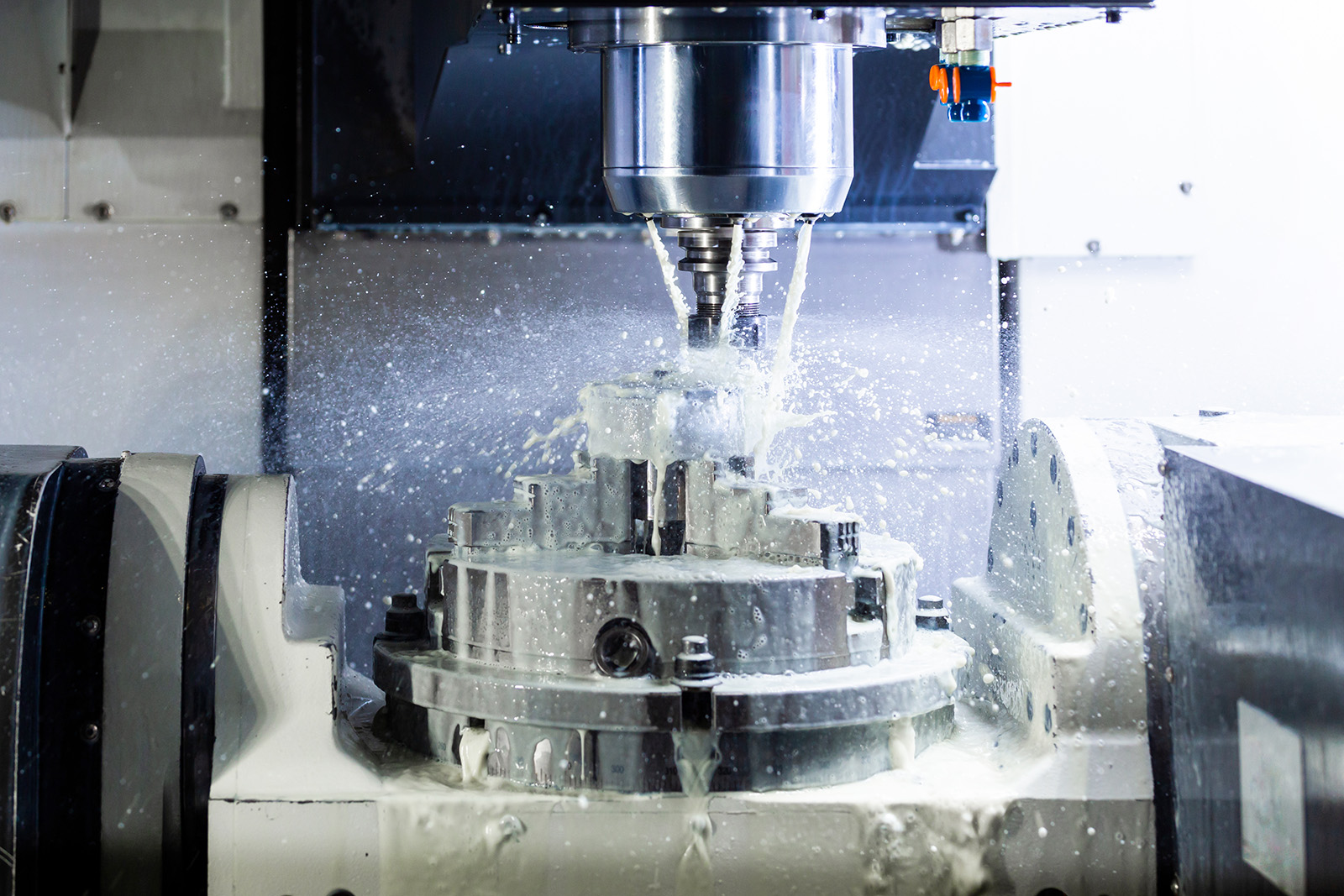
A 5-axis machining center (MC) is a machining center equipped with two additional rotary axes in addition to the three linear axes: X, Y, and Z. Since a total of five axes can move simultaneously, it is called a "5-axis" machine.
The rotary axes are generally referred to as the A-axis, B-axis, and C-axis. Rotation around the X-axis is called the A-axis, around the Y-axis the B-axis, and around the Z-axis the C-axis. A 5-axis machining center consists of the three linear axes combined with any two of these rotary axes.
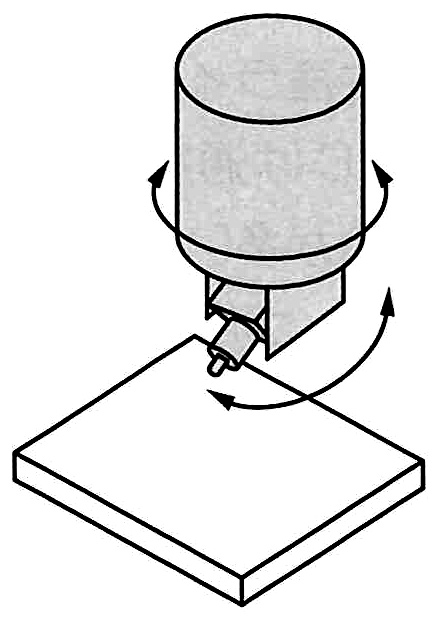
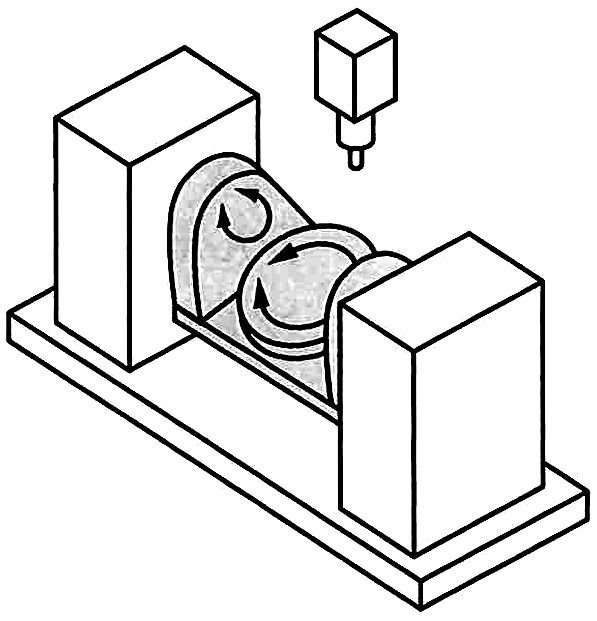
Depending on the combination of rotary axes, 5-axis machining centers are classified into three types: (1) swivel-head type, (2) rotary-table type, and (3) hybrid type.
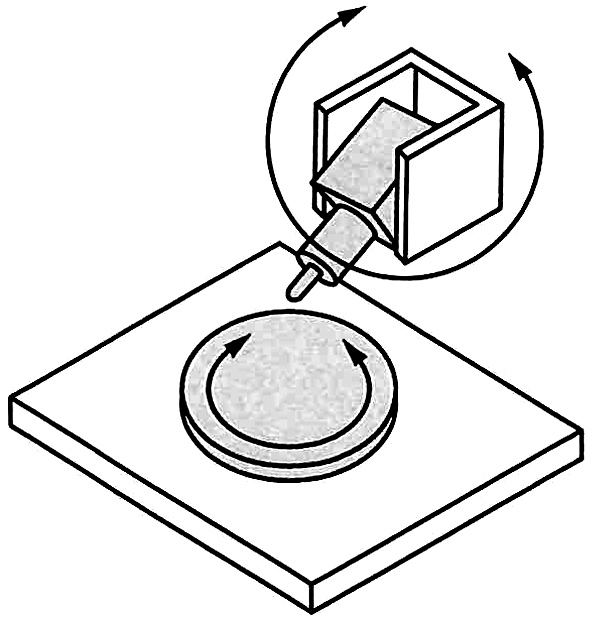
The swivel-head type is a 5-axis machining center with two rotary axes added to the spindle side where the cutting tool is mounted. This type is particularly effective for machining relatively large workpieces.
The rotary-table type is a 5-axis machining center in which the rotary axes are added to the table side that holds the workpiece rather than to the spindle side. This structure is commonly found in compact 5-axis machining centers. It can be divided into two configurations: cradle type and cantilever type. The cradle type supports and tilts the rotating table from both sides and is also known as the "trunnion type." The cantilever type supports and tilts the rotary table from only one side.
The hybrid type is a 5-axis machining center with one rotary axis added to the spindle side and another added to the table side.
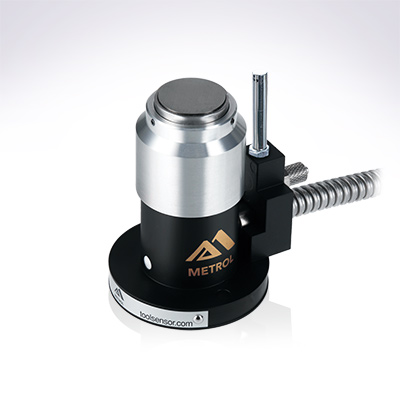
Automates originating of cutting tools
- Tool Setter -
Tool length and chips are monitored to prevent machining defects due to wear and thermal displacement
Click here ›Types of 5-Axis Machining
5-axis machining can generally be divided into two categories: (1) indexed 5-axis machining and (2) simultaneous 5-axis machining.
1. Indexed 5-Axis Machining
Indexed 5-axis machining refers to machining performed using the standard three linear axes after positioning the spindle side or table side at a specific angle using two rotary axes. "Indexing" means accurately rotating the rotary axis to the desired angle.
Features such as angled holes, which are difficult to machine with a standard 3-axis machining center unless special jigs are used, can be machined easily by tilting the spindle or table in advance.
2. Simultaneous 5-Axis Machining
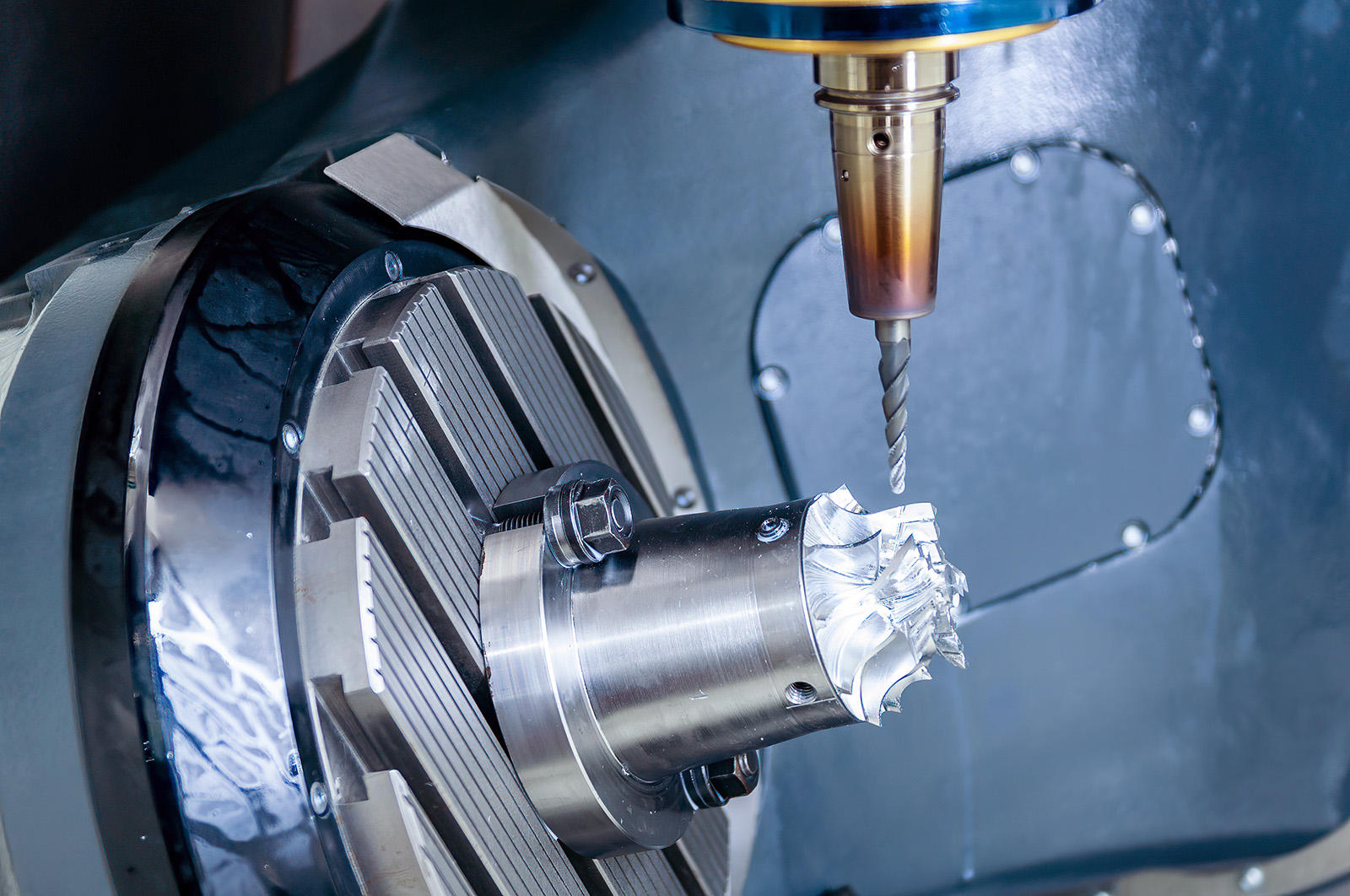
Simultaneous 5-axis machining involves moving all five axes simultaneously during machining. Its major advantage is the ability to machine complex geometries that are difficult to produce with a 3-axis machining center.
For example, pumps and aircraft engines use components called impellers. An impeller is a rotating component with many smoothly curved blades mounted around a shaft, similar in shape to fan blades.
When the spindle or tool holder collides with the workpiece during machining, it is referred to as interference. Since linear machining with a 3-axis machining center can easily cause interference, machining impellers is extremely difficult using only 3-axis processing.
In contrast, simultaneous 5-axis machining continuously adjusts the spindle and table angles during processing, allowing complex components such as impellers to be machined without interference.
Advantages of 5-Axis Machining
5-axis machining offers many advantages. One of the greatest benefits is the ability to machine up to five sides of a workpiece with a single setup.
When machining five sides using a 3-axis machining center, the workpiece must be repositioned multiple times. This process is called setup changeover. Because a 5-axis machining center greatly reduces the number of setup changes, machining efficiency is significantly improved compared to a 3-axis machine. It also eliminates the need for additional jigs for repositioning, helping reduce production costs.
Repeated setup changes can introduce positioning errors when mounting the workpiece. By minimizing setup changes, 5-axis machining reduces mounting errors and improves machining accuracy.
Another advantage of 5-axis machining is that it allows the use of shorter tool overhang lengths.
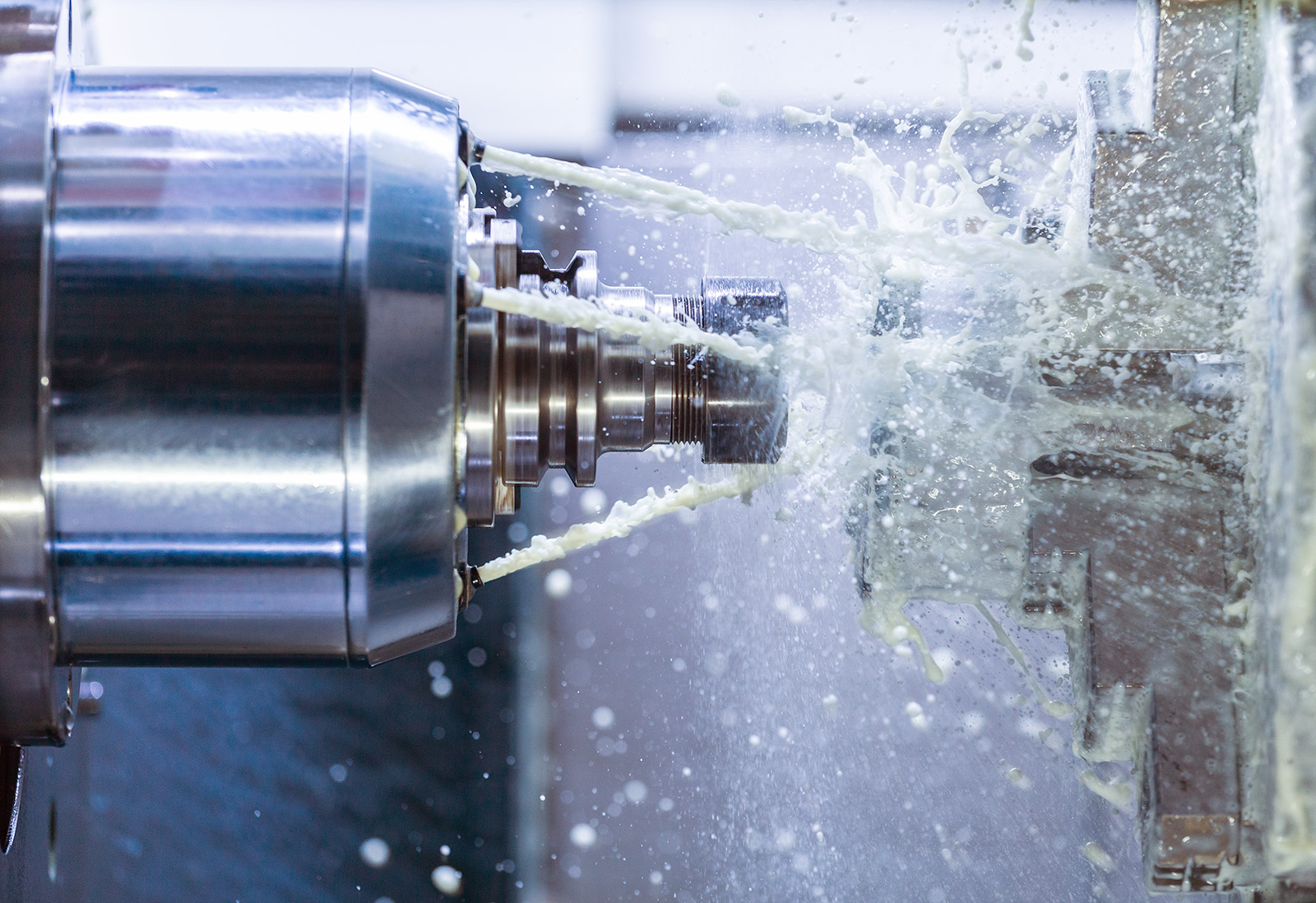
With a 3-axis machining center, machining deep areas with large height differences often requires a long tool overhang to avoid interference between the spindle, tool holder, and workpiece.
However, longer tool overhang increases the likelihood of tool deflection and vibration during machining, which can negatively affect surface finish quality and dimensional accuracy.
In contrast, a 5-axis machining center can tilt the spindle or table during machining, enabling deep areas to be machined using shorter tools while maintaining high machining accuracy.
Although 5-axis machining offers many advantages, it also presents several challenges.
First, controlling five axes requires more advanced control technology than 3-axis machining. In addition, because tool path programming becomes more complex as the number of axes increases, high-performance CAM software is essential. CAM software is used to generate NC programs for machining operations.
Another issue is the increase in "cumulative error," which results from the accumulation of small errors in each axis.
To address these challenges, machine tool manufacturers developing 5-axis machining centers are focusing on improving machining accuracy and control technologies. They are also working to improve usability, including more efficient program generation.
Source: "Hajimete no Kousaku Kikai"
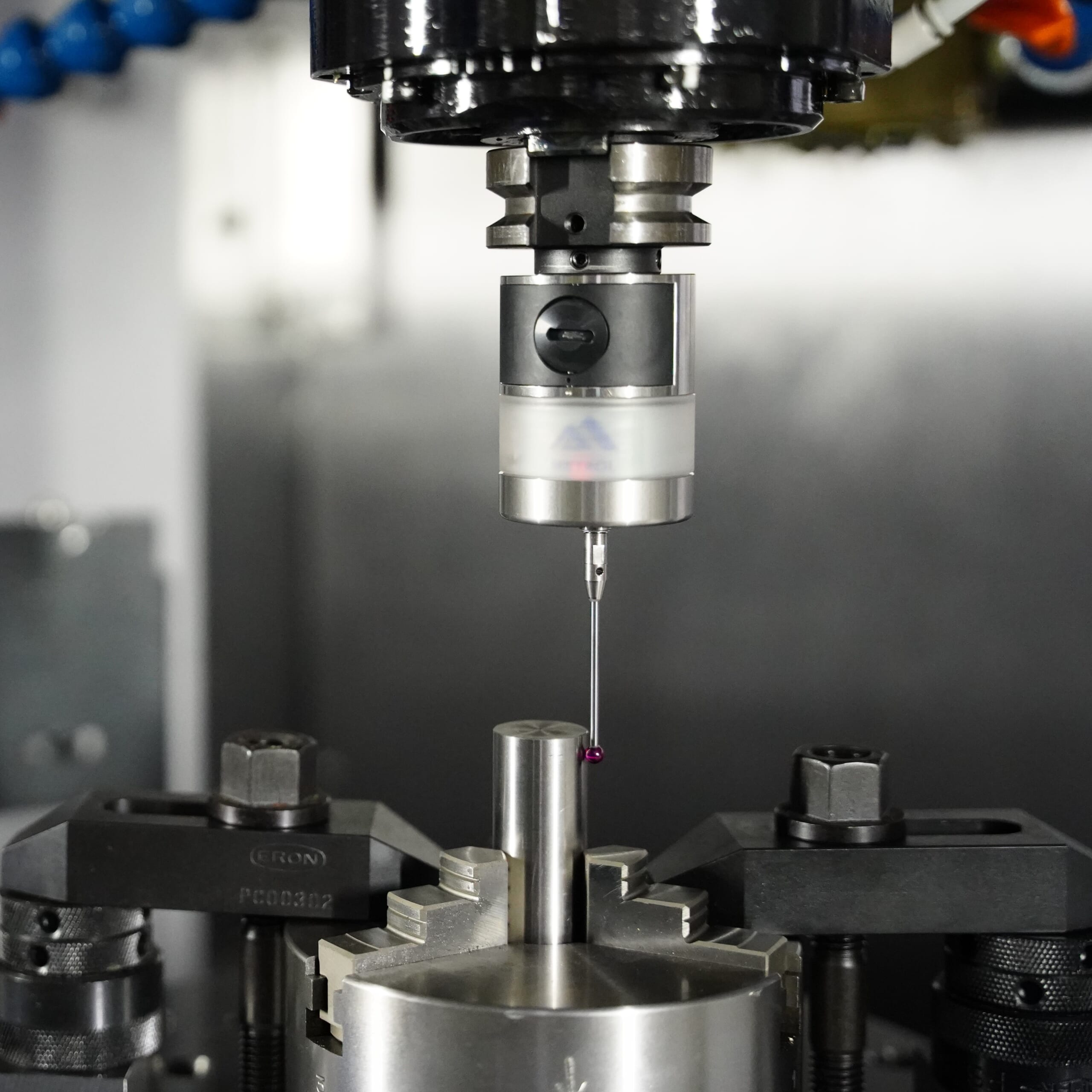
Automated workpiece centering and positioning
- Touch probe -
A contact/touch sensor for on-machine measurement that improves the efficiency of setup work
Click here ›Sensor Implementation Case Study
Shank adhesion confirmation realizes ultra-precise machining
An ATC design engineer from a machine tool manufacturer that produces machining centers consulted us regarding verification of proper shank seating.
By installing an air micro sensor in the tool changer of a CNC machining center, it became possible to detect a 10 μm gap caused by chips trapped between the shank and the tool holder.
[Video]
【Must-Have for CNC Users!】Wireless 3D Touch Probe RC-K3X
Related Articles
What Are Machine Tools? A Clear and Easy-to-Understand Explanation of Their Types and Features
Machine tools produce components used in a wide variety of everyday products and are indispensable in manufacturing environments.
This article categorizes machine tools into major groups and introduces the primary machine tools used in machining operations.