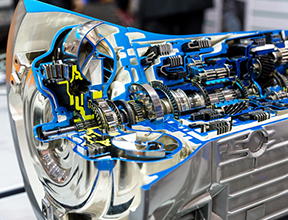
What Is a Dedicated Machine? An Easy-to-Understand Guide to Its Types and Features
Key Points
- Machines and units designed specifically for particular machining operations
- Transfer machines widely used mainly in the automotive industry
- The overall performance of a dedicated machine depends heavily on the quality of its units
Source: "Hajimete no Kousaku Kikai"
Table of Contents
What Is a Dedicated Machine?
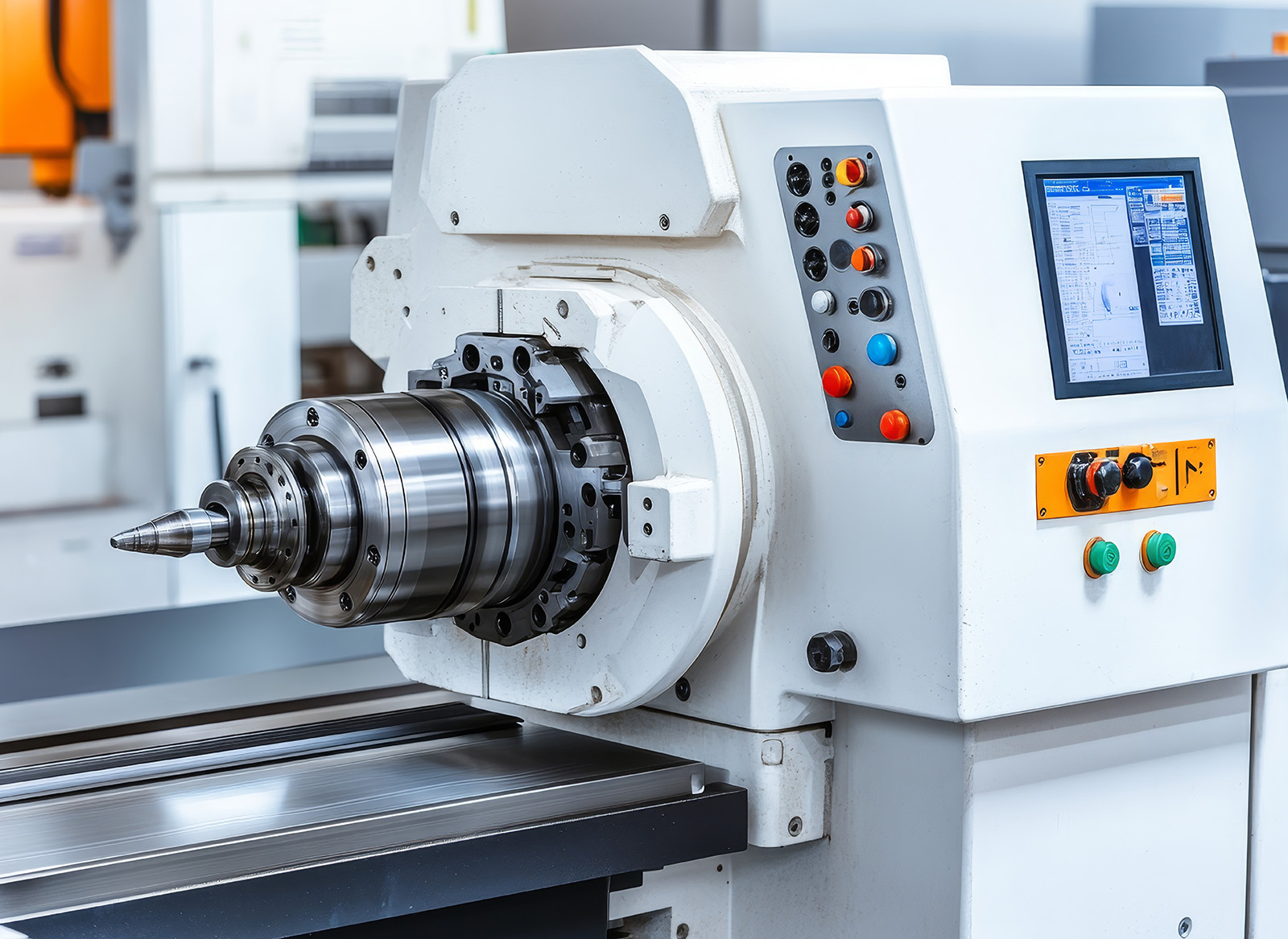
A dedicated machine is a machine tool specifically designed and manufactured for machining a particular workpiece or performing a specific machining process.
Industrial production can be categorized into high-mix low-volume production and mass production, depending on the number of product types and production volume.
Dedicated machines excel in mass-production machining. However, because they are designed for specific operations only, major specification changes and modifications are required when the workpiece shape changes due to product redesigns or model changes. While highly productive, they are not well suited to sudden design changes.
In contrast, high-mix low-volume production involves frequent setup changes, so general-purpose machines capable of handling a wide range of machining operations are often used. Setup change refers to the preparation work required when switching production from one workpiece to another.
Historically, the term “general-purpose machine” referred to non-NC machines. Today, however, it is more commonly used as a general term for standard machine tools sold by manufacturers, such as machining centers (MCs) and NC lathes. As the name implies, these machines can process various workpieces on a single machine and offer high versatility, making them more adaptable to sudden design changes.
As consumer needs diversify, product model cycles are becoming shorter across many industrial products. Even in the automotive industry, which traditionally focused on mass production, manufacturing is gradually shifting toward high-mix low-volume production. As a result, machining equipment is also trending away from dedicated machines toward more general-purpose machines.
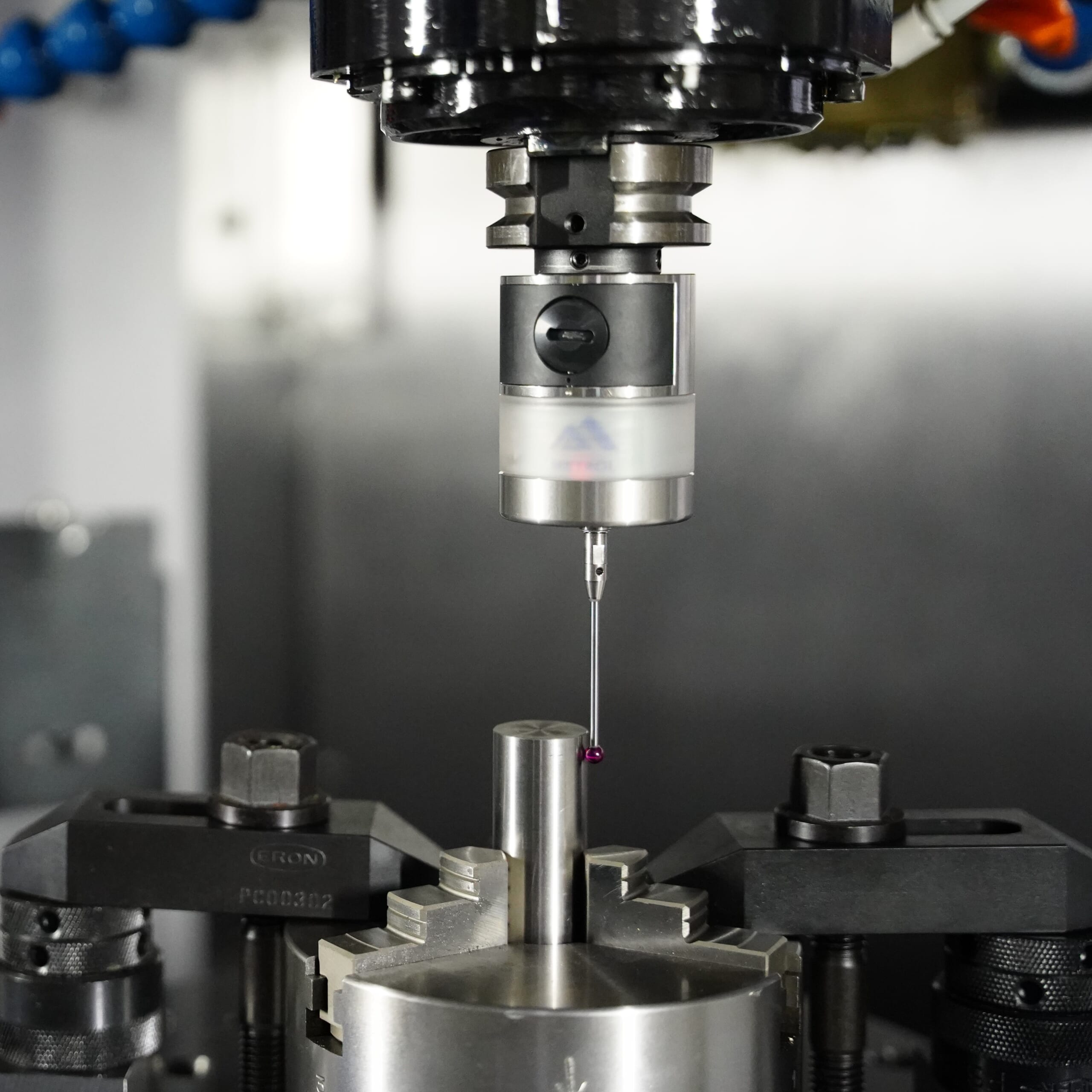
Automated workpiece centering and positioning
- Touch probe -
A contact/touch sensor for on-machine measurement that improves the efficiency of setup work
Click here ›Types of Dedicated Machines
Dedicated machines are classified into single-function (single-station) dedicated machines and composite (multi-station) dedicated machines, depending on the number of machining stations. A machining station is the area where the workpiece is actually machined.
1. Single-Function Dedicated Machines
A single-function dedicated machine fixes the workpiece in one position while the machining unit advances to process it. These machines are often automated with transfer devices and workpiece loading/unloading systems.
2. Composite Dedicated Machines
This is a general term for dedicated machines that combine multiple machining stations, measurement units, cleaning systems, transfer devices, and other equipment. Among them, machines that arrange multiple machining stations in a straight line and connect them using a transfer device that sequentially moves workpieces are called transfer machines.
Transfer machines were originally developed by American automobile manufacturers to improve engine machining efficiency. They are still widely used today, especially in the automotive industry.
Transfer machines are classified into linear and rotary types based on how workpieces move through the machining stations. Linear types transport workpieces in a straight line for machining.
Rotary types place workpieces on an indexing rotary table positioned at the center, with machining units arranged around the outer circumference. Machining is completed during one full rotation of the table.
3. Line-Compatible MCs
A production line that achieves high productivity while maintaining flexibility for design changes is called an FTL, short for Flexible Transfer Line. A Flexible Manufacturing System (FMS) provides even greater flexibility for design changes than an FTL. Generally, FTLs are suitable for medium-mix medium-volume production, while FMSs are better suited for high-mix low-volume production.
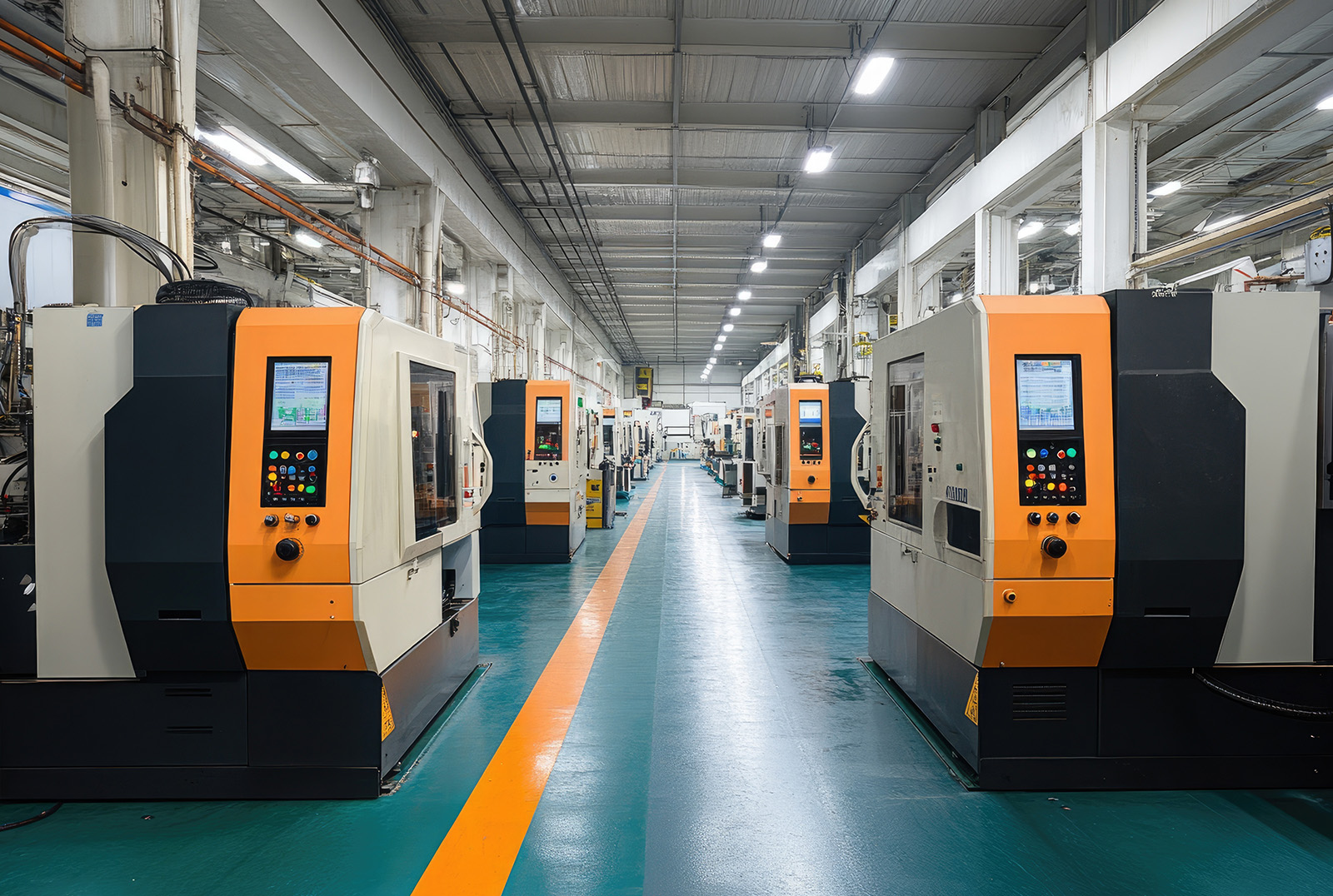
Line-compatible MCs incorporated into FTLs and similar systems differ structurally from standard MCs. In a typical MC, the table holding the workpiece often moves. In contrast, a line-compatible MC keeps the table fixed while the column moves forward/backward, left/right, and up/down. Also called a column-feed MC, this design offers advantages in chip disposal, accessibility to the workpiece, and ease of transfer between processes.
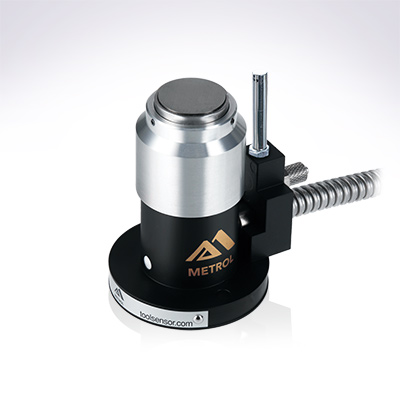
Automates originating of cutting tools
- Tool Setter -
Tool length and chips are monitored to prevent machining defects due to wear and thermal displacement
Click here ›What Are Units?
The overall performance of a dedicated machine depends greatly on the performance of the various units installed in the machine.
1. Spindle Units
A representative unit used in dedicated machines. It is a head unit that integrates the spindle head with a drive mechanism and motor. Its role is to rotate cutting tools mounted at the unit tip with high precision. Together with a feed unit that moves the unit to a specified position, it is mounted on the base of the dedicated machine.
Spindle units are classified into single-spindle heads and multi-spindle heads according to the number of spindles. Single-spindle heads are equipped with boring tools and milling tools, while multi-spindle heads are equipped with drills, taps, and reamers.
Here, “multi-spindle” refers to having multiple spindle shafts. It does not mean controlling multiple machine axes as in a 5-axis MC or multitasking machine, so care should be taken not to confuse the terms.
2. Boring Units
A unit used for boring operations such as rough boring and precision boring. Boring is a machining method that precisely enlarges a pre-drilled hole to achieve the required dimensional accuracy.
A boring unit has a simple structure in which a single shaft rotated by a motor is supported by bearings inside the unit body.
3. Drill Units
A unit used for drilling operations. It is available in single-spindle and multi-spindle types. In multi-spindle drill units, motor rotation is transmitted to a gearbox, where gears distribute power to multiple shafts for simultaneous rotation.
4. Feed Units
A unit that guides spindle units and other components to the required position. “Feed” refers to the feeding motion. It is also called a slide unit.
Feed units are broadly divided into two types: (1) hydraulic feed and (2) mechanical feed. Hydraulic feed uses hydraulic cylinders to move the unit to the desired position. Mechanical feed, on the other hand, mechanically moves the unit using ball screws and similar mechanisms.
5. Power Units
A power unit consists of a spindle unit and a feed unit. There are two types: quill type and slideway type.
In the quill type, the spindle itself moves forward and backward to perform the feed motion. The slideway type consists of a fixed slide surface and a sliding table that moves along it.
Source: "Hajimete no Kousaku Kikai"
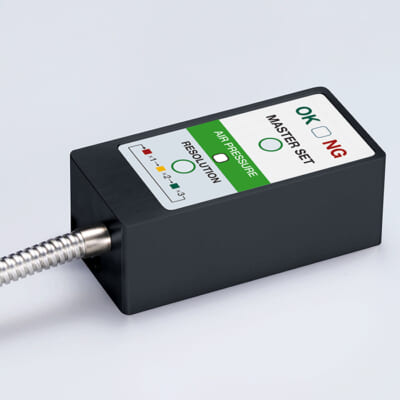
High-precision seating confirmation of workpiece and jig
- Air Gap Sensor -
You can check not only "presence/absence" but also "adhesion (gap)" at the same time with a repeatability of ±0.5 μm.
Click here ›Sensor Implementation Example
Consistent non-contact detection of 10μm float of shaft components
This case study features an automotive parts manufacturer producing special gears for a major automobile manufacturer.
A representative from the engineering department consulted us regarding “seating confirmation” of shaft parts for special gears during drilling operations.