What Is a Jig? An Easy-to-Understand Guide to Types and Features
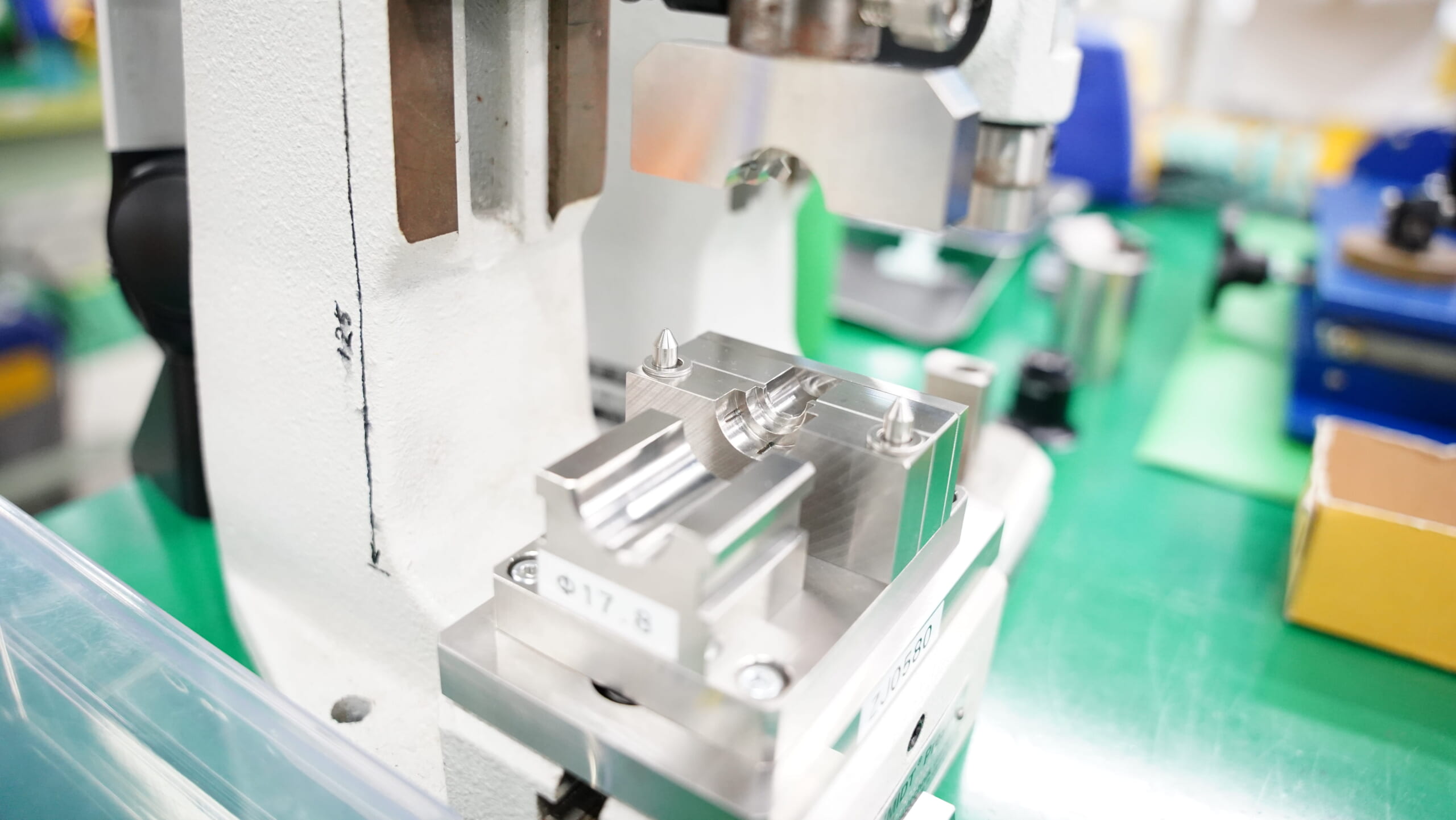
Table of Contents
What is a jig?
A jig is a dedicated device or fixture used in manufacturing and machining sites to hold parts in place or position them accurately.
It is especially indispensable where precision machining is required or when mass production is carried out, and its role is extremely important.
By using a jig, machines and operators can work stably without having to hold the part by hand, which improves accuracy and work efficiency while minimizing machining errors.
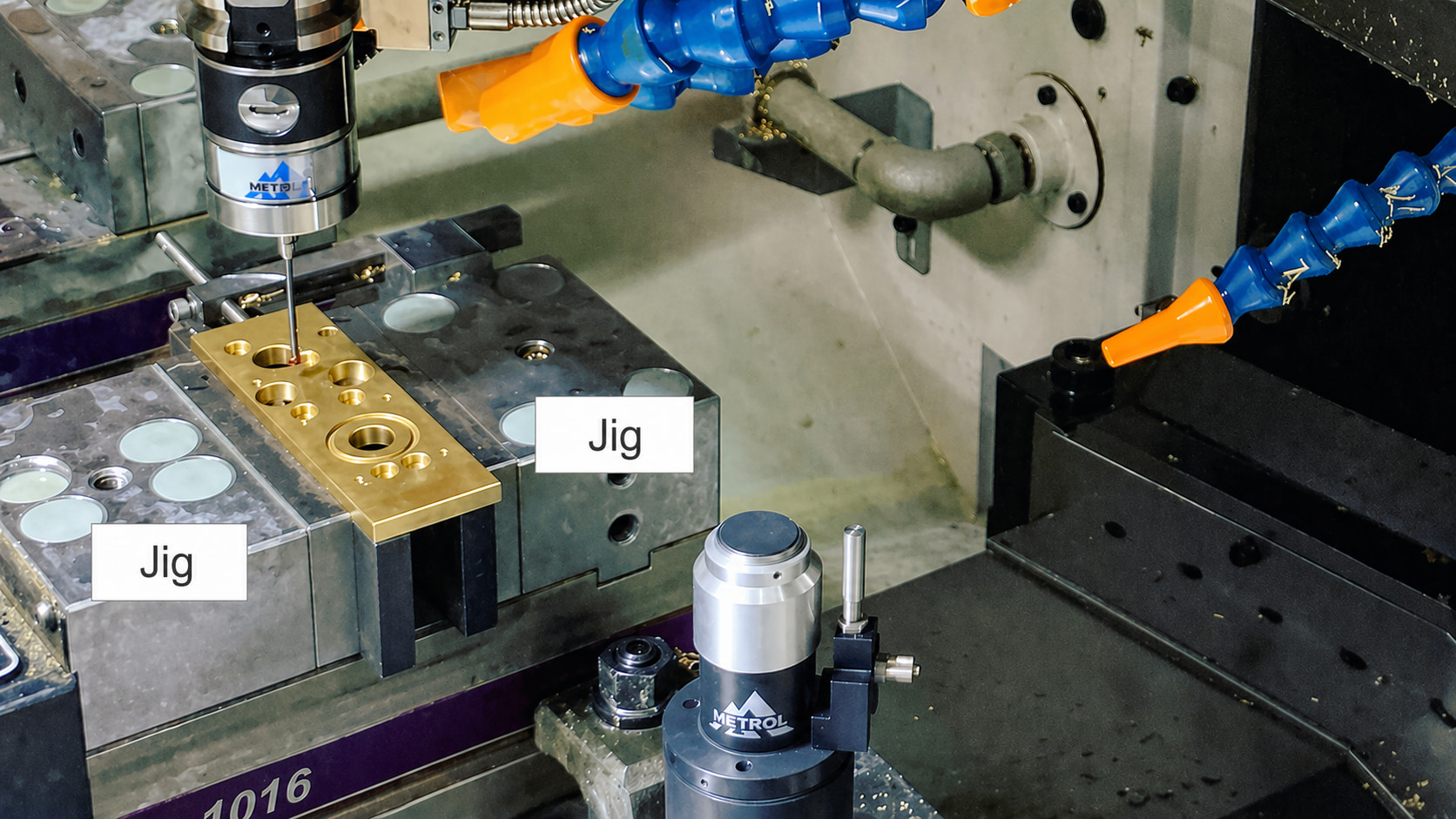
Jigs are used in a wide range of manufacturing processes, including drilling, welding, cutting, and assembly, and are essential elements in manufacturing. Their design varies depending on product specifications and required accuracy, ranging from jigs specialized for specific parts to more general-purpose designs. In many cases, jigs are designed to match specific machines and are customized to suit the needs of each production site.
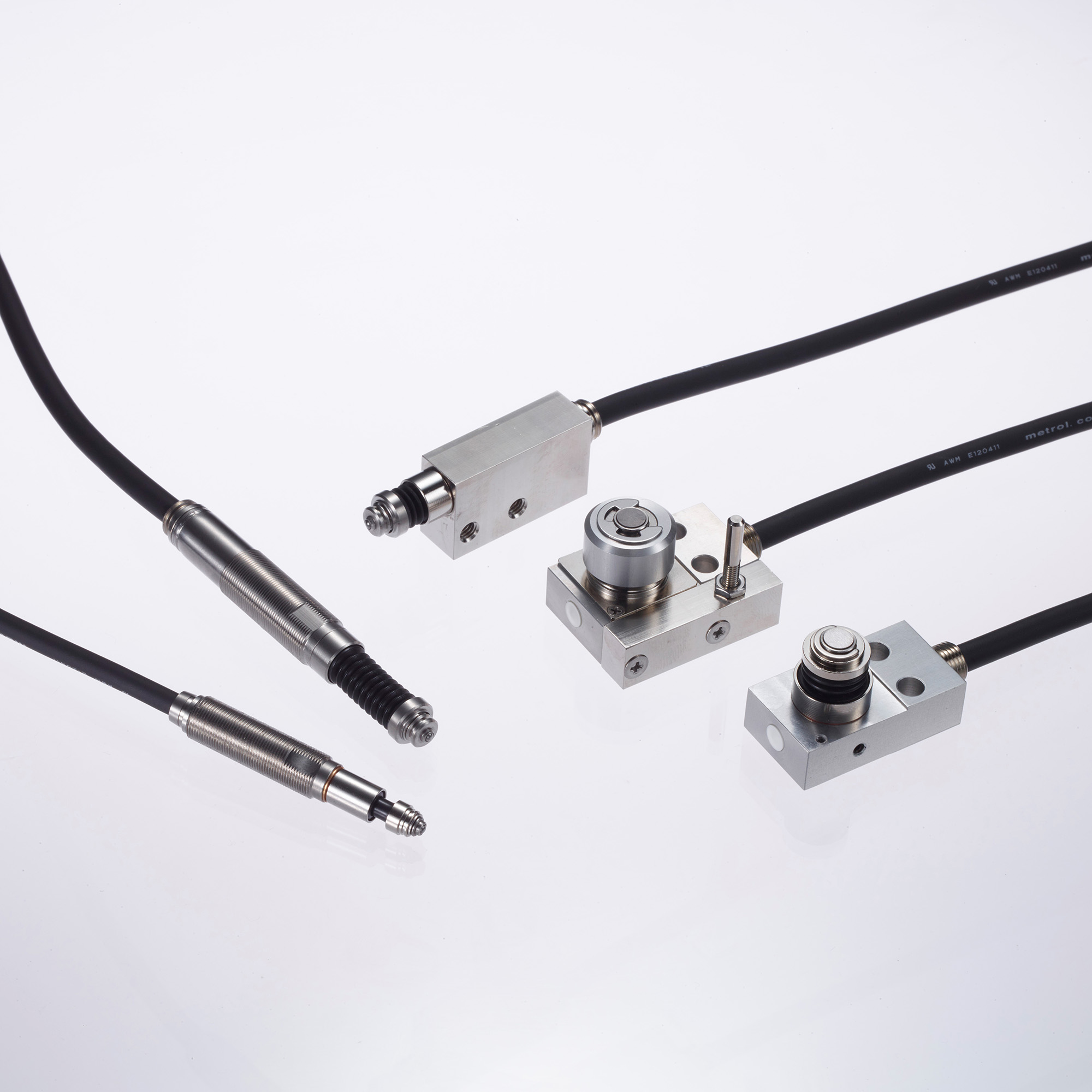
High Precision Positioning
- MT-Touch Switches -
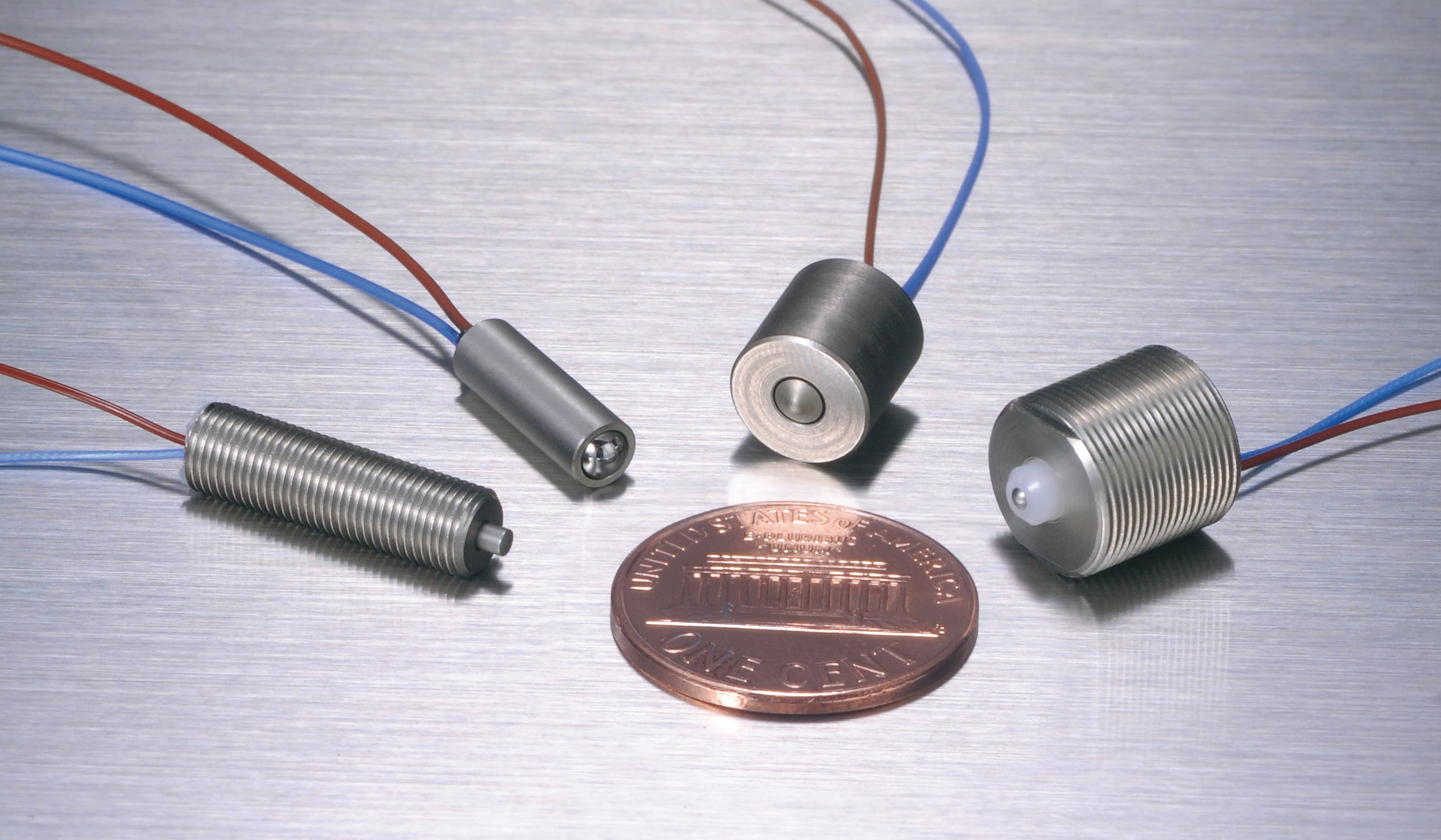
0.5 μm repeatability without amplifier IP67, highly resistant to adverse environments
Click here ›Benefits of using jigs
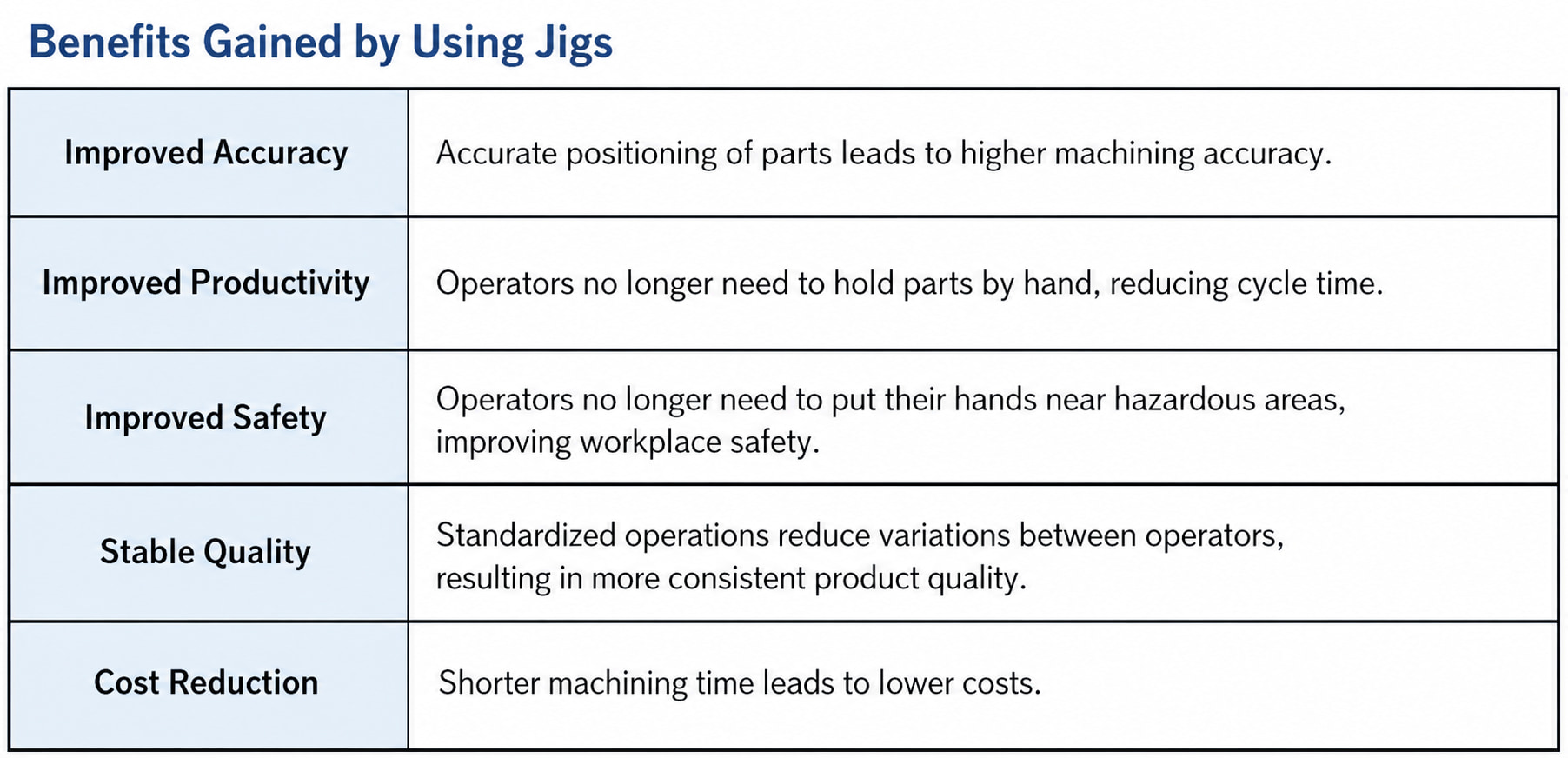
Using jigs offers many advantages. The main benefits are outlined below.
1. Improved accuracy
Using a jig enables accurate positioning of parts, which improves machining accuracy. In particular, for fine machining or parts with complex shapes, the precision of the jig directly affects product quality.
2. Improved productivity
By using a jig, operators no longer need to hold parts by hand, which shortens working time. In addition, because jigs are designed for specific processes, they help standardize operations and enable more efficient production.
3. Improved safety
Using a jig improves workplace safety by eliminating the need for operators to bring their hands close to hazardous areas. This is especially effective when handling heavy or sharp parts, where jigs help reduce risk.
4. Consistent quality
Using jigs standardizes operations and reduces variation among operators. As a result, product quality becomes more consistent, leading to higher customer satisfaction.
5. Cost reduction
Although an initial investment is required, using jigs shortens machining time and ultimately reduces costs. Their effectiveness is especially noticeable in mass production.
Types of jigs
There are many types of jigs depending on their purpose and application. Below are some representative examples.
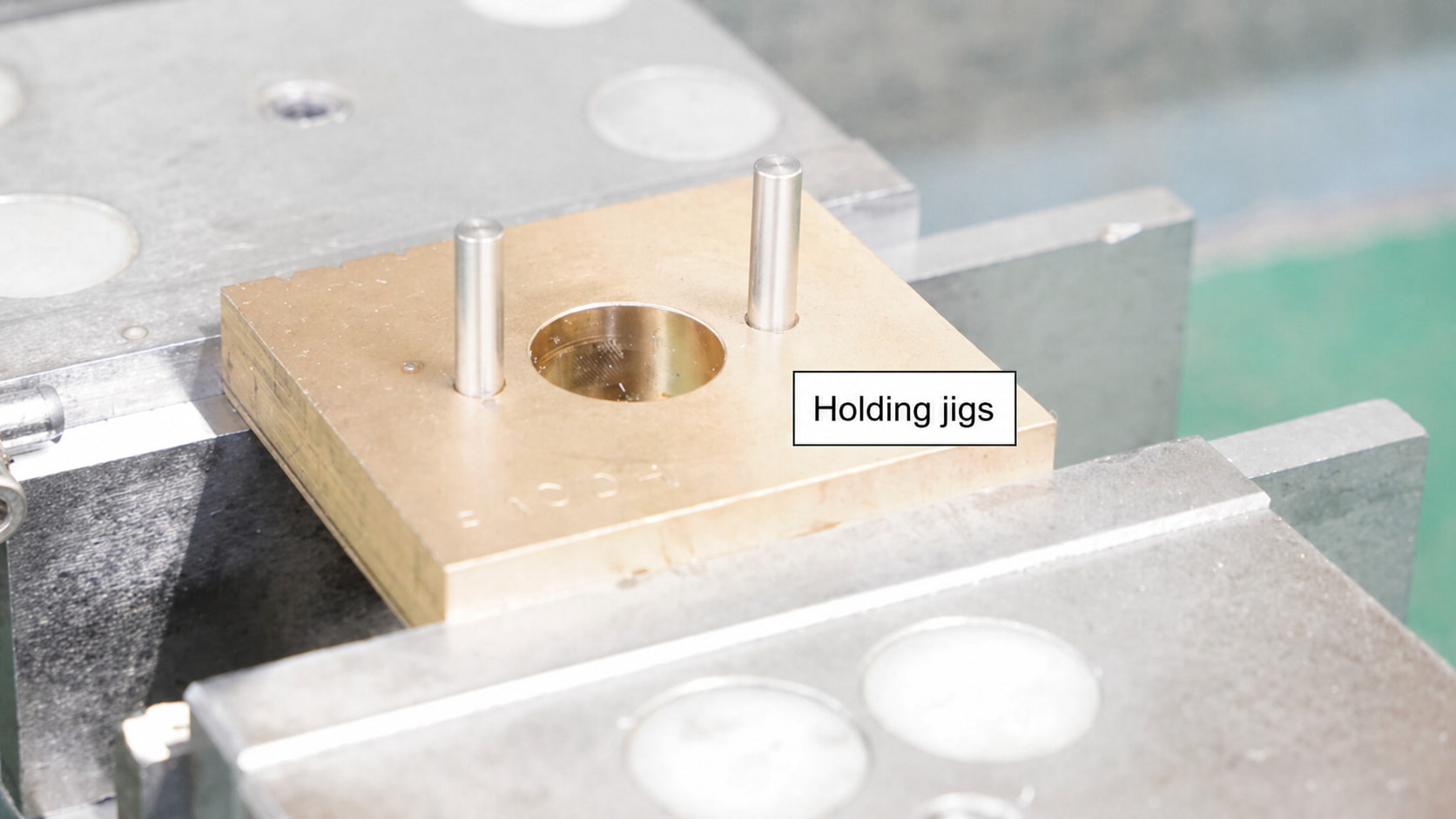
1. Holding jigs
These jigs are used to hold a part in a fixed position.
They are the most common type of jig and keep the part from moving during machining.
Examples include drilling jigs and cutting jigs.
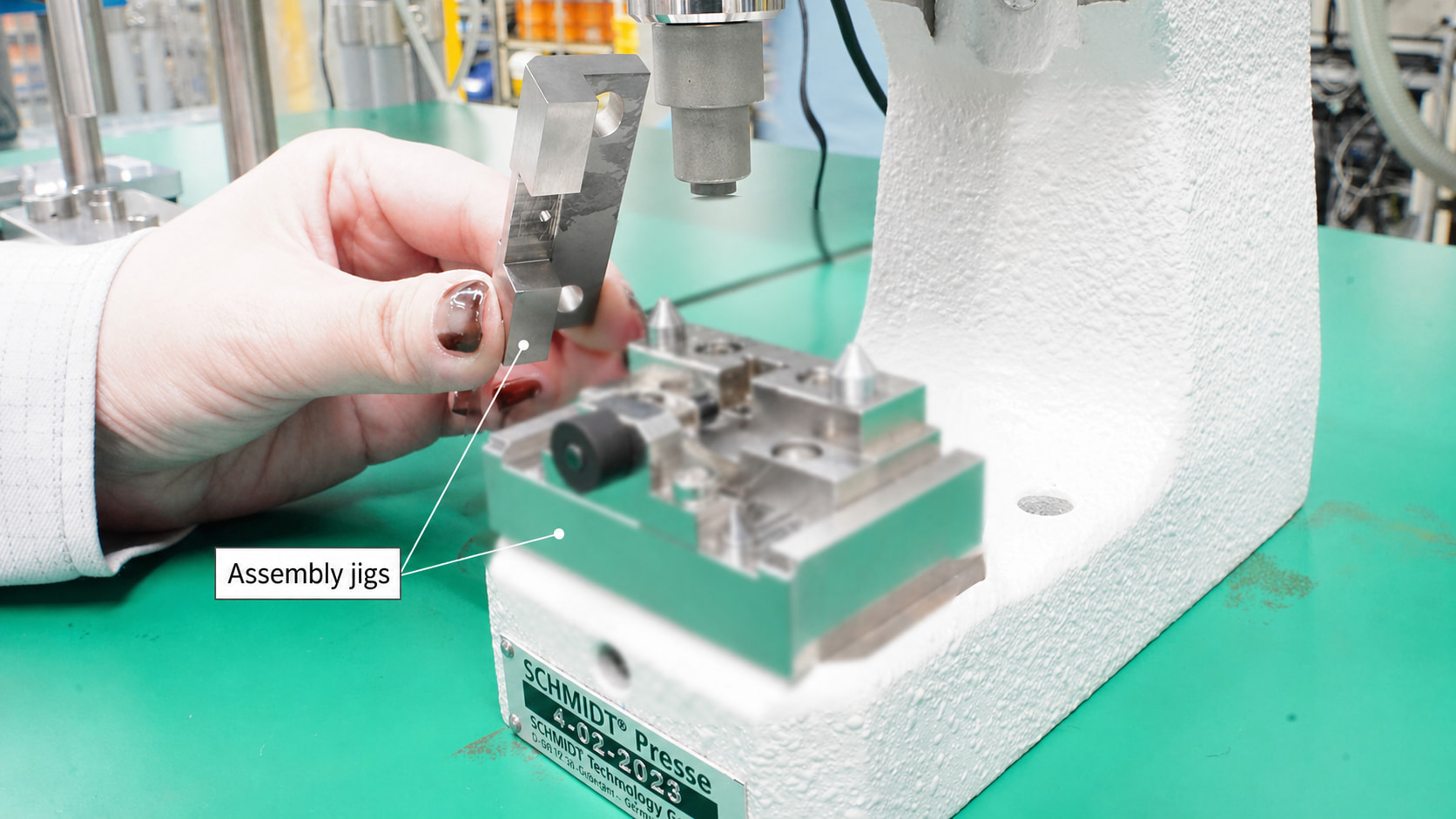
2. Assembly jigs
These jigs are used during part assembly.
They help position parts and support accurate assembly. They play an especially important role in the manufacturing of automobiles and electronic devices.
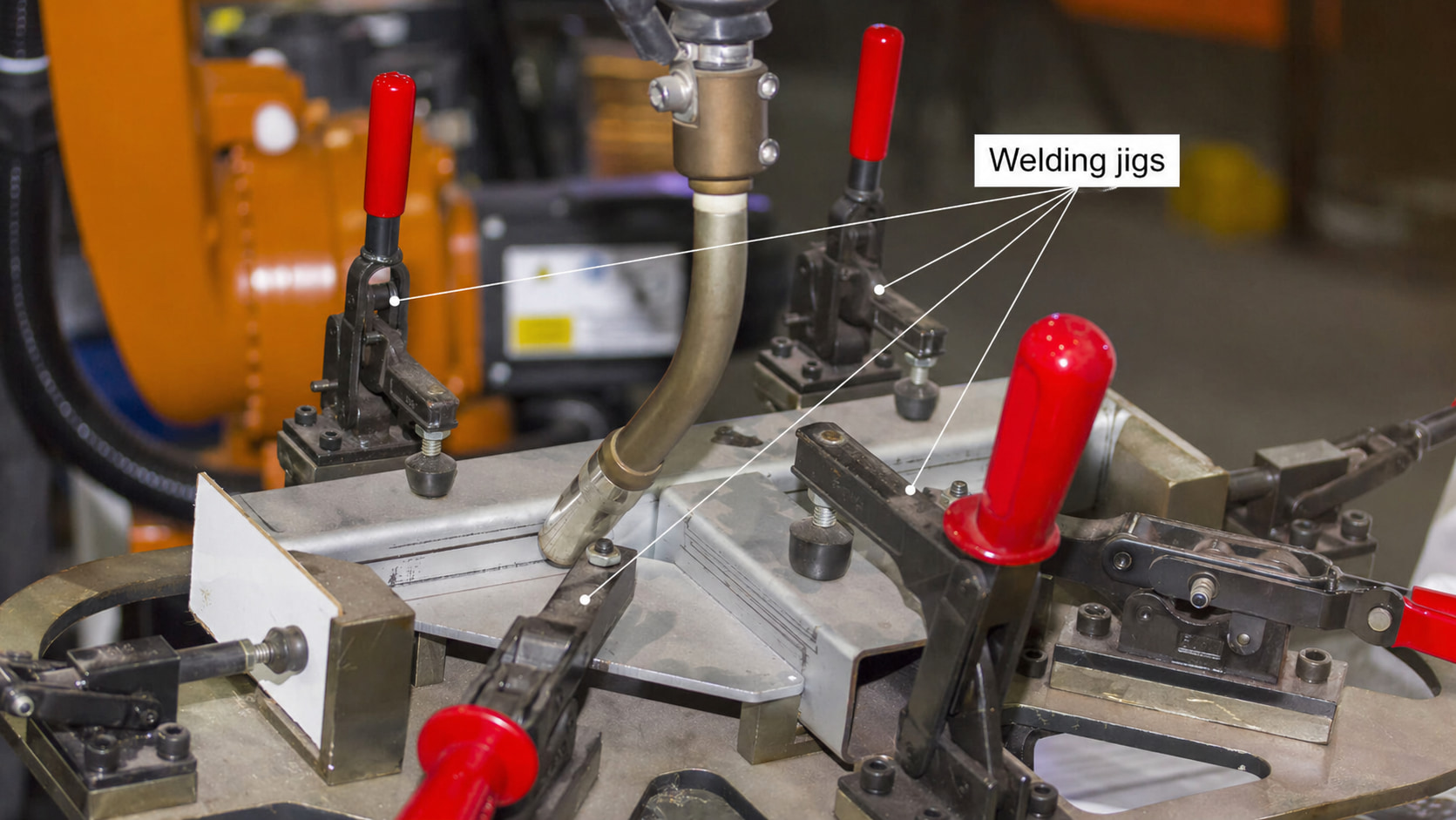
3. Welding jigs
These jigs are used to accurately position parts during welding operations.
They are used to ensure accuracy in welded areas and are especially important for large parts or parts with complex shapes.
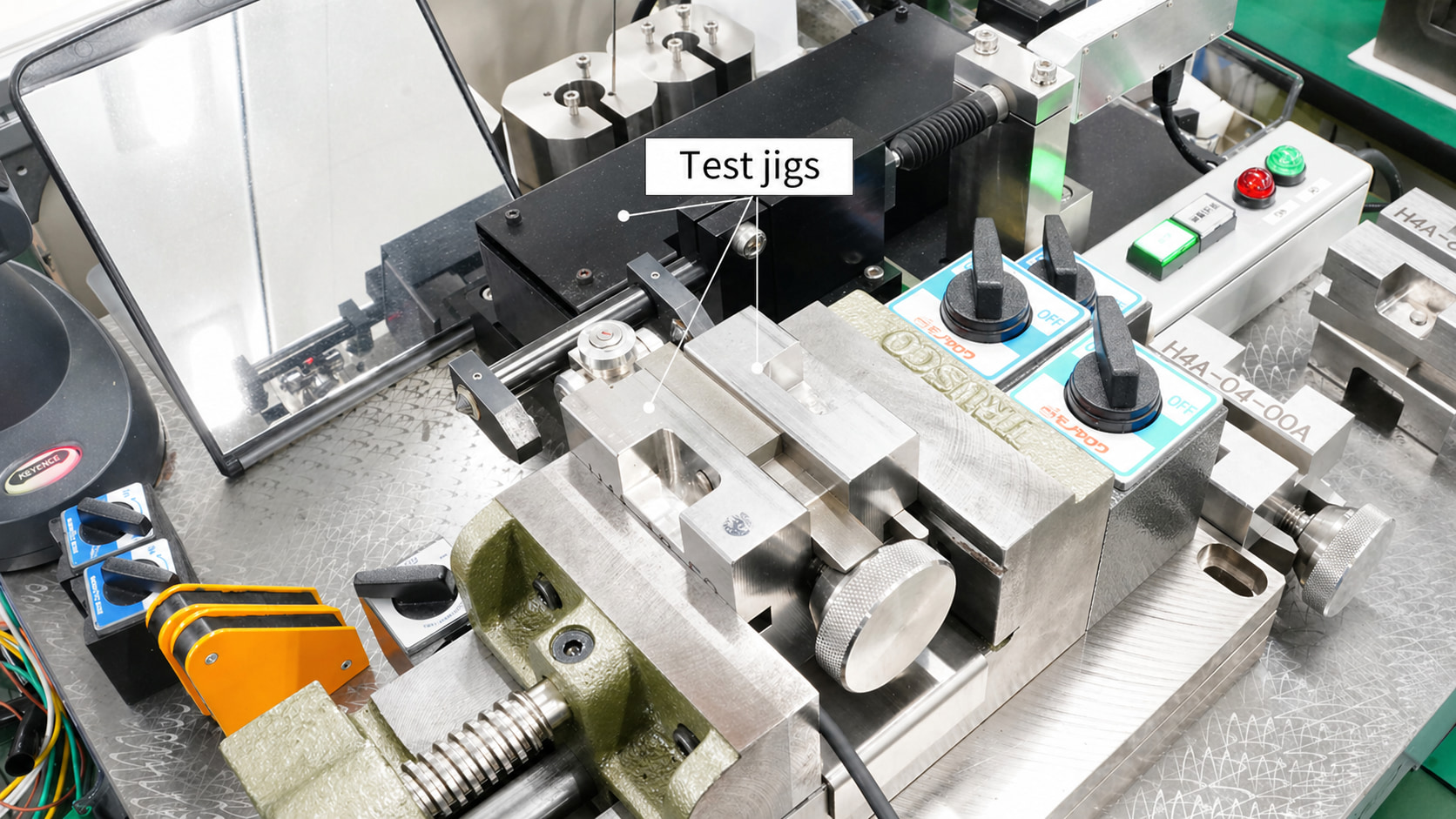
4. Test jigs
These jigs are used to verify whether a product functions according to specifications.
They are used in testing electrical equipment and mechanical components and are necessary for performance evaluation.
Examples of machining processes using jigs
Using jigs makes it possible to carry out various machining processes efficiently and with high precision. Specific examples are shown below.
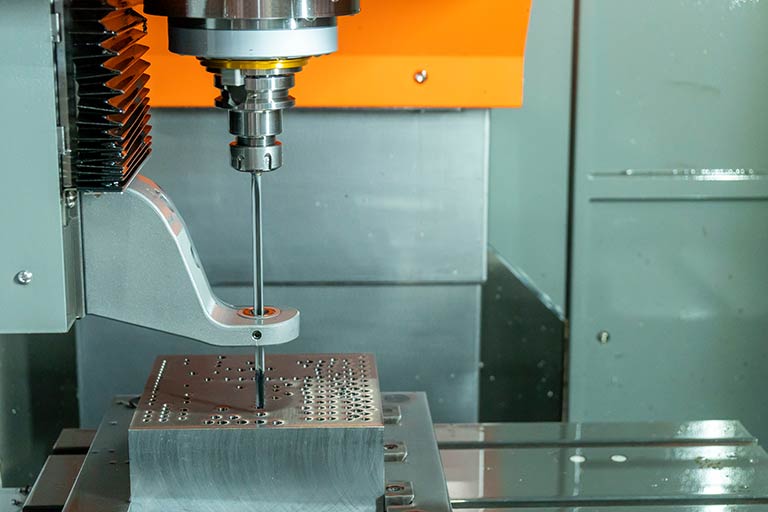
1. Drilling
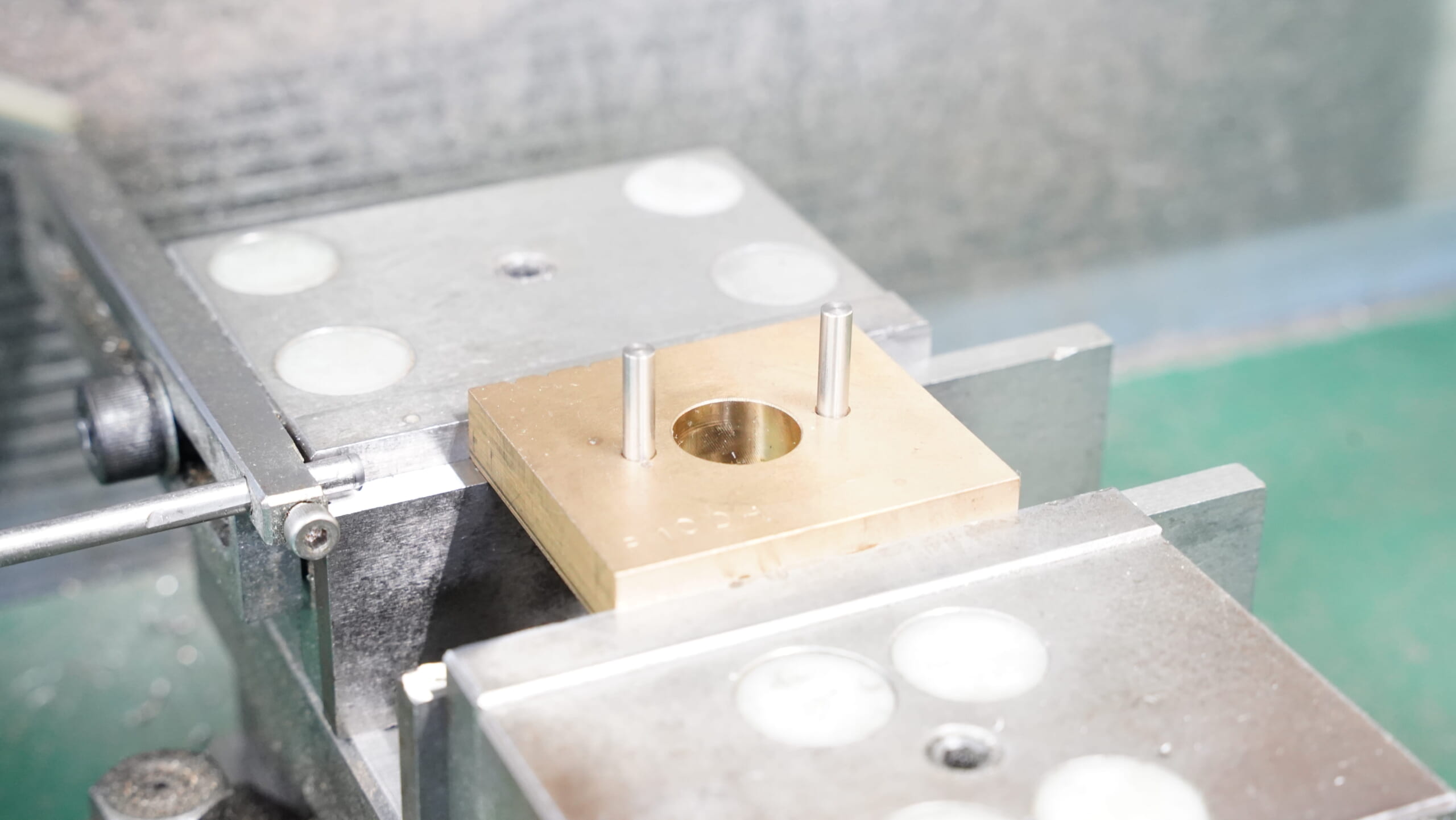
By using a jig, parts can be fixed in place and holes can be drilled at the correct positions.
Jigs are indispensable, especially for parts that require high precision. For example, in aircraft component manufacturing, an error of just a few millimeters can have critical consequences, so precise positioning with a jig is essential.
(Image source: What Is Drilling? An Explanation of Drilling and the Drills Used for It | “Getting Started with Machine Tools”)
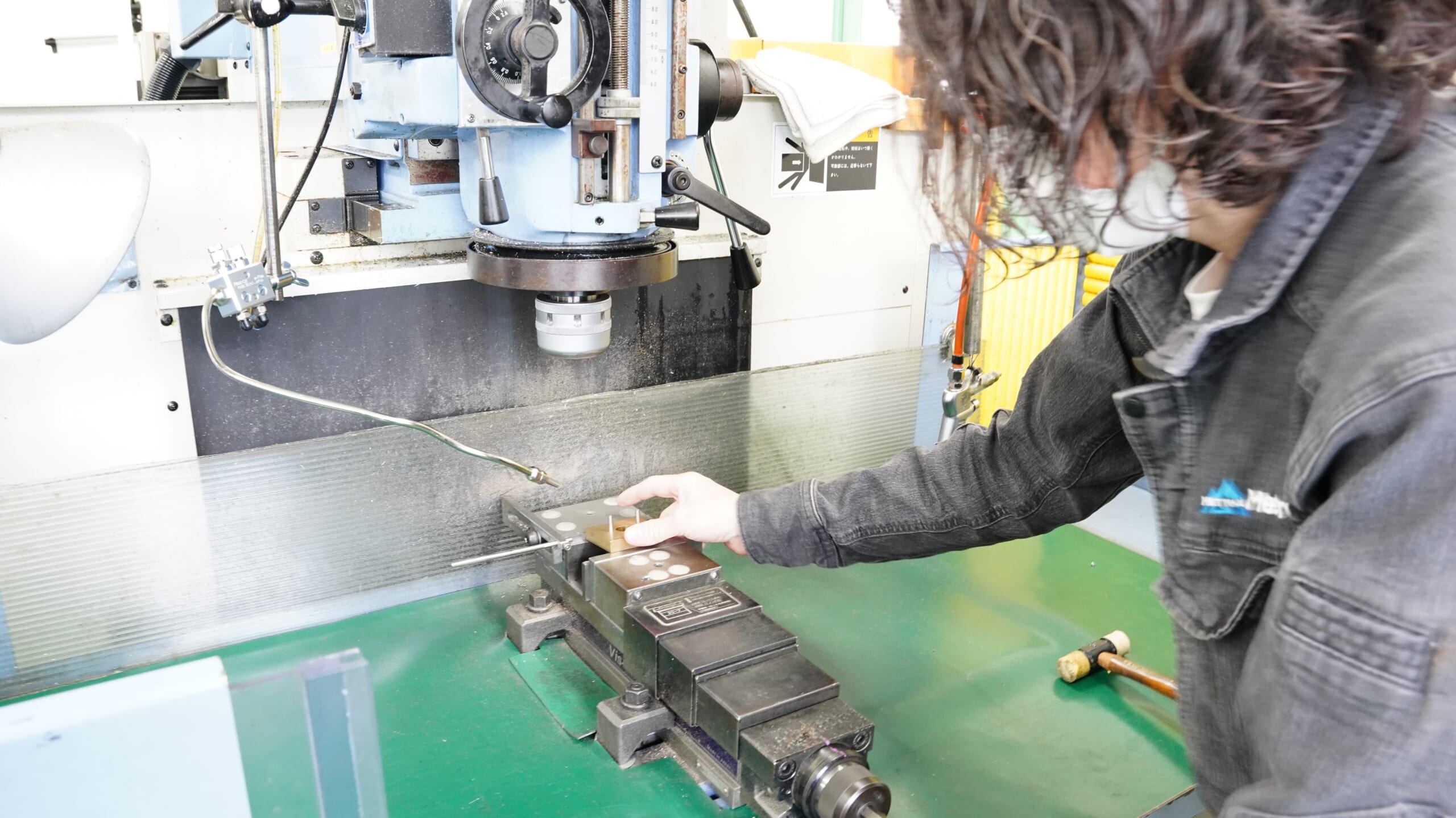
2. Cutting
In cutting processes as well, using a jig enables stable machining.
For example, when milling metal parts, firmly securing the part with a jig allows the cutting tool to move more smoothly and improves accuracy.
3. Welding
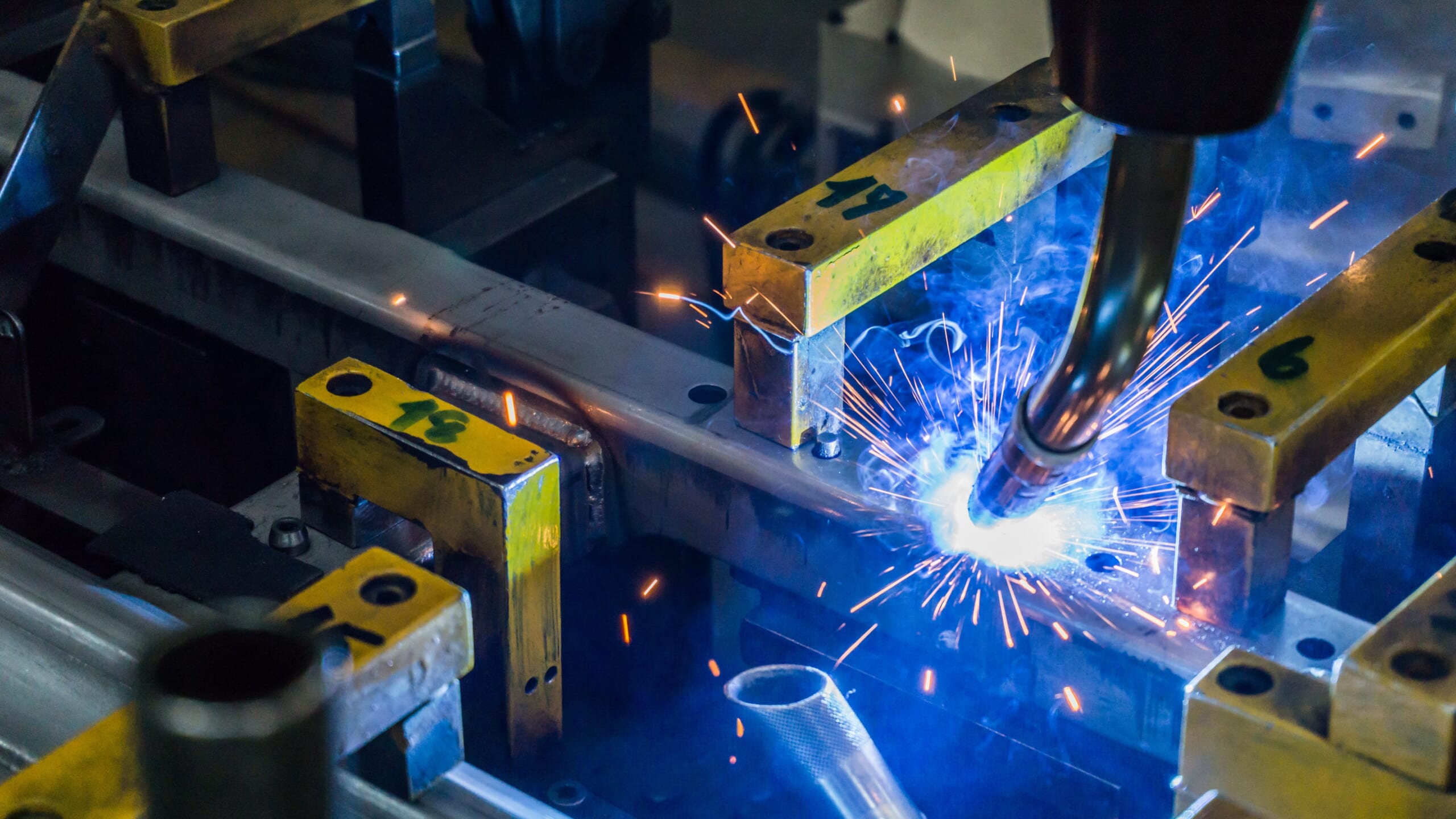
In welding, using a jig to fix the position of parts enables accurate welding.
Especially in the manufacture of structures and frames, jigs maintain the position of parts and enable uniform welding.
4. Assembly
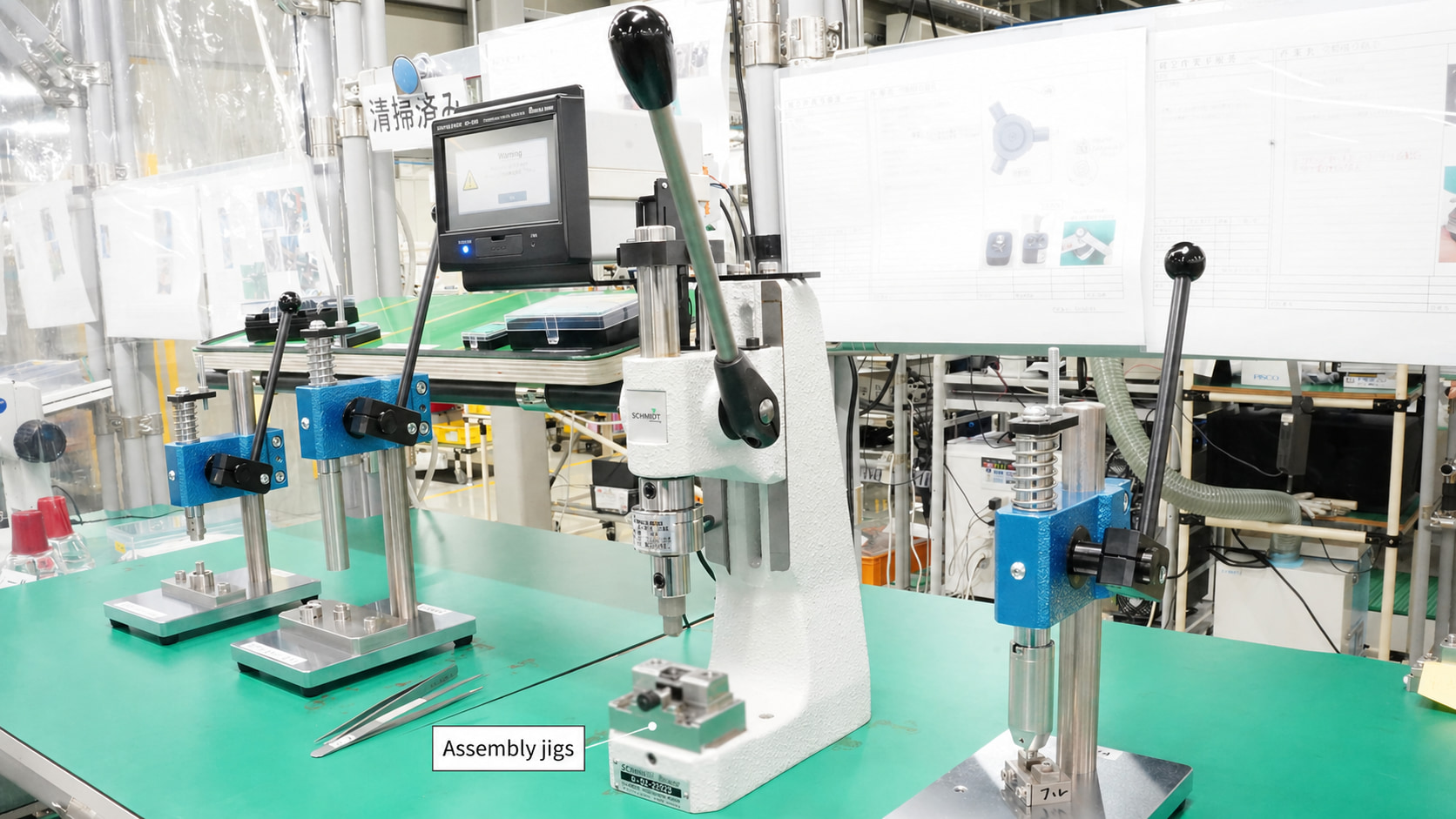
In assembly work as well, jigs make part positioning easier and enable efficient assembly.
For example, in the image below, a jig mounted on the equipment holds the part in place so that another part can be press-fitted at the correct angle. The jig acts as a guide and contributes to fast assembly work.
High Precision Positioning
- MT-Touch Switches -
0.5 μm repeatability without amplifier IP67, highly resistant to adverse environments
Click here ›Jig production process
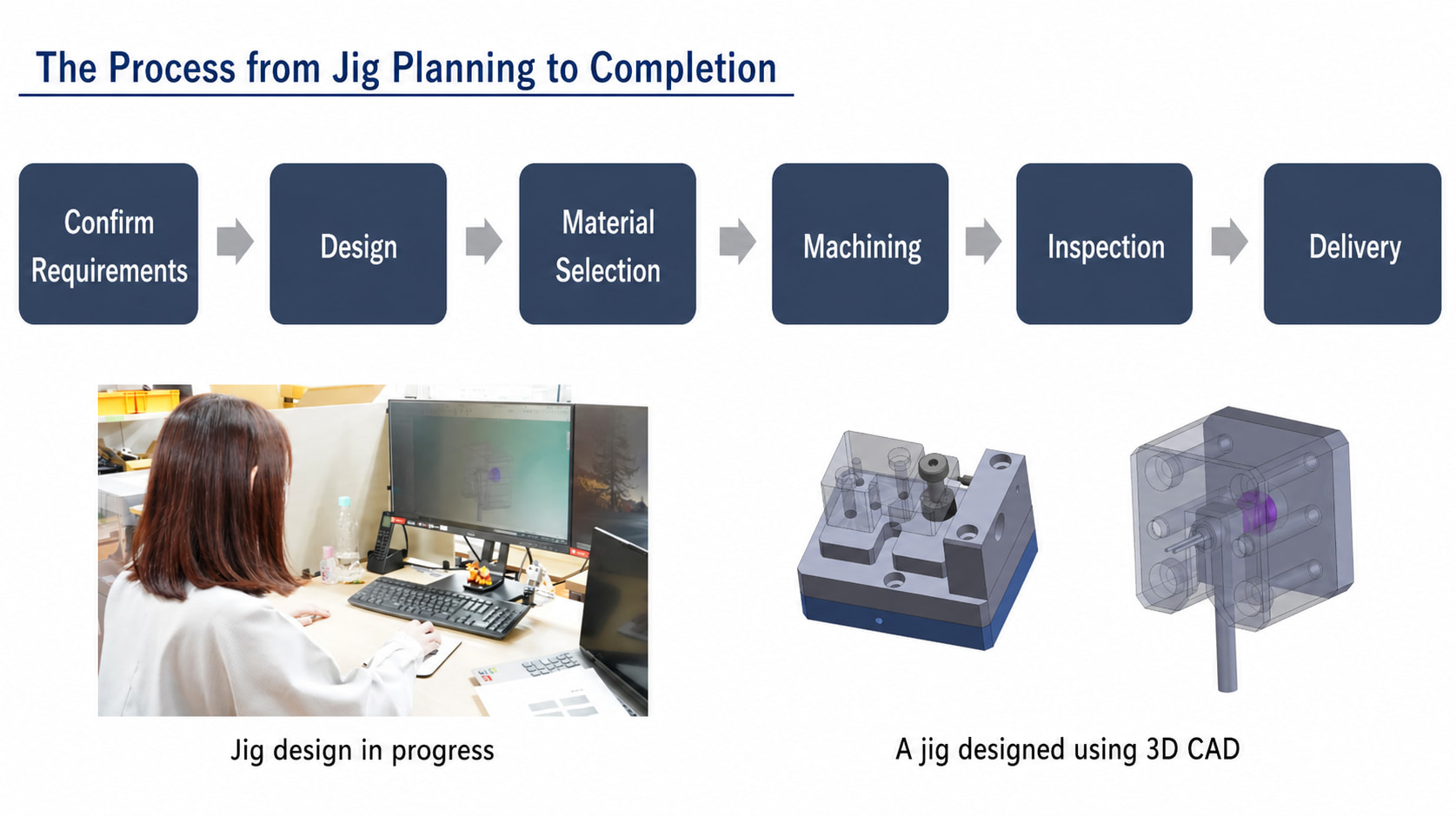
Jig production is typically carried out in the following steps.
1. Confirming requirements
First, clarify what kind of jig is required. Confirm requirements such as part specifications, machining accuracy, and the usage environment.
2. Design
The jig is designed based on the requirements. At this stage, detailed drawings are created using CAD software.
3. Material selection
Materials for the jig are selected by considering durability, machinability, cost, and other factors in order to determine the most suitable option.
4. Fabrication
Materials are fabricated based on the drawings. This includes processes such as cutting, welding, and assembly.
At Metrol, jigs are sometimes produced using a 3D printer.
5. Inspection
The completed jig is inspected to confirm that it has been finished according to the design. Corrections are made if necessary.
6. Delivery and start of use
After inspection is complete, the jig is delivered and put into use at the actual production site. Its effectiveness is confirmed, and improvements may be made as needed.
Comments from the jig production team: What are the key points in jig production?
We design jigs on the fundamental premise that they must be “safe” and allow “anyone to work consistently without variation.”
The next important point is “cost-effectiveness.” Specifically:
・How many orders the product is expected to receive
・What level of accuracy is required
We determine the jig configuration and budget based on these considerations.
In addition, when converting a task that was previously done manually into a jig-assisted process, careful interviews with operators are essential.
If the jig design does not match the way operators are accustomed to working, it can lead to frequent missed parts, skipped process steps, and complaints caused by increased difficulty.
We place great importance on creating jigs that feel natural and intuitive to the people who actually use them.
Difference between jigs and tools
Jigs and tools both play important roles in manufacturing processes, but their functions are clearly different.
Jig
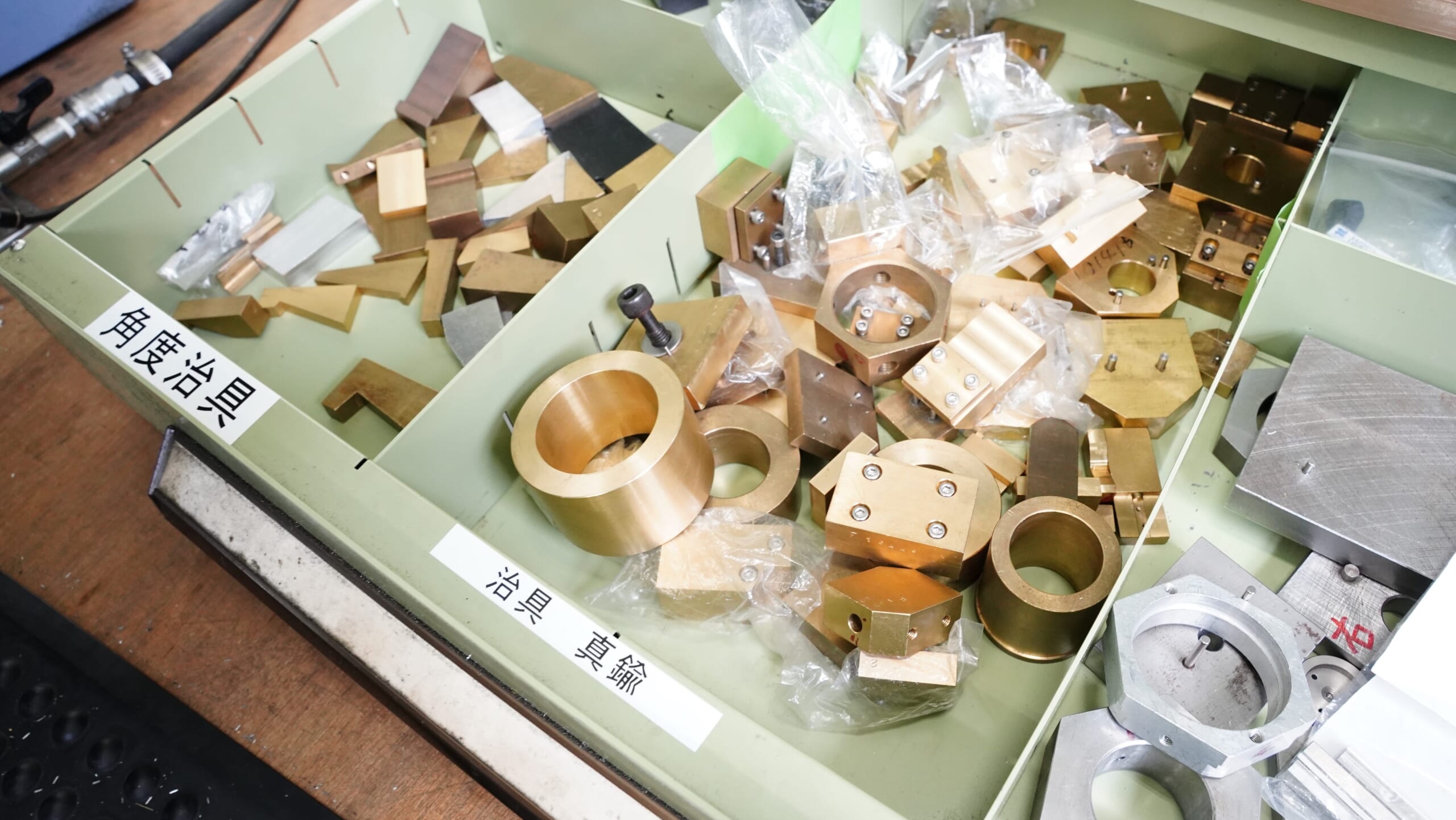
A jig is primarily a device used to hold parts in place or position them. It is used to support machining and assembly work, and many jigs are designed for specific parts.
Tool
A tool, on the other hand, is primarily used to perform machining. Examples include drills, saws, and milling cutters, which actually cut or remove material. Tools act directly on the part.
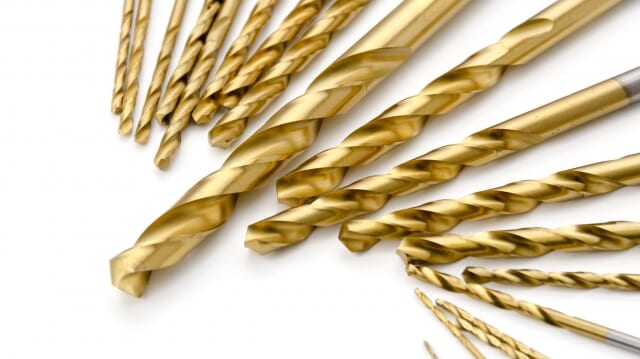
As described above, jigs and tools serve different functions and are important elements that complement each other on the production floor. By using jigs, the effectiveness of tools can be maximized, making it possible to efficiently produce high-quality products.
Examples of sensor applications in jigs
Detected the deviation of the X-Y axes of the machining table with 0.5µm repeatability
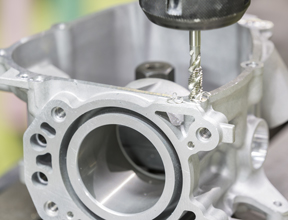
When machining engine turbochargers on a tapping center, even slight misalignment of the machining table affects turbocharger quality, so the customer was looking for a sensor capable of highly accurate positioning even in harsh environments.
Metrol’s “Precision Positioning Switch” is a sealed contact-type switch that uses fluororubber with excellent coolant resistance.
Even in the harsh environment of machine tools, where chips and coolant are scattered, it directly contacts the machining table for stable detection. With 0.5 μm repeatability, it enables highly precise machining of turbochargers.
Stably detected an uplift of the jig and workpiece of the CNC machine tool without contact.
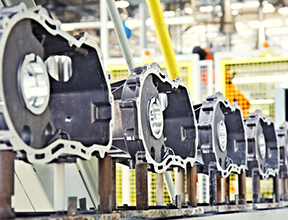
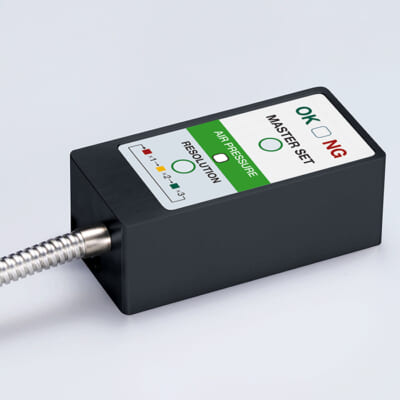
Here is an example of stable non-contact detection of lift-up between the jig and workpiece in a CNC machine tool. During cutting, chips became trapped and caused lift-up, resulting in machining defects. Air sensors from other manufacturers lacked sufficient accuracy and could not stably detect 10 μm of lift-up, but Metrol’s Air Micro Sensor achieves this with an accuracy of ±0.5 μm. Because it can be installed inside the machine, the air piping is shorter, response speed improved to 0.8 seconds, and productivity was significantly enhanced.
High-precision seating confirmation of workpiece and jig
- Air Gap Sensor -
You can check not only "presence/absence" but also "adhesion (gap)" at the same time with a repeatability of ±0.5 μm.
Click here ›[Video]
Detection of the ABS Parts Floating During Cutting【Air Gap Sensors】
Related Articles
【Definitive Guide】A Complete Explanation of How to Choose Positioning Touch Switches and the Terminology You Need to Know!
“Positioning Touch Switches” are contact-type sensors that output an ON/OFF signal when they touch the target. Their most common applications are seating confirmation and positioning of the target. While their applications are similar to those of limit switches and micro switches, they differ greatly in terms of accuracy and durability and can be installed even in harsh environments.
Depending on the type of switch, the operating method, operating position, operating motion, and required operating force differ. This article explains the basic structure and terminology useful for selecting touch switches.