What Is Plastic Working? An Easy-to-Understand Guide to Its Types and Characteristics
Source: "Hajimete no Kousaku Kikai"
Key Points
- Plastic working is a machining method that does not generate chips
- Metals possess two properties: plasticity and elasticity
- There are many types of processing methods, including shearing, bending, and forging
Table of Contents
What Is Plastic Working?
1. Difference from Machining
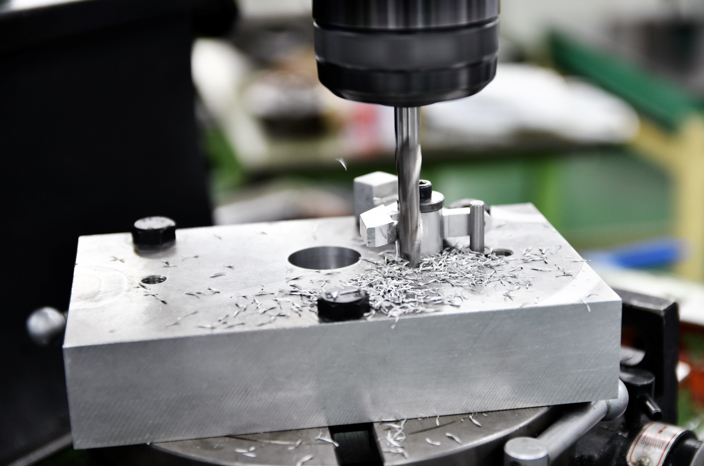
Among processing methods that apply external force to deform a material into the required dimensions, those that do not generate chips are called plastic working. In Japanese, plasticity is pronounced "sosei."
The process is called plastic working because it utilizes the property of metals known as plasticity. However, machining processes also make use of plasticity. Therefore, the simplest way to distinguish plastic working from machining is whether chips are generated or not.
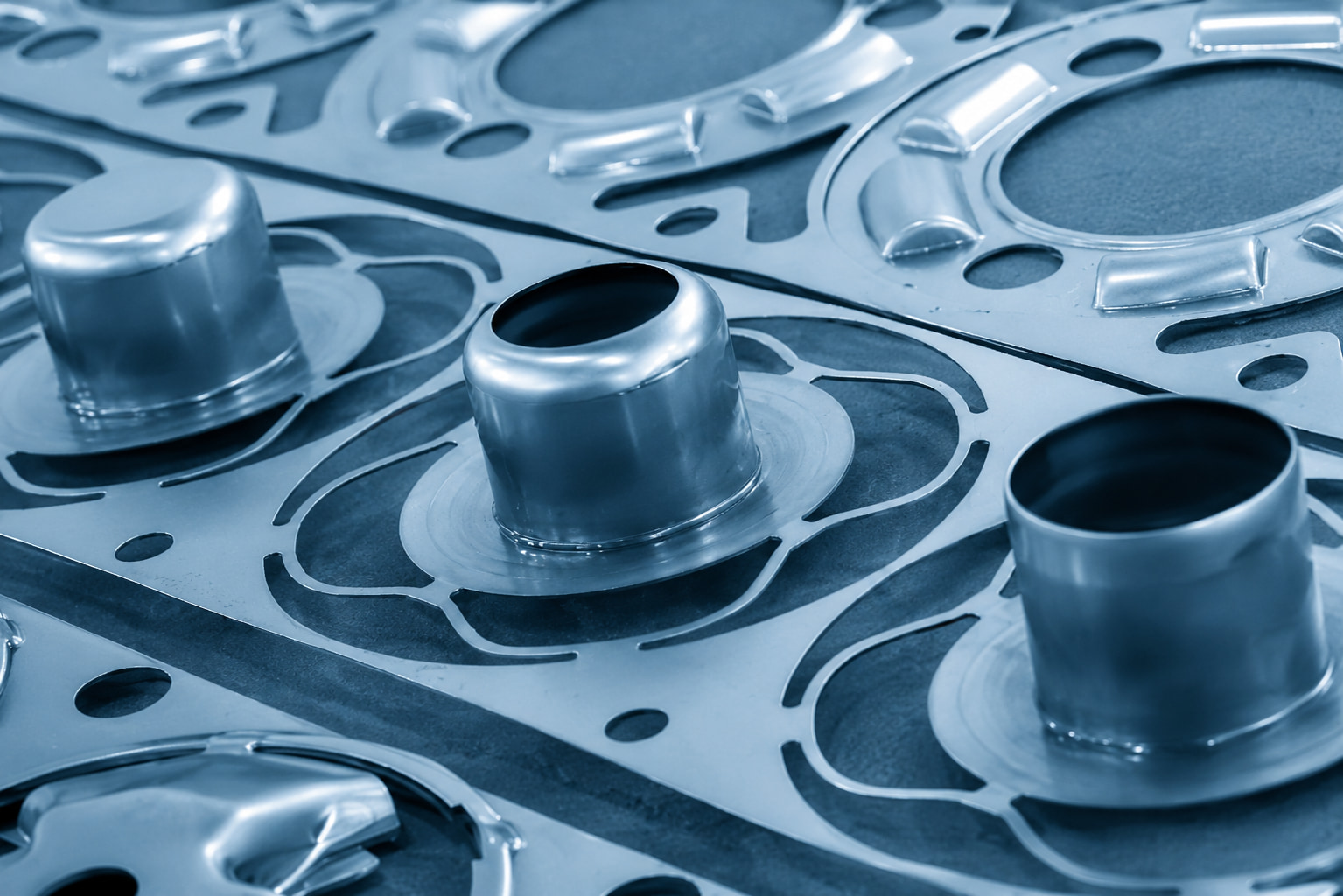
Plastic working generally offers high productivity. Another major characteristic is the high material yield and low material loss. Plastic working methods such as press working and forging are widely used in the mass production of automotive parts.
Plastic working includes "cold working," which is performed at room temperature, and "hot working," which is performed after heating the material until it softens.
2. Elasticity and Plasticity
Metal materials possess two properties: elasticity and plasticity. Elasticity refers to the property in which a material returns to its original shape after the applied force is removed. Plasticity, on the other hand, refers to the property in which deformation remains even after the force is removed.
The behavior of a spring is an easy way to understand elasticity. A spring stretches when pulled by force, but returns to its original shape when the force is removed.
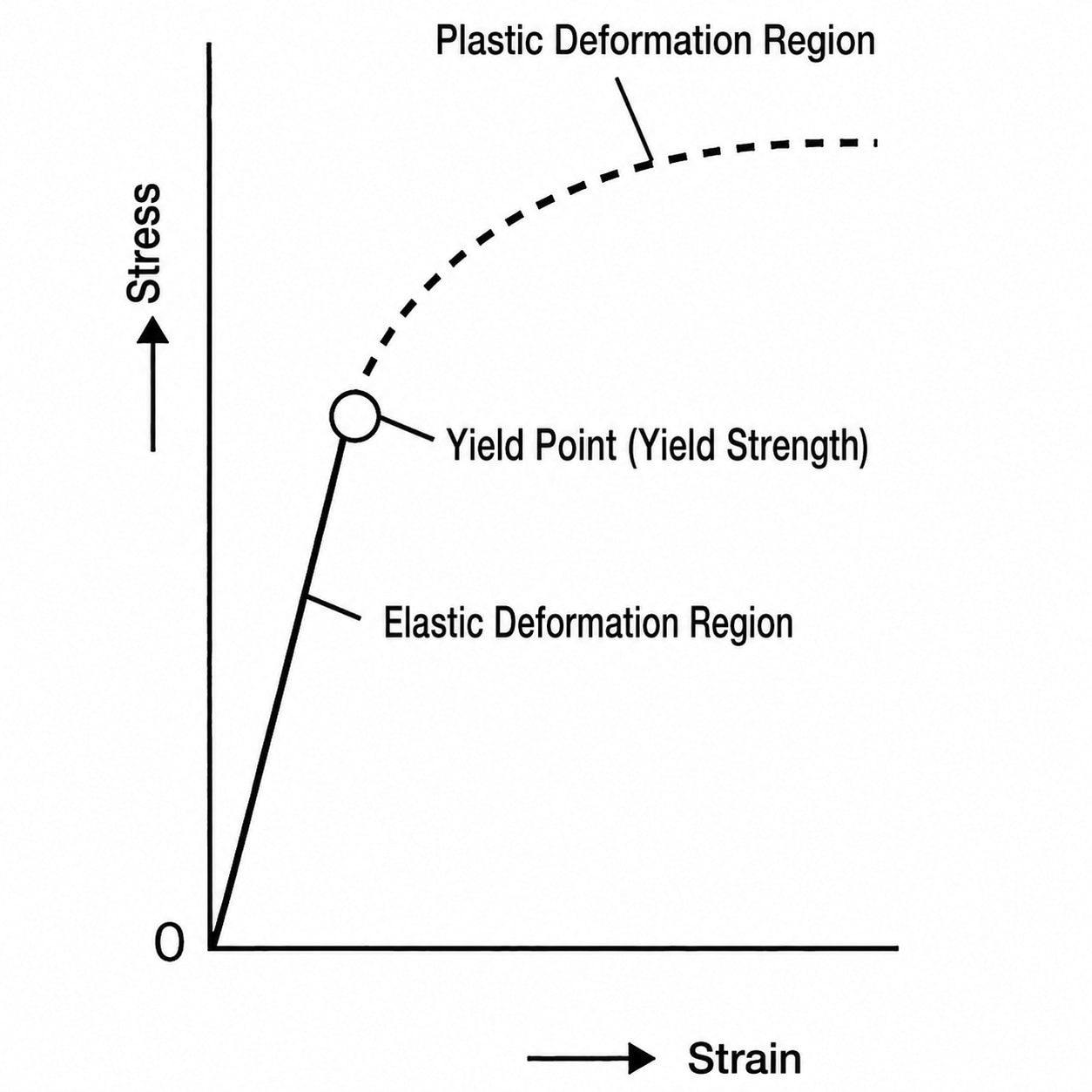
The force generated internally within an object per unit area is called "stress," and the amount of deformation caused by stress is called "strain." When the relationship between stress and strain is graphed, the elastic deformation region is represented by a straight line. Beyond a certain point, the graph gradually curves.
This point is called the yield point, and the curved region beyond it represents plastic deformation. In other words, stress greater than the yield point must be applied to plastically deform a metal material.
Press working uses dies to apply stress exceeding the yield point to the material, causing plastic deformation and creating the desired shape. However, the die shape is not transferred perfectly to the product shape, as the material slightly changes while attempting to return to its original shape. This phenomenon, caused by the material's elasticity, is called springback.
Since springback can reduce the dimensional accuracy and quality of formed products, controlling springback is a key issue in press working. Materials with higher yield points or lower Young's modulus tend to exhibit greater springback. Young's modulus represents the ratio of stress to strain within the elastic region.
3. Primary and Secondary Processing
Plastic working is divided into primary processing, which produces raw materials such as steel products, and secondary processing, which forms finished products from those materials.
Primary processed products are mass-produced at low cost by steel manufacturers using rolling or extrusion to create standardized materials. Secondary processing forms products from these materials through methods such as press working, forging, and roll forming.
Automates originating of cutting tools
- Tool Setter -
Tool length and chips are monitored to prevent machining defects due to wear and thermal displacement
Click here ›Classification of Plastic Working Methods
The purposes of plastic working are broadly classified into (1) forming, (2) separation, (3) correction, and (4) material modification.
The primary purposes of plastic working are (1) forming shapes and (2) separation processes such as sheet shearing, both commonly achieved through press working. Purpose (3) refers to correcting dimensional or shape defects after processing using plastic deformation techniques, making it a specialized method. Purpose (4) utilizes effects such as work hardening, residual stress, and grain refinement caused by plastic deformation to improve product accuracy and surface properties.
Steel is the most commonly used material in plastic working, while the remainder consists mainly of non-ferrous metals such as aluminum. Common material forms include sheet materials, bars, pipes, structural shapes, and blocks.
| Main Plastic Working Methods by Material Shape | ||
|---|---|---|
| Sheet Material Processing | Pipe and Structural Shape Processing | Bar and Block Material Processing |
| Shearing | Shearing | Hot free forging |
| Bending | Bending | Hot die forging |
| Deep drawing | Bulge forming | Cold forging |
| Stretch forming | Taper forming | Rolling |
| Spinning | Wall thinning | |
| Roll forming | ||
| Wall thinning |
1. Sheet Material Processing
When forming sheets or coil materials supplied by material manufacturers using press working or similar processes, the material must first be cut to the required size. Hole punching, bending, and deep drawing are then performed.
The main processing methods include (1) shearing, (2) bending, (3) deep drawing, (4) stretch forming, (5) spinning, (6) roll forming, and (7) wall thinning.
Forming uses reciprocating machines such as presses and bending machines, as well as rotary machines such as spinning machines and roll forming machines.
2. Pipe and Structural Shape Processing
Round pipes and structural shapes with square cross-sections are often bent after shearing. For round pipes, bulge forming is also used, in which water or a rubber medium is placed inside the pipe and pressurized to expand it. Specialized pipe benders and bulge forming machines are used for these processes.
3. Block and Bar Material Processing
Methods used to process block materials and bar materials include forging and rolling. Since both methods require large processing forces, selecting suitable lubricants is also important.
(1) Forging
Forging is a processing method that forms metal by compressing a metal block. It requires extremely large forces, and hot forging, in which the material is heated and softened before compression, is commonly used. Equipment includes forging presses, headers, rotary forging machines, and thread rolling machines.
Forging processes include (1) free forging, which shapes material by hammering and compressing it, (2) die forging, which transfers die features onto the material, and (3) extrusion, which forms shapes by forcing material through a tapered opening.
(2) Thread rolling
Rolling is a processing method in which a dedicated rotary tool called a rolling die is pressed against a rotating bar-shaped metal material to transfer the tool shape onto the material. It is performed as a cold working process using a rolling machine. It is mainly used to form screws and gears. The serrated grooves around the edges of coins are also created by rolling.
Compared with machining, rolling requires less energy, offers shorter processing times, and provides high productivity. Since compressive residual stress is generated on the material surface, fatigue strength is also improved.
Source: "Hajimete no Kousaku Kikai"
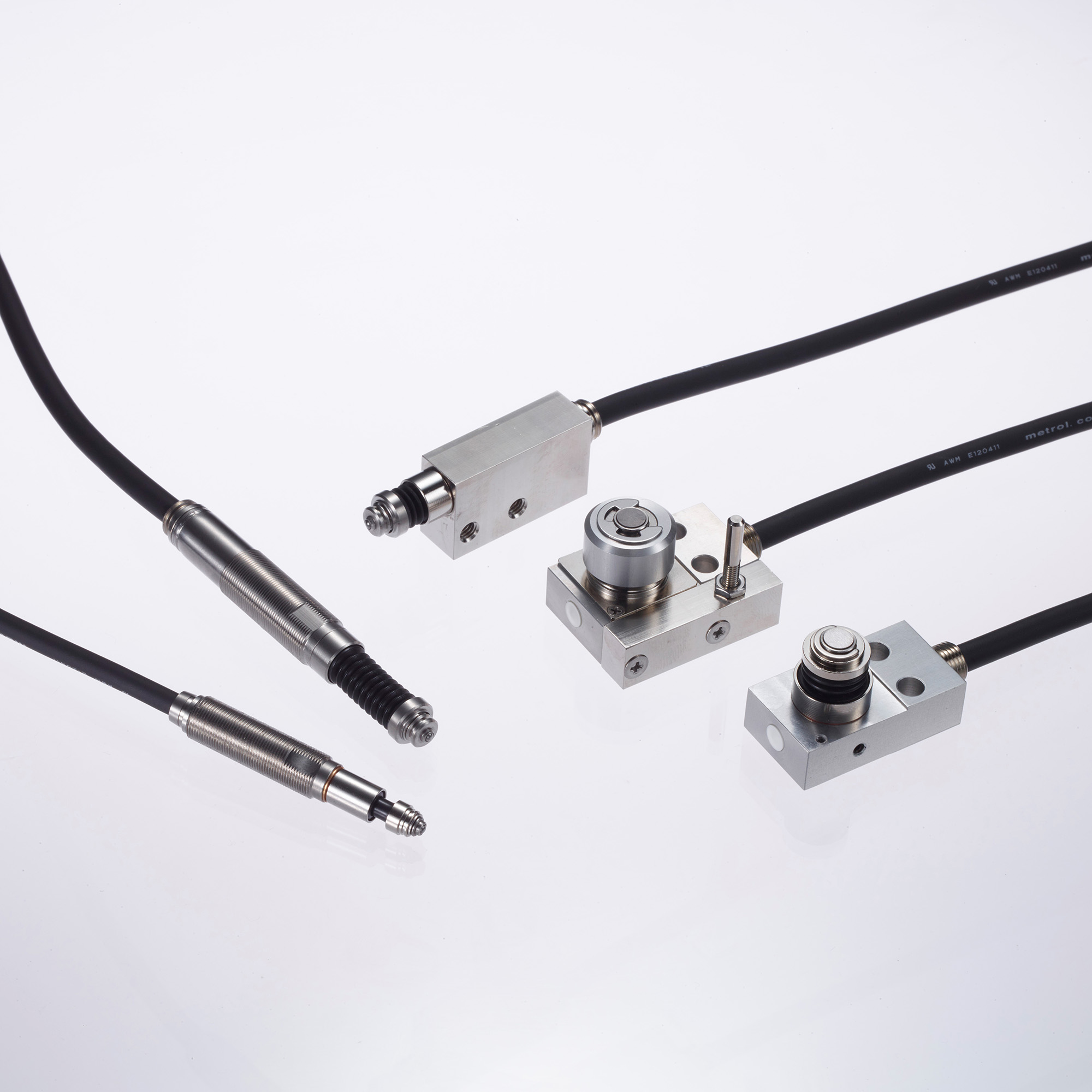
High Precision Positioning
- MT-Touch Switches -
0.5 μm repeatability without amplifier IP67, highly resistant to adverse environments
Click here ›Related Articles
What Are Machine Tools? A Clear and Easy-to-Understand Explanation of Their Types and Features
Machine tools produce components used in a wide range of products around us and are indispensable in manufacturing environments.
This article classifies machine tools into major categories and introduces the primary machine tools used in machining operations.
Milling Basics: Material Properties, Cutting Tools, and Key Points When Outsourcing Work
Today, machining using machining centers is the mainstream approach in manufacturing sites, enabling even less experienced operators to produce highly accurate products in a short time.
As a result, many people are unfamiliar with the basics of milling and are unable to respond effectively to machining problems.
This article clearly explains the fundamentals of milling, cutting tools and work materials, as well as troubleshooting methods.